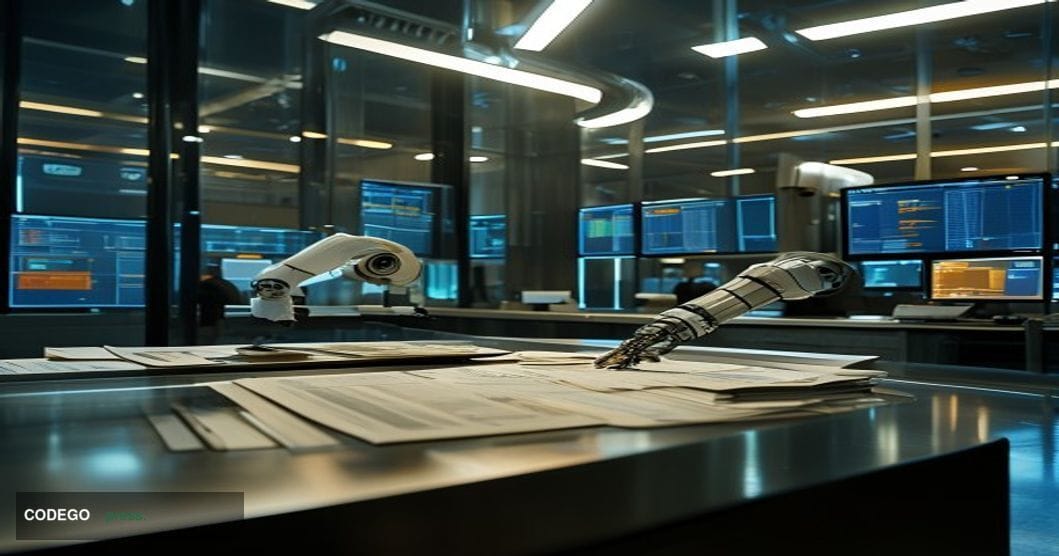
The payments industry's most compelling storylines in 2026 revolve around real-time rails, stablecoins, and frictionless cross-border transfers — a narrative of speed, digitization, and always-on liquidity. Yet beneath that gleaming surface, a far more prosaic reality persists: J.P. Morgan Payments, one of the world's largest payments businesses by any measure, processed more than 130 million checks in 2025 alone. That single figure punctures the dominant fintech thesis that paper-based payments are an artifact of a vanishing era. They are not. They are the present tense of corporate finance, and they represent a problem that digital settlement rails cannot, by themselves, resolve.
The concept of the payments "last mile" has long served as shorthand for the friction that survives even the most sophisticated infrastructure upgrades. Speed at the point of settlement is a genuine achievement — the ability to move funds across borders in seconds is genuinely transformative — but it addresses only the middle of a much longer operational chain. Before money moves, someone must receive, read, validate, and reconcile a payment instruction. After money moves, someone must confirm receipt, match it to an outstanding obligation, and update records accordingly. When those instructions arrive on paper — as they evidently did 130 million times across J.P. Morgan's client base in 2025 — the efficiency gains of modern rails are effectively quarantined from the broader workflow.
Why Paper Endures
Understanding why check volumes remain this substantial at one of the world's most technologically sophisticated financial institutions requires stepping back from the fintech conversation and considering the institutional realities of commercial payments. Large enterprises, municipalities, healthcare systems, insurance carriers, and real estate operations continue to issue and receive checks for reasons that range from contractual obligation to counterparty preference to regulatory requirement. In many B2B contexts, checks remain legally and operationally embedded. A corporate treasury team cannot unilaterally abandon checks simply because faster alternatives exist; the decision is bilateral, often multilateral, and frequently tied to systems on the other side of the transaction that are not being upgraded on the same timeline.
This is the environment J.P. Morgan Payments is navigating. The institution is not defending the check as a preferred instrument — it is confronting the operational volume that checks generate as a commercial reality, and deploying artificial intelligence and robotics to manage that volume with greater speed and accuracy than legacy manual processes allow. The strategic logic is straightforward: if you cannot eliminate the paper, you automate the handling of it.
AI and Robotics Enter the Back Office
The application of AI and robotics to check processing reflects a broader maturation in how large financial institutions are thinking about automation. Early waves of fintech disruption focused heavily on the consumer-facing layer — mobile interfaces, instant transfers, digital onboarding. The enterprise back office, with its exception-handling workflows, paper-intensive reconciliation processes, and legacy system dependencies, received far less attention. That gap is now drawing serious institutional investment.
For J.P. Morgan Payments, the challenge is not simply scanning and digitizing a check image — that capability has existed for years. The harder problem involves extracting structured data from unstructured paper documents, matching that data against accounts receivable records, identifying discrepancies, routing exceptions to the appropriate resolution path, and doing all of this at a scale of tens of millions of items annually. Artificial intelligence, particularly advances in optical character recognition, natural language processing, and machine learning-based anomaly detection, makes this kind of high-throughput, high-accuracy processing increasingly tractable. Robotics process automation adds the physical dimension — managing the intake, sorting, and handling of paper documents in a way that reduces manual touchpoints and the errors that accompany them.
The Broader Implication for Financial Infrastructure
J.P. Morgan's strategic posture here carries implications well beyond its own operations. If the institution processing 130 million checks in a single year is investing in AI and robotics to manage that load, it signals to the broader market that paper-based payment volumes are neither negligible nor expected to disappear on a short timeline. Banks, payment processors, treasury software vendors, and enterprise resource planning providers all face a version of the same challenge: their clients exist in a hybrid world where digital and paper coexist, and infrastructure must serve both.
It also reframes the conversation about what "payments modernization" actually means in practice. For the fintech community, modernization has often been synonymous with digitization — replacing paper with data, replacing batch processing with real-time flows. J.P. Morgan's approach suggests a complementary thesis: that for the foreseeable future, modernization also means making paper-based processes dramatically more efficient, rather than assuming they will simply be displaced. The two strategies are not in conflict. They are, in fact, both necessary.
What This Means
The 130 million check figure from J.P. Morgan Payments in 2025 is more than a data point — it is a strategic signal. It confirms that the last mile of payments remains stubbornly analog in large swaths of the commercial economy, and that the institutions best positioned to serve corporate clients are those willing to invest in the unglamorous infrastructure of back-office automation. Artificial intelligence and robotics are not just tools for building the next generation of consumer finance products; they are becoming load-bearing elements of enterprise payments operations at the largest scale. For competitors, vendors, and clients alike, the message from J.P. Morgan Payments is clear: the future of payments requires mastery of both the digital frontier and the paper that still defines where many transactions begin and end.
Written by the editorial team — independent journalism powered by Codego Press.