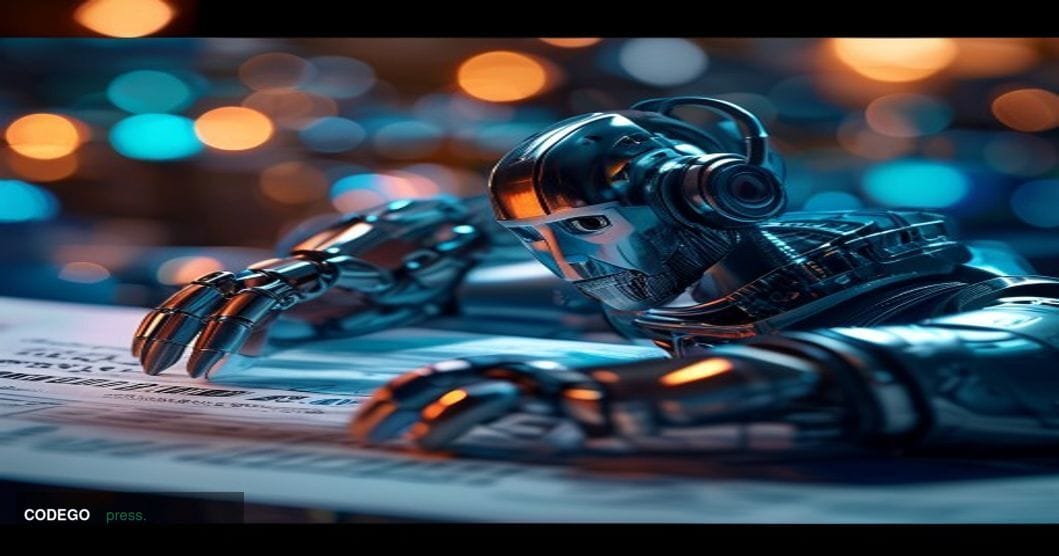
While the global payments industry fixates on real-time rails, stablecoins, and borderless money movement, J.P. Morgan Payments is confronting a more stubborn, decidedly unglamorous reality: paper checks still dominate the final stretch of countless commercial payment cycles. The firm processed more than 130 million checks in 2025 alone — a figure that reframes the entire conversation about what "modern payments" actually means in practice, and signals why the bank is now betting on artificial intelligence (AI) and robotics to bridge the gap between digital ambition and paper reality.
The dominant narrative in payments has, for several years, centered on velocity. Instant payment rails, always-on liquidity, near-frictionless cross-border transfers, and the rise of stablecoins as settlement instruments — these are the themes commanding conference stages and venture capital attention. But as J.P. Morgan Payments recognizes, raw settlement speed addresses only one dimension of the payments lifecycle. What happens in the operational layers before money moves — the intake, validation, reconciliation, and exception-handling surrounding each payment instruction — and what must be resolved after funds clear, is where friction quietly compounds. That pre- and post-settlement terrain is payments' last mile, and for a significant share of commercial and institutional clients, that terrain is still defined by paper.
130 Million Reasons to Automate
Processing 130 million checks in a single year is not a footnote. It is a headline that most of the fintech ecosystem would prefer to ignore, because it complicates the clean narrative of an industry racing toward full digitization. Each one of those checks represents a discrete set of manual touchpoints: physical handling, optical character recognition challenges, fraud screening, reconciliation against accounts payable or receivable ledgers, and exception management when amounts, dates, or payee details do not align cleanly. Multiply those touchpoints by nine figures, and the operational burden becomes self-evident. For J.P. Morgan Payments, one of the world's largest payments businesses by volume and client reach, tolerating that burden at scale is simply not viable in a competitive landscape where margins, speed, and client experience all demand continuous improvement.
The bank's strategic response is to apply AI and robotics directly to the paper-bound segments of its payments infrastructure. Rather than waiting for corporate clients to abandon checks entirely — a behavioral shift that has proven far slower than technologists have predicted for decades — J.P. Morgan Payments is engineering intelligence around the check itself. AI can accelerate and improve the accuracy of data extraction from physical documents, flag anomalies that suggest fraud or processing errors, and feed cleaner data downstream into reconciliation systems. Robotics, in the context of payments operations, can automate the physical and digital handling tasks that currently require human intervention at each step of check processing.
The Last Mile Is an Organizational Problem, Not Just a Technical One
What makes the payments last mile genuinely difficult is that its persistence is not purely a function of outdated technology. Checks endure in commercial payments because they serve specific legal, contractual, and operational purposes for businesses that range from mid-market manufacturers to healthcare providers to real estate firms. For many of these organizations, checks are embedded in accounts payable workflows, vendor agreements, and audit processes that are not easily rewired by deploying a new payment API. The inertia is institutional, not merely habitual.
This is precisely why J.P. Morgan Payments' AI and robotics strategy is notable for what it does not assume: it does not assume that clients will change their behavior on the bank's preferred timeline. Instead, the approach meets clients where their processes actually exist — at the paper boundary — and applies intelligence to reduce the cost and error rate of operating there. That pragmatism reflects a maturity in thinking about payments transformation that pure-play fintech disruptors, whose business models often depend on clients already operating in digital-native environments, are rarely positioned to demonstrate.
What This Means for the Broader Payments Industry
The implications extend well beyond J.P. Morgan's own operations. A bank of this scale deploying AI and robotics infrastructure against the check processing problem sets a competitive benchmark and effectively raises the floor for operational efficiency across institutional payments. Smaller banks and payment processors that handle checks at meaningful volume but lack the engineering resources to build proprietary AI tooling will face mounting pressure to partner, purchase, or fall behind.
More broadly, the 130 million checks figure is a useful corrective for an industry narrative that has repeatedly declared paper payments to be on the verge of extinction. The last mile of payments — the place where corporate treasury realities, legacy vendor relationships, and paper documents intersect — remains stubbornly analog. The question was never whether technology would eventually eliminate the check. The question, which J.P. Morgan Payments is now actively answering, is who builds the intelligence layer that makes the check manageable, accurate, and economically viable to process at scale while that transition unfolds over the years and decades ahead. Betting on AI and robotics to own that layer is not a concession to the past — it is a calculated claim on a present that the payments industry's most optimistic forecasters have consistently underestimated.
Written by the editorial team — independent journalism powered by Codego Press.