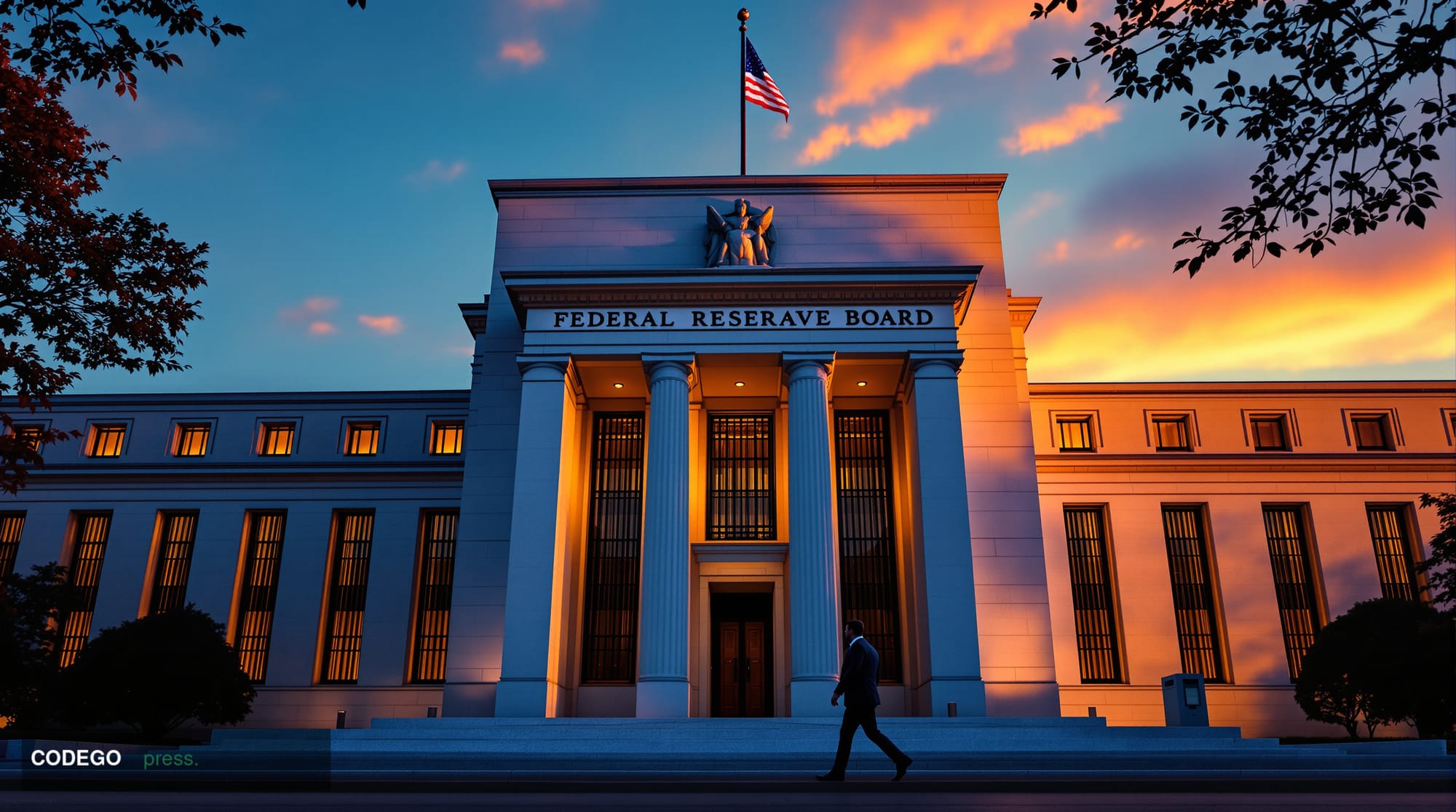
Kevin Warsh's anticipated appointment to lead the Federal Reserve has emerged as a defining moment for American monetary policy, with financial markets and regulatory observers raising significant questions about the future direction of the nation's central banking system. As Warsh prepares to assume the chairmanship, concerns about potential challenges to Federal Reserve independence are casting uncertainty over both traditional financial markets and the evolving cryptocurrency landscape.
The scrutiny surrounding Warsh's nomination reflects broader tensions within the financial system about the appropriate balance between political oversight and central bank autonomy. Federal Reserve independence has long been considered a cornerstone of effective monetary policy, allowing the institution to make decisions based on economic data rather than political pressures. Warsh's approach to this delicate balance will likely influence everything from interest rate decisions to the regulatory framework governing digital assets.
Market stability concerns have become particularly acute as investors attempt to gauge how Warsh's leadership might alter the Fed's traditional policy-making approach. The central bank's role in maintaining financial stability has expanded significantly since the 2008 financial crisis, encompassing everything from emergency lending facilities to stress testing of major financial institutions. Any perceived shift in the Fed's commitment to independence could trigger volatility across asset classes, as markets recalibrate expectations for future monetary policy decisions.
The cryptocurrency sector faces particular uncertainty under Warsh's potential leadership, as digital asset regulation remains one of the most contentious areas of financial oversight. The Federal Reserve's stance on central bank digital currencies, stablecoin regulation, and the broader integration of cryptocurrencies into the traditional banking system could undergo significant changes depending on Warsh's regulatory philosophy. Financial institutions that have invested heavily in cryptocurrency infrastructure are closely monitoring these developments, recognizing that shifts in Fed policy could fundamentally alter their business models.
Political and financial scrutiny of Warsh's nomination reflects the heightened importance of Federal Reserve leadership in an era of persistent inflation concerns and evolving monetary challenges. The appointment process itself has become a litmus test for broader questions about the appropriate relationship between elected officials and independent regulatory agencies. Critics worry that any erosion of Fed independence could undermine the institution's credibility and effectiveness, particularly during periods of economic stress when decisive, apolitical action is most crucial.
The timing of Warsh's potential appointment adds another layer of complexity to an already challenging economic environment. With ongoing debates about inflation targets, employment mandates, and the appropriate pace of monetary tightening or easing, the Federal Reserve chair's role has never carried more weight in shaping both domestic and global economic outcomes. International central banks and financial institutions are also watching closely, as changes in Fed policy inevitably ripple through global markets and influence monetary policy decisions worldwide.
As the confirmation process unfolds, the financial community will be parsing every statement and policy signal from Warsh for clues about his approach to central banking. The crypto industry, in particular, awaits clarity on whether his leadership will bring greater regulatory certainty or introduce new compliance challenges. Traditional banking institutions are equally concerned about potential shifts in supervisory approaches and the evolution of the Fed's role in overseeing systemic risk.
The ultimate test of Warsh's leadership will be his ability to maintain the Federal Reserve's credibility while navigating an increasingly complex political and economic landscape. Success will require balancing legitimate oversight concerns with the independence necessary for effective monetary policy implementation. As markets continue to evolve and new financial technologies emerge, the Fed chair's role in preserving both stability and innovation will determine not just the success of Warsh's tenure, but the future trajectory of American financial leadership on the global stage.
Written by the editorial team — independent journalism powered by Codego Press.