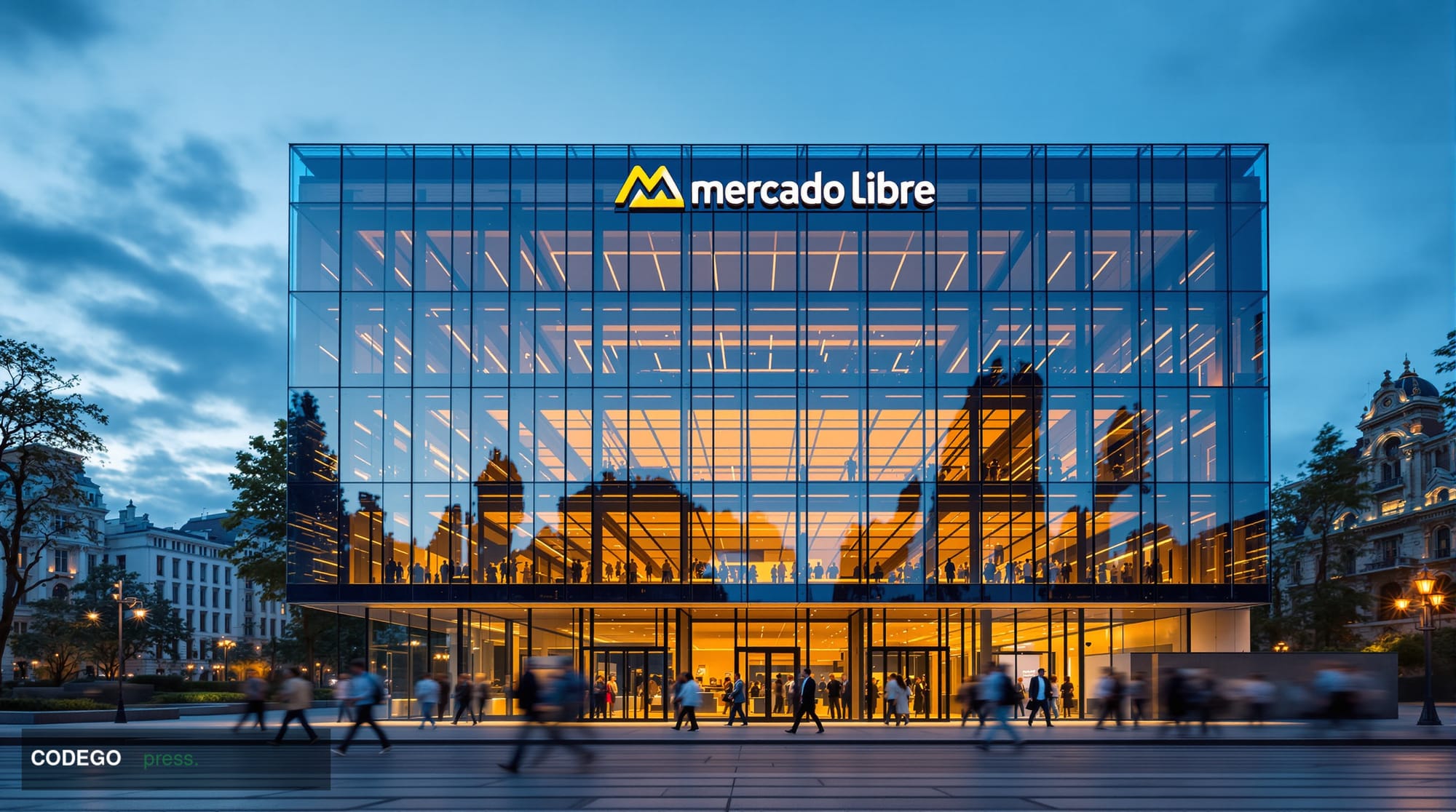
The Latin American digital economy continues its remarkable ascent, with Mercado Libre delivering a striking demonstration of how strategic patience can yield extraordinary results. The Buenos Aires-based eCommerce and financial technology giant reported a 49% year-over-year surge in net revenue and financial income for the first quarter, underscoring the effectiveness of its aggressive investment strategy across key growth verticals.
The impressive revenue acceleration stems from Mercado Libre's calculated decision to prioritize long-term market expansion over immediate profitability. The company's strategic investments span four critical areas: free shipping infrastructure, the Mercado Pago credit card initiative, first-party product selection expansion, and cross-border trade facilitation. This multi-pronged approach reflects a sophisticated understanding of Latin America's evolving digital commerce landscape and the infrastructure investments required to capture sustainable market share.
The 49% revenue growth figure represents more than mere top-line expansion—it signals Mercado Libre's successful navigation of Latin America's complex regulatory and economic environment. The region's diverse currencies, varying banking penetration rates, and fragmented logistics networks have historically challenged international players. However, Mercado Libre's localized approach, combining deep market knowledge with substantial capital deployment, appears to be yielding the anticipated returns.
The free shipping investment deserves particular attention, as it addresses one of Latin America's most persistent eCommerce barriers. Traditional logistics costs and delivery timeframes have long hindered online adoption across the region's vast geography. By absorbing these costs, Mercado Libre is effectively subsidizing customer acquisition and retention, betting that increased transaction volumes will ultimately justify the near-term margin compression. This strategy mirrors successful approaches employed by Amazon in developed markets, though adapted for Latin America's unique challenges.
The Mercado Pago credit card expansion represents an even more ambitious play, positioning the company to capture both commerce and financial services revenue streams. Latin America's traditionally underbanked population presents a massive opportunity for digital financial products, particularly as smartphone penetration accelerates and digital payment acceptance grows. The credit card offering serves dual purposes: enhancing customer stickiness within the Mercado Libre ecosystem while generating interchange and lending revenues that can fund further platform investments.
Cross-border trade facilitation addresses another structural opportunity within Latin American commerce. Regional trade barriers, currency volatility, and logistical complexities have historically limited intra-regional commerce despite obvious economic complementarities. Mercado Libre's investments in cross-border infrastructure could unlock substantial new transaction volumes while positioning the company as the dominant platform for Latin American trade digitization.
The first-party selection expansion indicates Mercado Libre's evolution beyond pure marketplace operations toward a more integrated retail model. This vertical integration strategy, while capital-intensive, offers greater control over inventory, pricing, and customer experience. For Latin American consumers, who often prioritize product authenticity and reliable delivery, first-party offerings can provide crucial trust and reliability advantages over third-party marketplace sellers.
However, this growth-at-all-costs approach carries inherent risks. Latin America's economic volatility, currency fluctuations, and political uncertainties could rapidly alter the investment landscape. Additionally, increased competition from global players like Amazon and regional competitors could compress margins and reduce the payback period for current investments. The company's ability to maintain investor confidence while sacrificing near-term profitability will prove crucial for sustaining this expansion strategy.
The 49% revenue growth also highlights the broader transformation of Latin American digital commerce. As regional governments invest in digital infrastructure and regulatory frameworks evolve to support online transactions, companies like Mercado Libre are positioned to benefit disproportionately from the resulting market expansion. The COVID-19 pandemic accelerated digital adoption across the region, creating a larger addressable market for Mercado Libre's investments to capture.
What this means for the broader fintech and eCommerce sectors is clear: Latin America remains one of the world's most attractive growth markets for digital platforms willing to make substantial upfront investments. Mercado Libre's results validate the thesis that patient capital deployment, combined with deep local market understanding, can generate exceptional returns in emerging markets. For investors and competitors alike, the company's performance establishes a new benchmark for Latin American digital platform success, while demonstrating that sustainable competitive advantages in emerging markets require more than technology—they demand comprehensive ecosystem development and unwavering long-term commitment.
Written by the editorial team — independent journalism powered by Codego Press.