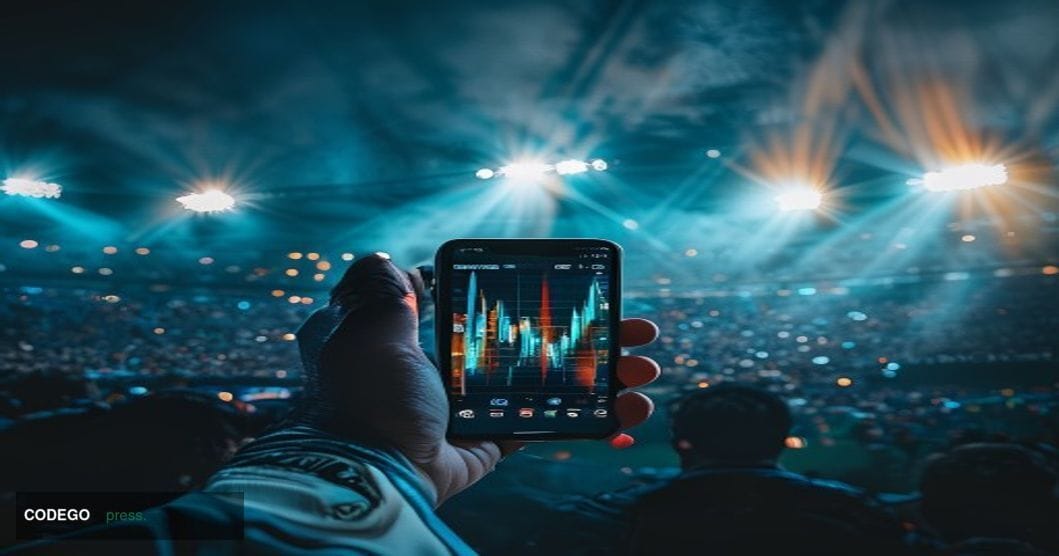
Lionel Messi's record-breaking campaign at the 2026 FIFA World Cup has ignited a fresh wave of speculative activity in the fan token market, drawing the attention of retail traders, crypto enthusiasts, and financial analysts who see the tournament as both a case study in sentiment-driven asset pricing and a cautionary tale about the limits of sports-linked digital assets.
Fan tokens — blockchain-based digital assets that grant holders varying degrees of engagement rights with sports clubs and national teams — have long occupied an uneasy space between utility product and speculative instrument. Their valuations have historically proven sensitive to sporting outcomes, media cycles, and the gravitational pull of high-profile athletes. Messi, whose global cultural footprint transcends even the most lucrative of sports brands, represents perhaps the single most powerful variable in that equation. When he performs at the highest level on the world's biggest stage, markets react — and in the summer of 2026, they are reacting loudly.
Socios.com, the dominant platform for fan token issuance and trading, has built its business model around precisely this kind of moment: a superstar athlete, a global audience, and the promise that digital ownership can deepen the fan experience. Yet the mechanics of what is now unfolding in fan token markets reveal as much about speculative psychology as they do about the maturation of sports-linked crypto products. Trading frenzies tied to World Cup performances are not new, but the scale and speed at which sentiment converts into order flow has intensified as the retail crypto market has grown more sophisticated — and more hair-trigger — in recent years.
The volatility inherent in fan tokens is not incidental; it is structural. Unlike equities, which are anchored by earnings, revenue projections, and discounted cash flow models, fan tokens derive the bulk of their pricing power from narrative momentum. A Messi hat-trick, a last-minute winner, or a semi-final berth can send related tokens surging by double-digit percentages within hours. The reverse is equally true: an early exit or an injury scare can eviscerate value just as rapidly. This asymmetry makes fan tokens a genuinely distinct asset class — one that demands a risk framework calibrated to event-driven volatility rather than traditional financial metrics.
For investors already active in the broader cryptocurrency market, fan tokens do present a credible, if narrow, diversification opportunity. Their price movements are not perfectly correlated with Bitcoin or the wider altcoin market, meaning that a portfolio allocation — carefully sized — can provide exposure to a different set of catalysts. The World Cup cycle, in particular, generates a predictable arc of sentiment: anticipation building through group stages, intensity peaking at knockout rounds, and resolution at the final. Traders who understand how to position across that arc, rather than simply reacting to it, can extract value. The keyword, however, is discipline.
What Messi's 2026 run has also exposed is the degree to which fan token markets remain structurally immature relative to the size of the cultural events they seek to financialize. Liquidity can thin rapidly away from peak trading windows, bid-ask spreads can widen dramatically during volatile moments, and the absence of robust market-making infrastructure means that even relatively modest order flow can move prices in ways that would be considered anomalous in developed financial markets. For institutional participants, these characteristics remain significant barriers to meaningful participation — leaving the trading frenzy largely in the hands of retail investors, who are the most exposed to sharp reversals.
Regulators in both the European Union and the United Kingdom have signaled growing interest in how fan tokens are marketed and categorized. Under the Markets in Crypto-Assets Regulation (MiCA), which came into full effect across the European Union, the classification of fan tokens — whether they constitute utility tokens, financial instruments, or a hybrid category — remains a live question with significant compliance implications for issuers and trading platforms alike. That regulatory uncertainty is, paradoxically, one more source of price risk that participants in the current frenzy may be underweighting.
What This Means for Investors
Messi's record-breaking 2026 World Cup campaign is a reminder that sports-linked digital assets can generate extraordinary short-term trading energy — but that energy is inherently event-dependent, emotionally charged, and structurally volatile. Fan tokens offer genuine diversification potential within a digital asset portfolio, but the risks are commensurately elevated: illiquidity, sentiment reversals, regulatory uncertainty, and the simple reality that athletic performance is, by its nature, unpredictable. Investors drawn into the current trading frenzy would do well to treat fan tokens as a high-risk, event-driven position — not a long-term store of value — and to size their exposure accordingly. The spectacle of Messi on the world stage is electrifying. The financial instruments that follow in his wake demand considerably cooler heads.
Written by the editorial team — independent journalism powered by Codego Press.