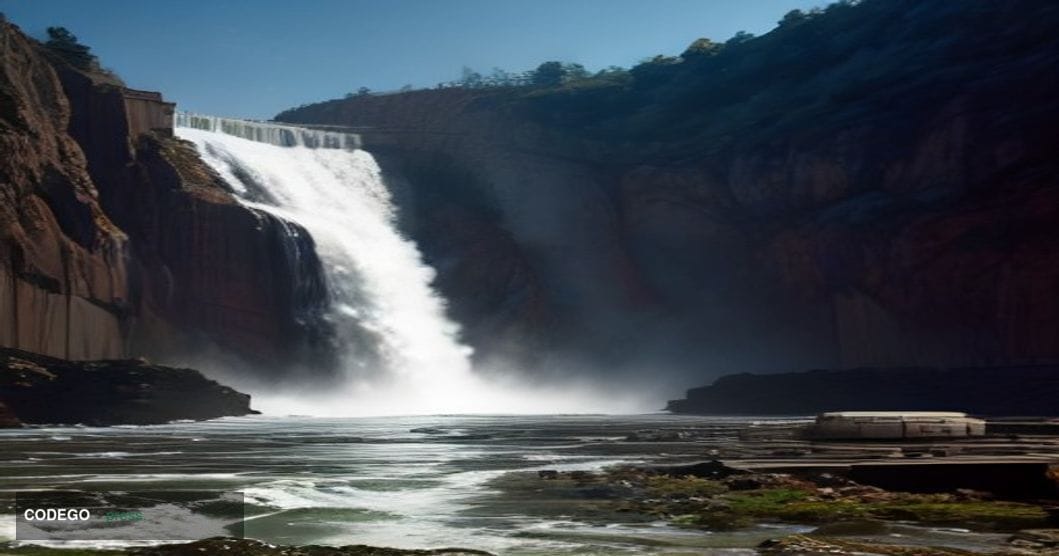
Mexican federal authorities have seized 300 cryptocurrency mining machines that were illegally connected directly to a hydroelectric dam, in one of the most brazen cases of energy theft tied to digital asset production yet uncovered in Latin America. The operation has triggered a full forensic financial investigation, with accountants now working to establish who purchased the hardware — and whether the entire setup served as a vehicle for laundering illicit funds.
The case stands at the intersection of two of the region's most pressing regulatory challenges: unchecked cryptocurrency mining operations that exploit public infrastructure, and the persistent use of opaque financial flows to disguise the origins of criminal proceeds. That both concerns appear together in a single seizure underscores how rapidly the threat landscape has evolved for Mexican law enforcement and financial regulators alike.
Energy Theft on an Industrial Scale
Connecting 300 mining rigs directly to a hydroelectric dam is not a casual act of opportunism. It requires physical access to restricted infrastructure, technical knowledge of high-voltage electrical systems, and the logistical capacity to install, operate, and conceal racks of power-hungry computing hardware in proximity to a major civil engineering structure. The scale of the operation suggests a degree of organizational sophistication that goes well beyond a small group of hobbyist miners looking to shave electricity costs.
Cryptocurrency mining — particularly for proof-of-work assets such as Bitcoin — is extraordinarily energy-intensive. Industrial mining farms routinely consume megawatts of continuous power, making electricity cost the single largest variable in any mining operation's economics. By tapping directly into a hydroelectric dam's output, the operators of this network would have effectively eliminated their power bill entirely, dramatically improving the profitability of whatever coins they were producing — while passing the cost onto the public utility and, ultimately, ratepayers.
The Money Laundering Dimension
The most consequential thread of this investigation may not be the energy theft at all. Forensic accountants have been deployed specifically to trace who paid for the 300 seized mining rigs, and authorities have explicitly declined to rule out money laundering as a related offence. That framing is legally and financially significant: it shifts the investigation from a straightforward case of infrastructure tampering into the realm of organised financial crime.
Cryptocurrency mining has long been identified by bodies such as the Financial Action Task Force and the Egmont Group as a potential mechanism for converting illicit cash into ostensibly legitimate digital assets. The logic is relatively straightforward: a criminal enterprise purchases mining hardware using cash proceeds from drug trafficking, extortion, or other predicate offences, operates a mining farm, and then receives freshly minted cryptocurrency whose on-chain provenance traces only back to the mining wallet — not to any prior criminal transaction. The hardware purchase itself becomes the money-laundering vehicle.
If forensic accountants can demonstrate that the 300 rigs were purchased with funds derived from criminal activity, prosecutors would have grounds to pursue charges that carry significantly heavier penalties than energy theft alone. The financial trail — invoices, wire transfers, shell company structures, cash purchases — becomes as important as the physical evidence of the rigs themselves.
Mexico's Broader Crypto Enforcement Context
Mexico has been navigating an increasingly complex relationship with cryptocurrency regulation. The country's Ley para Regular las Instituciones de Tecnología Financiera, commonly known as the Fintech Law, established a framework for regulated virtual asset service providers, but enforcement against unregulated and illegal operations has remained uneven. High-profile seizures such as this one signal a sharpening of institutional focus, particularly as Banco de México and federal financial intelligence units face pressure to demonstrate credibility in anti-money-laundering compliance before international peer review bodies.
The hydroelectric dam context also raises questions about insider access. Hydroelectric infrastructure in Mexico falls under federal jurisdiction and is managed by the state utility Comisión Federal de Electricidad. An unauthorised connection of this magnitude would almost certainly have required either a breach of physical security controls or, more troublingly, the complicity of personnel with legitimate access to the facility. Investigators are unlikely to confine their inquiries to the mining operators alone.
What This Means for the Region
This seizure is unlikely to be an isolated incident. Latin America has emerged as a significant geography for cryptocurrency mining, driven by a combination of abundant hydroelectric and geothermal energy resources, large informal economies, and regulatory environments that have historically lagged behind the pace of technological adoption. Where legitimate miners see opportunity in cheap renewables, criminal networks apparently see the same arbitrage — with the added benefit that illicit operations carry none of the compliance overhead of licensed facilities.
For regulators across the region, the Mexican case is a template worth studying. The convergence of energy crime, hardware financing, and potential money laundering in a single investigation demands a cross-agency response that combines utility security, financial intelligence, and criminal prosecution. As proof-of-work mining continues to migrate toward jurisdictions with cheap power and lighter regulatory touch, the hydroelectric dam in Mexico may prove to be an early and vivid illustration of what unchecked infrastructure vulnerability looks like in the digital asset era.
Written by the editorial team — independent journalism powered by Codego Press.