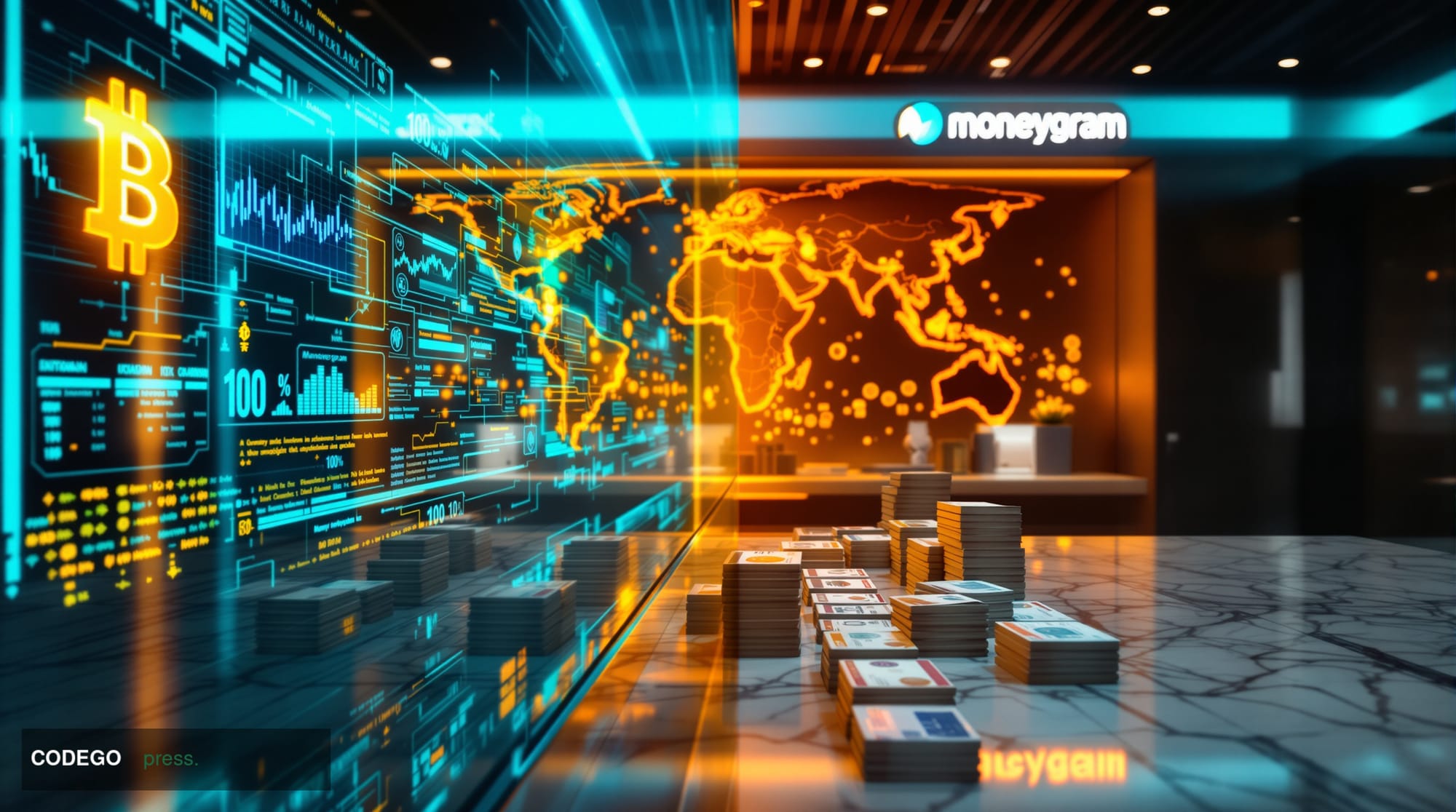
A groundbreaking partnership between digital asset exchange Kraken and global money transfer giant MoneyGram has launched Bitcoin-to-cash withdrawal services across 100 countries, marking a significant milestone in cryptocurrency adoption and financial accessibility. This collaboration represents the most extensive crypto-to-cash bridge deployment to date, potentially reshaping how millions of users interact with digital assets worldwide.
The integration allows Kraken users to convert their Bitcoin holdings directly into physical cash through MoneyGram's extensive retail network, which spans over 350,000 locations globally. This service addresses a persistent challenge in cryptocurrency adoption: the difficulty of converting digital assets into immediately usable fiat currency without lengthy bank transfers or complex verification processes.
MoneyGram's involvement signals a major shift in traditional financial services' approach to cryptocurrency integration. The company, which processes billions of dollars in cross-border transfers annually, brings established regulatory compliance frameworks and deep expertise in international money movement to the partnership. This infrastructure provides crypto users with access to a mature, regulated cash-out mechanism that operates within existing financial oversight structures.
The timing of this launch coincides with growing institutional acceptance of cryptocurrency as a legitimate asset class. Major financial institutions have increasingly embraced digital assets, but the gap between crypto holdings and practical spending options has remained a barrier to broader adoption. By leveraging MoneyGram's physical presence in underbanked regions, the service addresses financial inclusion challenges that traditional banking infrastructure has struggled to solve.
For Kraken, the partnership expands the utility of its platform beyond trading and custody services. The exchange has positioned itself as a bridge between traditional finance and cryptocurrency markets, and this collaboration strengthens its value proposition for users who need flexible access to their digital assets. The service could prove particularly valuable in emerging markets where crypto adoption has outpaced traditional banking penetration.
The potential disruption to traditional remittance services represents perhaps the most significant long-term implication of this partnership. Cross-border money transfers have historically involved multiple intermediaries, lengthy settlement times, and substantial fees. By enabling users to send Bitcoin internationally and withdraw cash locally through MoneyGram's network, the service could offer faster, potentially more cost-effective alternatives to conventional remittance channels.
Market Implications and Competitive Response
This development places pressure on other cryptocurrency exchanges and traditional money service businesses to accelerate their own integration efforts. The first-mover advantage in crypto-to-cash services could prove decisive in capturing market share among users who value immediate liquidity access. Competitors will likely need to develop similar partnerships or risk losing users to platforms offering more comprehensive cash-out options.
The regulatory implications of this service launch extend across multiple jurisdictions, as both companies must navigate complex compliance requirements in each of the 100 countries where the service operates. Success in maintaining regulatory compliance while scaling operations could establish a template for future crypto-traditional finance partnerships.
The partnership fundamentally challenges the traditional separation between digital and physical financial infrastructure. By creating seamless interoperability between cryptocurrency holdings and cash access points, MoneyGram and Kraken are establishing new standards for how financial services should integrate across technological platforms. This integration suggests that the future of finance will increasingly blur the boundaries between digital assets and traditional monetary systems, creating more flexible and accessible financial tools for global users.
Written by the editorial team — independent journalism powered by Codego Press.