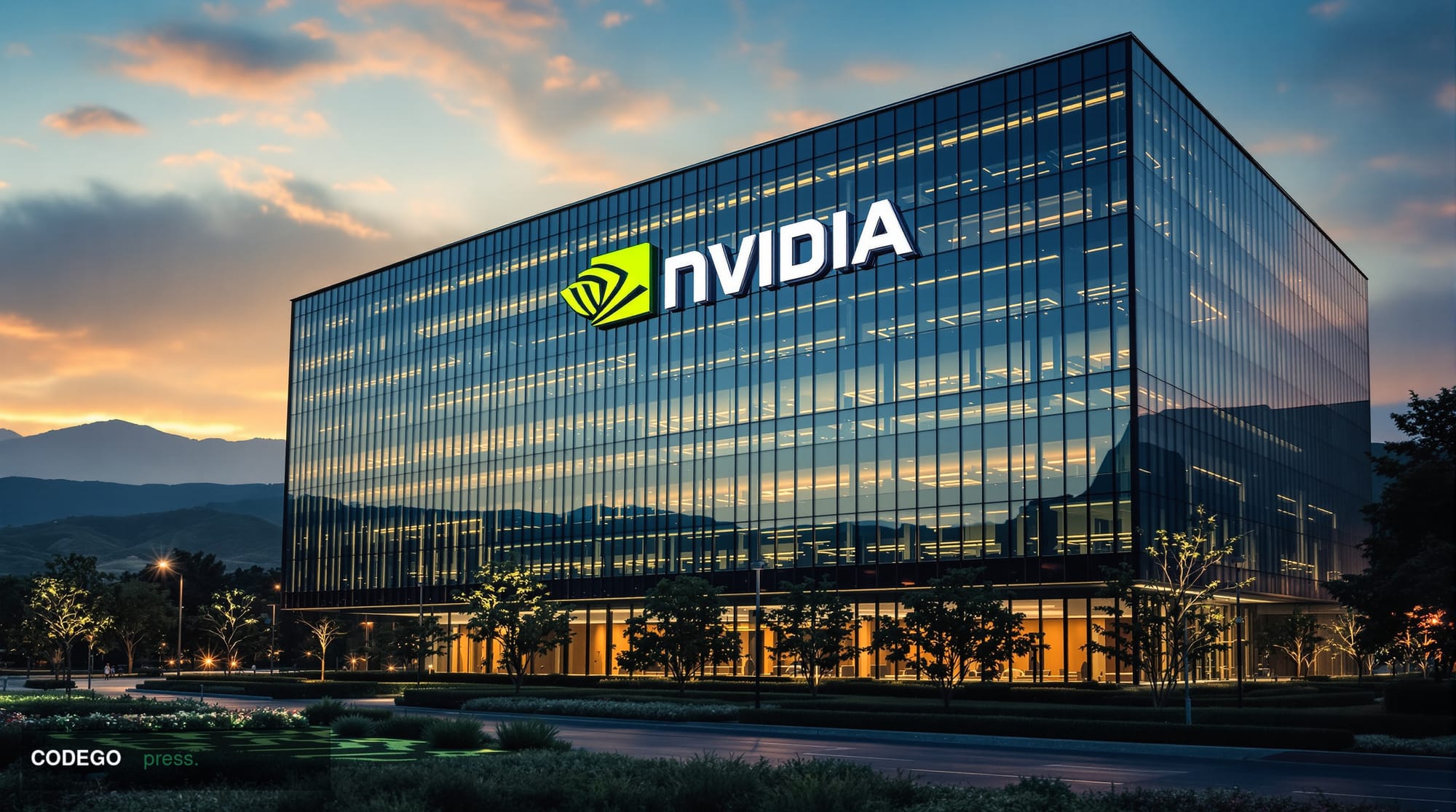
The global artificial intelligence landscape stands on the precipice of a fundamental realignment as Nvidia unveils plans for a staggering $150 billion annual investment in Taiwan, positioning the island nation as the epicenter of the next phase of AI infrastructure development. This commitment, representing one of the largest technology investments in modern history, signals far more than a corporate expansion strategy—it represents a calculated bet on the future geography of technological supremacy.
The sheer magnitude of Nvidia's planned investment dwarfs many national technology budgets and underscores the company's recognition that AI supremacy requires not just algorithmic innovation, but massive physical infrastructure investment. At $150 billion annually, this commitment exceeds the gross domestic product of numerous developed nations and positions Taiwan as arguably the most critical node in the global AI supply chain outside of the United States itself.
Taiwan's emergence as Nvidia's chosen destination reflects the island's unique position in the global semiconductor ecosystem. Home to Taiwan Semiconductor Manufacturing Company (TSMC), the world's most advanced chip fabricator, Taiwan already produces the majority of the world's most sophisticated processors. Nvidia's investment appears designed to deepen this relationship, creating an integrated AI manufacturing and development hub that could produce everything from next-generation graphics processing units to the specialized chips required for large language models and machine learning applications.
The geopolitical implications of this investment cannot be understated. As tensions between the United States and China continue to shape global technology policy, Nvidia's commitment to Taiwan represents a strategic positioning that aligns with broader Western efforts to maintain technological advantages in critical sectors. The investment effectively creates a massive economic incentive for maintaining Taiwan's current political and economic status, as any disruption to the island's stability would jeopardize one of the most significant AI infrastructure projects in history.
From a financial markets perspective, the announcement validates the extraordinary valuations that AI companies have commanded over the past two years. Nvidia's willingness to commit $150 billion annually suggests the company's leadership believes current AI market growth trajectories are not only sustainable but likely to accelerate. This level of investment implies expectations for AI market expansion that far exceed even the most optimistic current projections from technology analysts.
The investment also highlights the capital-intensive nature of maintaining leadership in the AI sector. Unlike software development, which can scale rapidly with relatively modest infrastructure requirements, AI leadership increasingly requires massive physical investments in chip manufacturing, data centers, and specialized research facilities. Nvidia's Taiwan commitment suggests the company views this physical infrastructure as a competitive moat that will be difficult for rivals to replicate.
For Taiwan's economy, the Nvidia investment represents a transformation from primarily serving as a contract manufacturer for foreign technology companies to becoming a full partner in AI innovation. The scale of investment suggests Nvidia plans to establish not just manufacturing facilities but comprehensive research and development operations, potentially making Taiwan a global center for AI advancement rather than simply a production hub.
The timing of this announcement also reflects broader shifts in global supply chain strategy following years of disruption from the COVID-19 pandemic and ongoing geopolitical tensions. Rather than diversifying supply chains across multiple regions, Nvidia appears to be doubling down on Taiwan as a concentrated center of excellence, betting that the benefits of clustering advanced manufacturing and research capabilities outweigh the risks of geographic concentration.
This investment strategy positions Nvidia to capture value across the entire AI stack, from fundamental chip design through specialized AI accelerators to complete system integration. By establishing comprehensive capabilities in Taiwan, Nvidia could potentially reduce its dependence on other suppliers while accelerating the development cycles for next-generation AI technologies.
The broader implications extend beyond Nvidia and Taiwan to the global competitive landscape for AI development. Other major technology companies will likely face pressure to make similar scale investments to remain competitive, potentially triggering a new phase of international competition for AI infrastructure development. The $150 billion commitment sets a new benchmark for serious AI ambitions, one that may prove challenging for smaller companies or even some national governments to match.
Written by the editorial team — independent journalism powered by Codego Press.