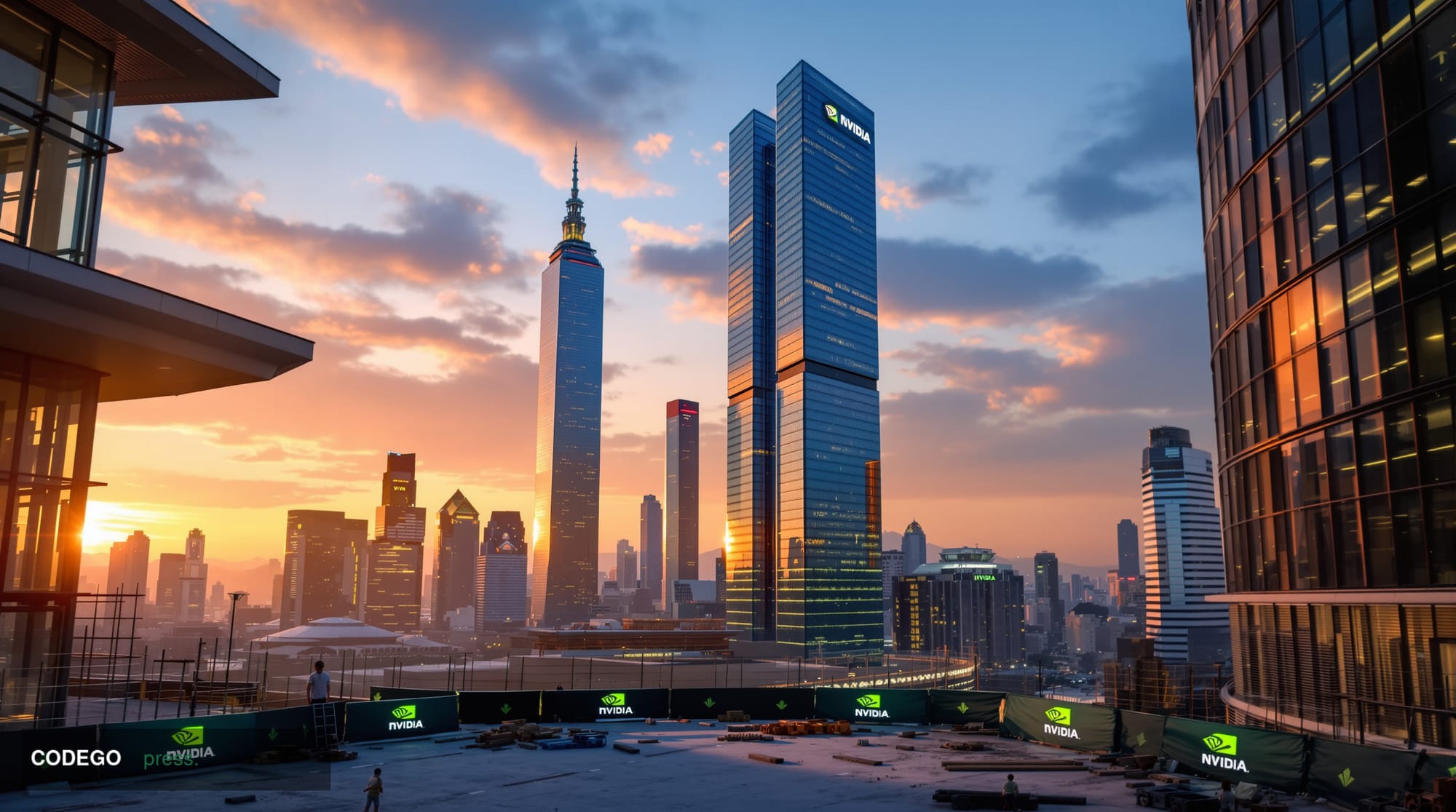
Nvidia Chief Executive Officer's announcement of a major headquarters project in Taiwan, set to break ground in 2026, represents a calculated bet on the island's central role in global semiconductor manufacturing despite mounting geopolitical uncertainties. The timing and scope of this commitment underscore how deeply intertwined the artificial intelligence chipmaker has become with Taiwan's technological ecosystem, particularly its partnership with Taiwan Semiconductor Manufacturing Company (TSMC).
The headquarters project signals Nvidia's confidence in Taiwan as a long-term strategic hub, even as tensions between China and Taiwan continue to create uncertainty for international businesses operating in the region. This substantial infrastructure investment goes beyond symbolic gestures, representing a tangible commitment to deepening operational ties with the world's most advanced semiconductor foundry. TSMC manufactures the overwhelming majority of Nvidia's cutting-edge graphics processing units and AI accelerators, making geographic proximity increasingly valuable as chip designs grow more complex and time-to-market pressures intensify.
For Taiwan's technology sector, Nvidia's headquarters project promises significant economic benefits through job creation and knowledge transfer. The local tech employment boost comes at a critical time when Taiwan seeks to maintain its competitive edge in high-value semiconductor design and manufacturing. The presence of a major American technology company's regional headquarters also enhances Taiwan's position as an innovation center, potentially attracting additional foreign investment and talent to the island's already robust technology ecosystem.
Strategic Alignment Amid Supply Chain Complexity
The 2026 construction timeline reflects careful coordination with TSMC's own expansion plans and capacity scaling. As artificial intelligence workloads drive unprecedented demand for specialized semiconductors, Nvidia's decision to establish a significant physical presence in Taiwan facilitates closer collaboration on next-generation chip architectures. This proximity becomes increasingly important as the company pushes the boundaries of semiconductor performance and faces intense competition from rivals like Advanced Micro Devices and emerging players in the AI chip market.
The headquarters project also demonstrates how global technology companies must balance operational efficiency with geopolitical risk management. While Taiwan offers unparalleled semiconductor manufacturing capabilities and a skilled workforce, the island's contested political status creates potential vulnerabilities for companies heavily invested in the region. Nvidia's commitment suggests management believes the strategic benefits of deeper Taiwan integration outweigh these risks, at least for the medium term.
Implications for Regional Tech Dynamics
Beyond immediate operational considerations, Nvidia's Taiwan headquarters project reflects broader shifts in global technology supply chains. As governments worldwide increase scrutiny of semiconductor dependencies and implement industrial policies aimed at domestic chip production, Taiwan's role becomes simultaneously more valuable and more precarious. The island hosts not only TSMC but also a sophisticated ecosystem of chip design companies, packaging specialists, and equipment suppliers that would be difficult to replicate elsewhere.
The project's announcement also comes as various nations, including the United States through the CHIPS Act and European Union through the European Chips Act, invest heavily in developing alternative semiconductor manufacturing capabilities. However, the advanced process nodes required for Nvidia's most sophisticated products remain concentrated in Taiwan, making the island's continued stability and accessibility crucial for the company's competitive position.
Nvidia's Taiwan headquarters project ultimately represents a sophisticated calculation about the future of global semiconductor manufacturing and artificial intelligence development. While geopolitical risks remain significant, the company appears to have concluded that the benefits of deeper integration with Taiwan's technology ecosystem justify substantial long-term investment. The success of this strategy will depend not only on continued technological collaboration with TSMC but also on the broader geopolitical stability of the Taiwan Strait region. For investors and industry observers, the project serves as a bellwether for how major technology companies view the risk-reward calculus of maintaining critical operations in geopolitically sensitive regions.
Written by the editorial team — independent journalism powered by Codego Press.