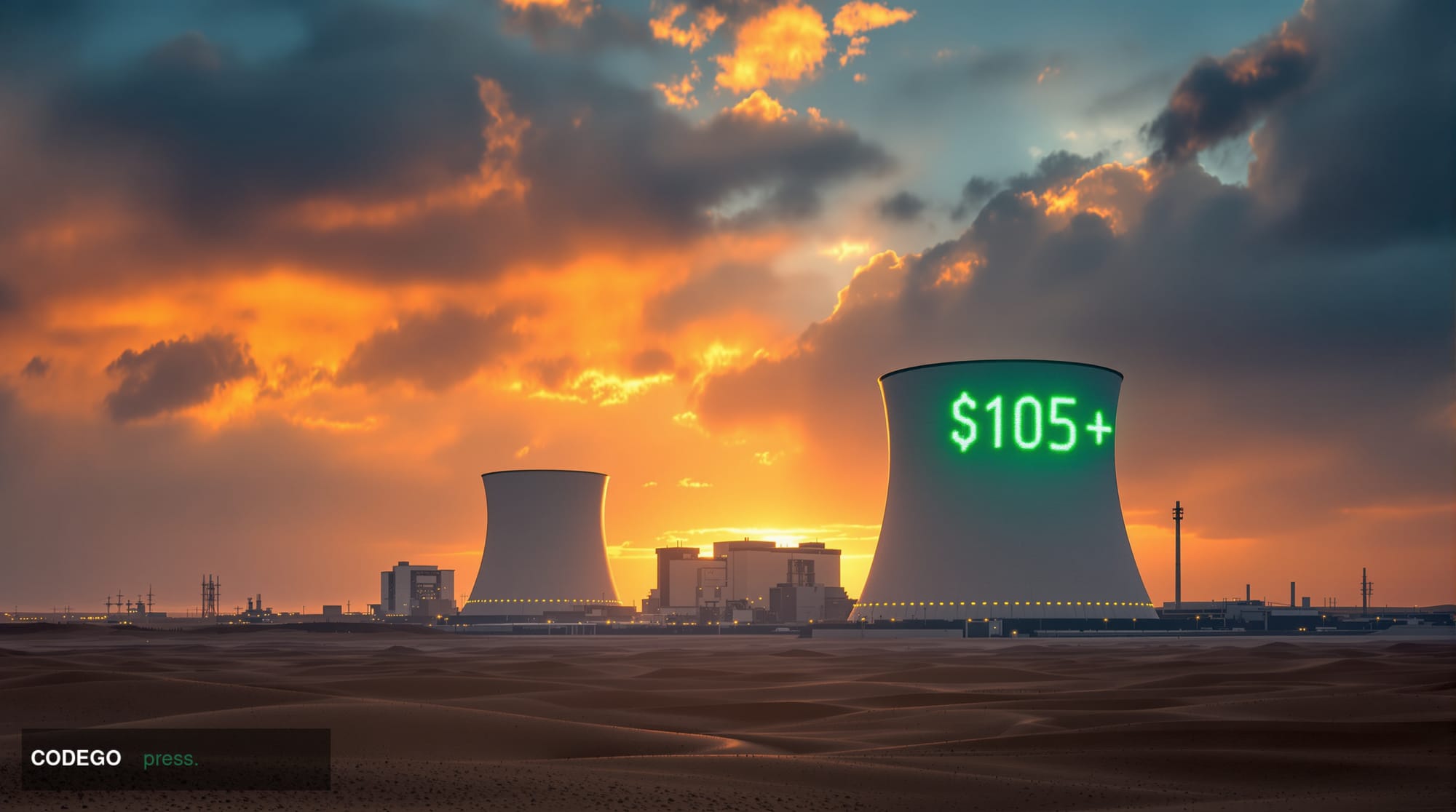
Energy markets erupted into chaos as oil prices surged past $105 per barrel following explosive allegations of a drone attack on the United Arab Emirates' nuclear facilities, with Iran firmly denying US accusations while broader cryptocurrency policy implications emerge from the escalating Middle East crisis.
The dramatic price spike represents more than just another geopolitical flash point in global energy markets. As tensions escalate between Washington and Tehran, the incident has cast a harsh spotlight on Iran's expanding cryptocurrency activities, potentially reshaping international approaches to both nuclear security and digital asset regulation. The convergence of energy security, nuclear safety, and cryptocurrency policy creates a complex web of challenges for policymakers worldwide.
Iran's categorical rejection of US allegations comes at a particularly sensitive moment for regional stability. The Islamic Republic has faced mounting international pressure over its nuclear program while simultaneously developing sophisticated cryptocurrency mining operations to circumvent traditional financial sanctions. This dual challenge has created unprecedented complexity for international sanctions enforcement, as digital assets provide alternative pathways for economic activity that traditional monitoring systems struggle to track effectively.
The oil price surge above $105 per barrel reflects market fears that any escalation could disrupt critical energy infrastructure across the Persian Gulf region. The UAE's nuclear facilities represent a cornerstone of the country's long-term energy strategy, designed to reduce dependence on hydrocarbon exports while meeting growing domestic electricity demand. Any perceived threat to these installations sends immediate ripple effects through global energy markets, where traders price in worst-case scenarios involving supply disruptions.
Financial technology sectors are watching these developments with particular concern, as geopolitical tensions increasingly intersect with cryptocurrency regulation. Iran has emerged as one of the world's largest bitcoin mining operations, leveraging subsidized electricity to power vast mining facilities while generating revenue streams that operate outside traditional banking systems. This development has prompted intense scrutiny from international regulators seeking to prevent sanctions evasion through digital assets.
The broader implications extend beyond immediate market reactions to fundamental questions about cryptocurrency's role in international sanctions regimes. As Iran continues developing digital asset capabilities, traditional enforcement mechanisms face unprecedented challenges. Blockchain transactions, while transparent in their technical implementation, can obscure beneficial ownership and geographic origins in ways that complicate sanctions monitoring. Financial institutions worldwide are grappling with enhanced due diligence requirements designed to prevent inadvertent sanctions violations through cryptocurrency exposure.
Nuclear security concerns add another layer of complexity to this evolving situation. The UAE's Barakah Nuclear Power Plant represents the first operational nuclear facility in the Arab world, making any security threats particularly sensitive for regional stability. International nuclear safety organizations monitor these developments closely, as any disruption to nuclear facilities could have catastrophic consequences extending far beyond immediate geographic boundaries.
What this crisis reveals is the growing interconnectedness between traditional geopolitical conflicts and emerging financial technologies. As nation-states increasingly turn to cryptocurrency mining and digital asset transactions to work around international sanctions, the global financial system faces new vulnerabilities that existing regulatory frameworks struggle to address. The current tensions between Iran and the UAE, filtered through US foreign policy objectives, demonstrate how quickly energy security, nuclear safety, and cryptocurrency regulation can converge into complex policy challenges requiring coordinated international responses. Market participants across energy and financial sectors will be watching closely for any escalation that could further disrupt both traditional commodity markets and emerging digital asset ecosystems.
Written by the editorial team — independent journalism powered by Codego Press.