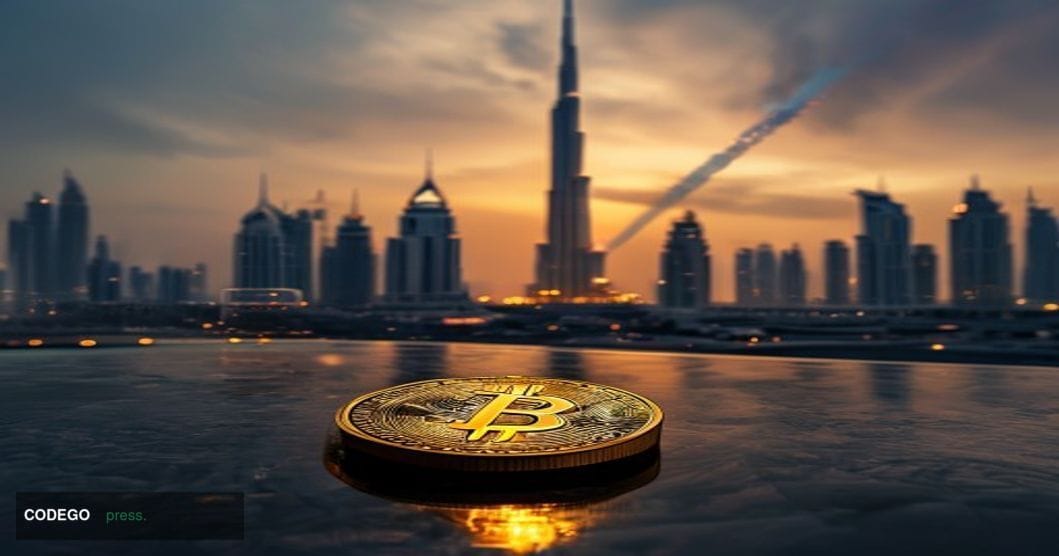
A missile interception over the United Arab Emirates sent shockwaves through global markets in the early hours of July 12, 2026, as Iranian projectiles were intercepted by UAE defense systems — triggering an immediate surge in crude oil prices above $105 a barrel and sending Bitcoin into a volatile whipsaw that reignited one of the most contested debates in modern finance: whether the world's largest cryptocurrency can genuinely function as a geopolitical hedge.
The incident marks one of the most direct escalations between Iran and Gulf state infrastructure in recent memory. The UAE, a critical node in global energy logistics and a regional financial hub, found itself at the center of a crisis that sent traders scrambling. Brent crude's move beyond the $105 threshold reflects the acute sensitivity of oil markets to any disruption — real or perceived — in the Persian Gulf corridor, through which a significant portion of the world's daily petroleum supply flows. That psychological and logistical significance cannot be overstated: the Strait of Hormuz, closely flanked by Iranian territorial waters, remains the single most consequential chokepoint in global energy infrastructure.
For energy markets, the reaction was entirely predictable. Supply anxiety is the oldest driver in the oil trading playbook, and any military action in the Gulf — even one that is successfully neutralized — instantly prices in the risk of escalation, retaliatory strikes, and potential disruption to tanker routes. The move above $105 represents not merely a number but a signal of how quickly geopolitical flashpoints can unwind months of supply-demand equilibrium calculations. Inflationary pressures that central banks across Europe and North America had been cautiously managing now face a renewed exogenous shock, one with the potential to complicate monetary policy trajectories heading into the second half of 2026.
Bitcoin's behavior during the crisis, however, tells a more complicated story. Rather than surging decisively — as proponents of the "digital gold" thesis would predict — Bitcoin whipsawed, reflecting the kind of directionally incoherent volatility that critics have long argued disqualifies it from serving as a reliable store of value during acute geopolitical stress. The narrative of Bitcoin as a safe haven, a neutral, borderless asset uncorrelated to state-level conflict and immune to the traditional risk-off panic that hammers equities, has always rested on a fragile empirical foundation. The events of July 12 provided yet another stress test — and the results were ambiguous at best.
This ambiguity is structurally significant. Institutional investors who have allocated portions of their portfolios to Bitcoin as a hedge against geopolitical tail risk are once again confronted with the asset's dual nature: it can serve as a speculative growth instrument in periods of calm but struggles to assert a consistent safe-haven identity when panic is acute and liquidity demands are immediate. Unlike gold, which rallied predictably on the news, Bitcoin's whipsaw movement suggests the market remains divided on what the asset actually represents under pressure. Some traders may have sold Bitcoin to cover margin calls or rebalance into more traditional safety instruments; others may have bought on the geopolitical narrative — resulting in the volatile, contradictory price action observed.
The UAE's increasingly prominent role as a global crypto and fintech hub adds another layer of complexity to this episode. Dubai and Abu Dhabi have aggressively courted blockchain businesses and digital asset exchanges over the past several years, positioning the Emirates as a regulatory-friendly destination for firms seeking an alternative to stricter Western frameworks. A direct missile attack on UAE soil — even one successfully intercepted — therefore carries implications not only for energy infrastructure but for the emerging digital asset ecosystem that has staked significant operational ground in the region. The resilience of that ecosystem under genuine kinetic threat is now a live question for institutional participants who have set up regional operations there.
What This Means for Markets and the Hedge Debate
The events of July 12 crystallize a tension that financial analysts and crypto advocates have circled for years without resolution. Oil's move above $105 confirms the enduring power of geography and physical infrastructure in determining commodity prices — a domain where Bitcoin has no direct relevance or influence. But Bitcoin's whipsaw also confirms that the cryptocurrency has not yet matured into the geopolitically neutral store of value its most ardent supporters envision. For institutional allocators, the lesson is one of caution: Bitcoin may complement a diversified portfolio, but it cannot yet be counted on to perform directionally in the way gold has during acute crisis moments. Until that behavioral consistency is established across multiple geopolitical shock events, the "digital gold" thesis remains a hypothesis rather than a demonstrated fact. In a region as strategically sensitive as the Persian Gulf, where energy markets and emerging digital infrastructure now intersect, that distinction carries real capital consequences.
Written by the editorial team — independent journalism powered by Codego Press.