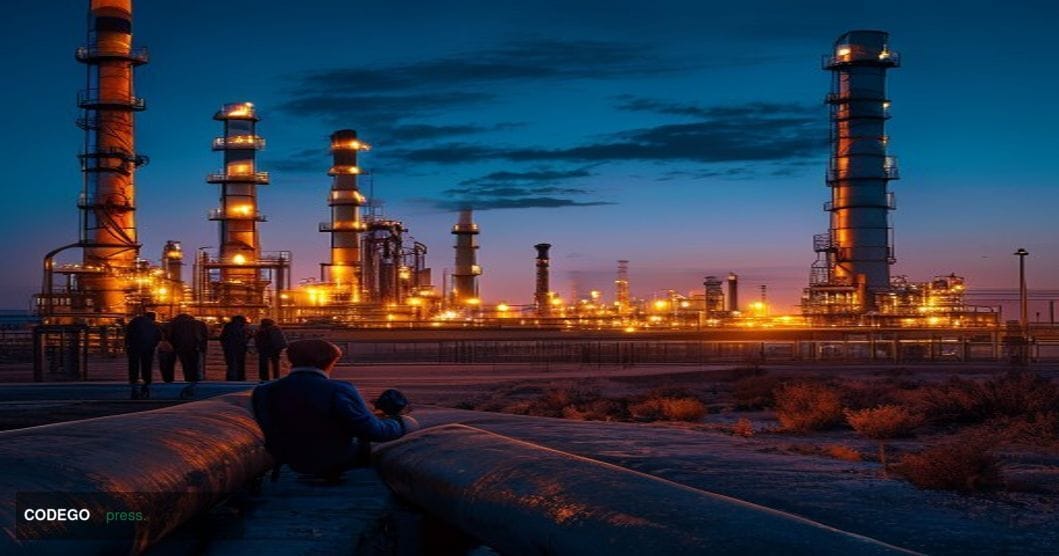
The Organization of the Petroleum Exporting Countries and its allies, the bloc commonly known as OPEC+, has moved to increase its oil production quotas as a period of relative geopolitical calm settles over the Middle East — a decision with potentially significant consequences for global energy markets, inflation trajectories, and the wider financial system. The announcement signals a coordinated pivot away from supply restraint and toward a managed expansion of output at a moment when the risk of oil prices breaching historic highs had become a genuine concern for central bankers and commodity traders alike.
At its core, the decision reflects a classic supply-side response to shifting geopolitical realities. For months, elevated tensions across the Middle East had injected a substantial risk premium into crude benchmarks, keeping prices stubbornly high and threatening to reignite inflationary pressure in economies that had only recently begun to bring consumer price indices under control. The stabilization of the regional security environment has now given OPEC+'s key decision-makers the political and logistical latitude to open the taps — and the bloc appears determined to use that window deliberately.
The mechanics of a quota increase in the OPEC+ framework are rarely straightforward. The alliance, which binds together traditional Gulf exporters with major non-Gulf producers including Russia, has historically operated through a complex system of individual country targets, voluntary additional cuts, and compliance monitoring. Any meaningful increase in collective output requires not only consensus among members whose fiscal break-even oil prices diverge considerably, but also confidence that demand conditions can absorb additional barrels without triggering a price collapse that would undermine the very revenues the bloc depends upon. The timing of this move, pegged to an improving security outlook in the region, suggests that key member states have calculated that the demand environment is sufficiently robust to accommodate expanded supply.
For global financial markets, the implications extend well beyond the energy sector. Oil prices remain one of the most powerful transmission mechanisms between geopolitical risk and consumer inflation. When crude climbs toward or beyond historic highs, it cascades through transportation costs, manufacturing inputs, and utility bills, effectively functioning as a regressive tax on households and complicating the task of monetary authorities who must calibrate interest rate policy against multiple competing pressures. A stabilization — or modest reduction — in oil prices driven by increased OPEC+ supply would offer meaningful relief on that front, particularly for import-dependent economies in Europe and Asia that have faced acute energy cost exposure in recent years.
The geopolitical dimension of this shift deserves careful attention. Middle East stabilization, if it proves durable, represents more than a short-term adjustment in the risk premium embedded in crude futures. It marks a potential reconfiguration of the strategic calculus that has governed energy diplomacy for the better part of a decade. Regional de-escalation opens the possibility of more predictable supply corridors, reduced insurance costs for tanker operators, and a gradual normalization of trade routes that had been subject to elevated risk premiums. These structural improvements, compounding the direct effect of higher production quotas, could prove more consequential for long-run price formation than the immediate output adjustment alone.
It is worth contextualizing this development against the broader commodity cycle. Markets had spent considerable time pricing in the possibility that supply shocks — whether from regional conflict escalation, infrastructure disruption, or unilateral production decisions by key members — could drive oil toward or through its historic price ceiling. The OPEC+ move materially reduces that tail risk. For commodity-linked derivatives, sovereign wealth funds with heavy energy exposure, and the corporate treasury desks of major airlines and logistics companies that rely on fuel hedging strategies, a more stable oil price environment simplifies long-term planning and reduces the cost of hedging programs.
Central banks monitoring secondary inflationary effects will also be watching closely. Institutions including the European Central Bank and the Bank for International Settlements have consistently flagged energy price volatility as one of the most difficult-to-model inputs in their inflation forecasting frameworks. A more predictable oil price path, anchored by a deliberate supply increase from the world's dominant producing coalition, would reduce the uncertainty bands around those forecasts and potentially provide more flexibility in setting the pace of any future monetary easing cycles.
What This Means for Markets and Policy
The OPEC+ quota increase, set against a backdrop of Middle East stabilization, represents one of the more consequential supply-side developments in the energy complex in recent quarters. Its most immediate effect is to reduce the probability of oil prices reaching historic highs — a scenario that would have materially worsened inflationary conditions globally. Over the medium term, the durability of the production increase will depend on member compliance, demand trends in major consuming nations, and whether the geopolitical calm that prompted the decision holds. Traders, policymakers, and corporate risk managers should treat this as a constructive shift in the supply outlook — but one that warrants continued scrutiny as the underlying diplomatic conditions that enabled it remain fluid. The intersection of energy geopolitics and macroeconomic stability has rarely been more consequential, and OPEC+'s latest move places it squarely at the center of that dynamic.
Written by the editorial team — independent journalism powered by Codego Press.