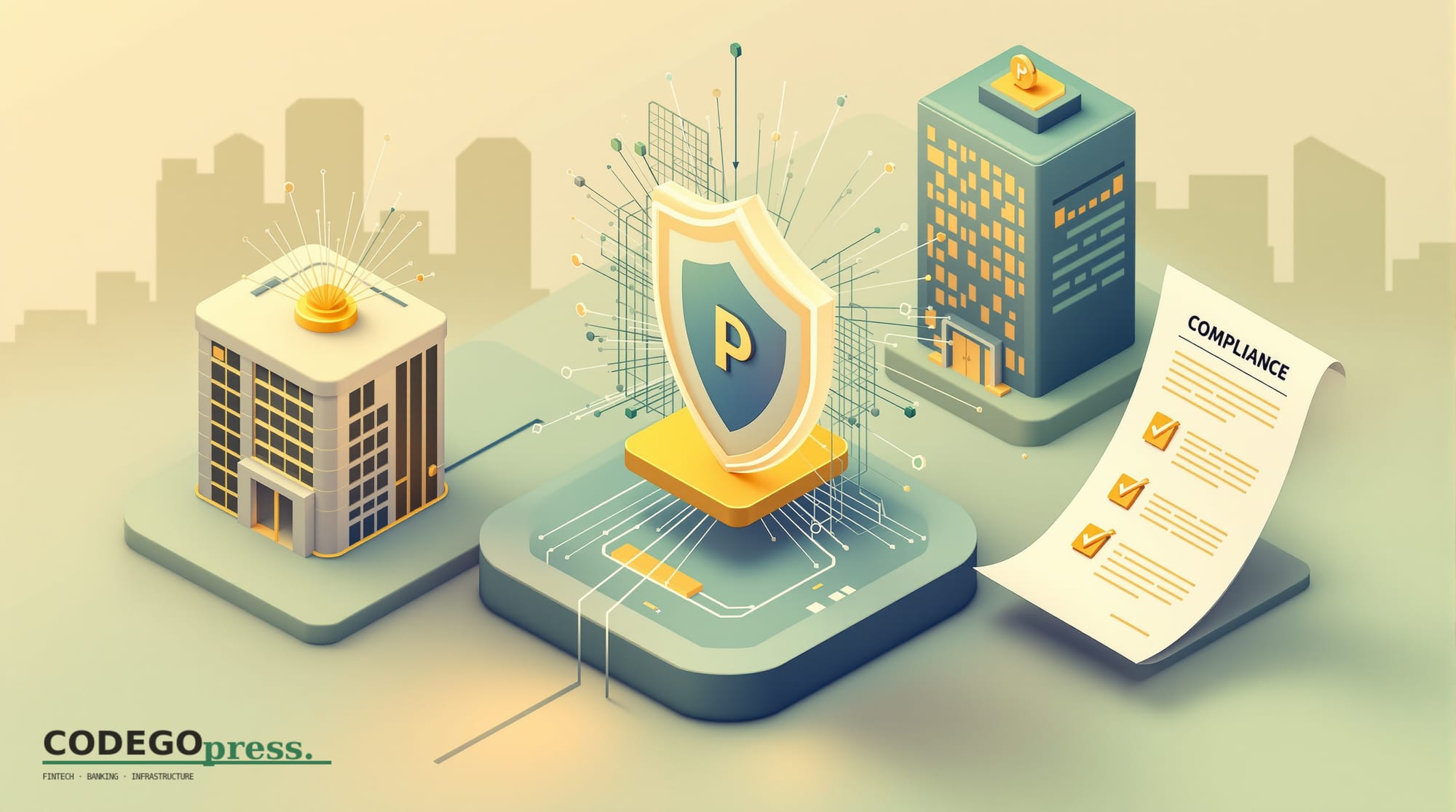
Polygon has taken a calculated step into one of blockchain finance's thorniest paradoxes: it has launched a wallet feature for stablecoin payments that obscures transaction details—sender identity, receiver identity, and amounts—while simultaneously maintaining auditability for regulators. The move targets institutional clients operating on the Ethereum scaling network, and it exposes the fundamental tension between the immutability and transparency that define distributed ledgers and the confidentiality requirements of enterprise finance.
For years, blockchain evangelists have promised institutions a revolution: near-instantaneous settlement, 24/7 availability, and transaction finality without intermediaries. Yet every pilot project, every genuine corporate deployment, collides with the same wall. Banks do not transact in public. They do not broadcast their trading flows, their counterparty relationships, or their transaction values to competitors and regulators indiscriminately. The ledger that powers permissionless money must somehow accommodate the secrecy that powers institutional finance. Polygon's answer is a privacy wrapper: cryptographic scaffolding that hides data on-chain while enabling regulators to decrypt and audit transactions through separate, controlled channels.
The architecture relies on what the company terms "know your transaction" screening—a mechanism that appears to sit alongside traditional know-your-customer (KYC) processes. Where KYC verifies identity upfront, know-your-transaction screening validates the legitimacy of individual transactions post-facto. Transaction details remain opaque in the public ledger, but auditors and compliance officers possess keys to unlock them. This is not anonymity in the strict sense. It is pseudonymity with trapdoors, designed to satisfy both institutional privacy appetites and regulatory oversight mandates. The framework also incorporates auditable files that presumably create immutable records of screening decisions and compliance determinations.
Such an approach contains intuitive appeal. It promises to preserve the efficiency gains of blockchain settlement while respecting the confidentiality norms of traditional finance. Banks using stablecoins on Polygon could theoretically move value at settlement speeds impossible in wire transfer networks, without broadcasting their cash flows to the market. Yet the scheme also invites skepticism from multiple quarters. Privacy advocates worry that "compliance-friendly" privacy is, by definition, compromised privacy—that the existence of regulatory backdoors means the system is not truly private, merely obscured. Regulators, conversely, may question whether off-chain auditable files provide sufficient transparency or whether they simply create new vectors for falsification and fraud. What guarantees that the files presented to regulators match the transactions that occurred on-chain?
There is also the question of competitive disadvantage. If Polygon offers privacy tools that other Layer 2 solutions do not, will institutions flock to the network? Or will they remain hesitant, preferring the legal clarity of fully transparent ledgers, where compliance is baked into immutability rather than bolted on afterward? The institutional stablecoin ecosystem remains nascent. Circle's USDC and Tether's USDT dominate by volume, yet neither has achieved meaningful adoption for wholesale banking flows. Polygon's privacy layer could be a differentiator, or it could be a solution to a problem institutions do not yet recognize.
The timing is worth noting. Regulators across jurisdictions are actively drafting frameworks for stablecoins and tokenized assets. The European Union's Markets in Crypto-Assets Regulation (MiCA) takes effect next year. The U.S. Securities and Exchange Commission continues probing custody and issuance standards. In this environment, Polygon is gambling that privacy-with-auditability strikes the balance that institutions actually want—that they seek confidentiality from market competitors, not from regulators. If regulators accept Polygon's auditable files as sufficient compliance, the bet may pay off. If they demand full, real-time transparency, the privacy layer becomes a liability rather than an asset.
The deeper implication is that true institutional adoption of blockchain finance may require custom, hybrid architectures rather than the permissionless monoliths that cryptocurrency marketing has long promised. Polygon's move suggests the scaling network is willing to build those bridges. Whether those bridges hold up under regulatory scrutiny—and whether institutions will actually cross them—remains an open question. What is certain is that the blockchains that succeed in enterprise finance will not be the ones that insist the public ledger must remain fully public. They will be the ones that figure out how to be partially opaque while remaining fully accountable.
Written by the editorial team — independent journalism powered by Codego Press.