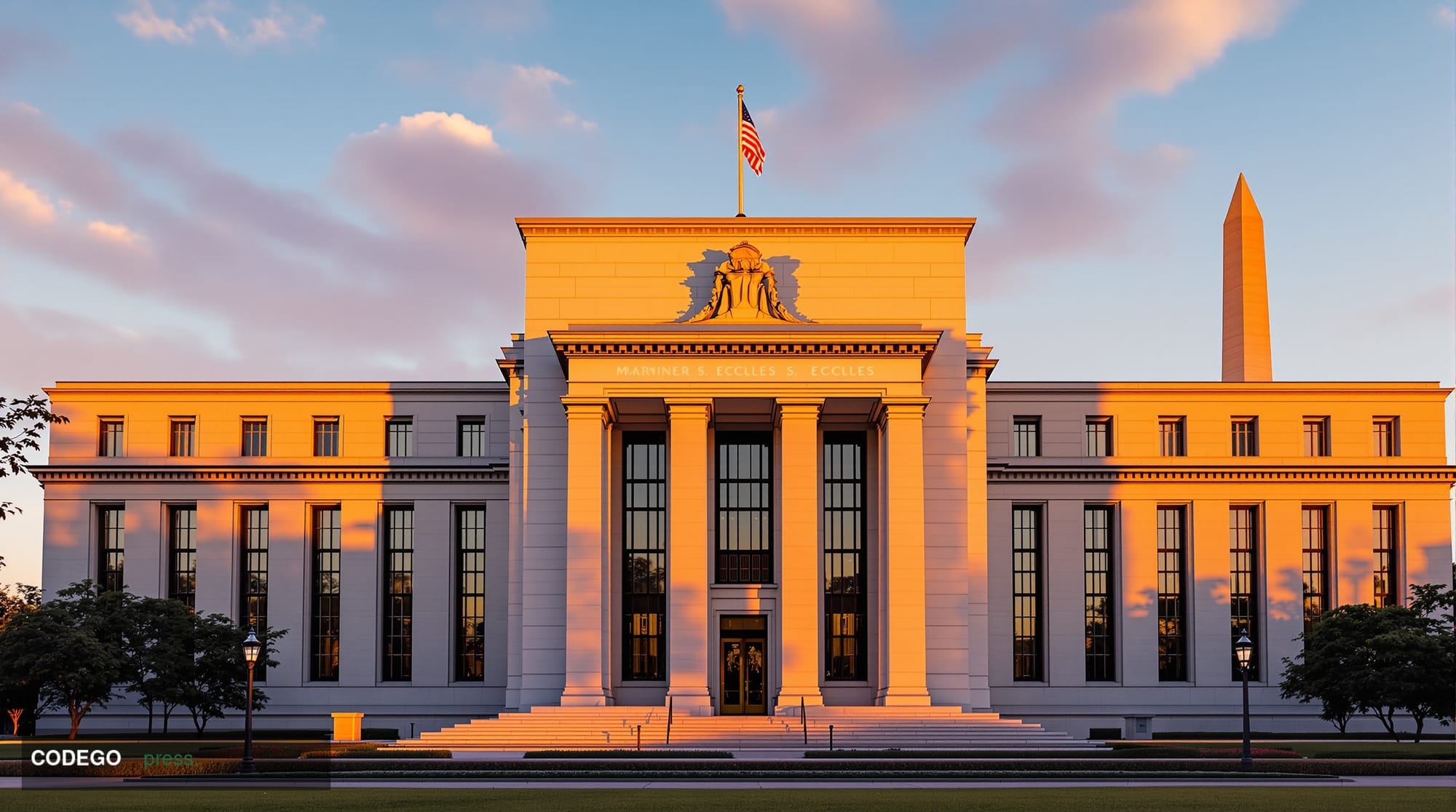
The anticipated departure of Jerome Powell as Federal Reserve Chair marks the end of a tenure defined by unprecedented monetary interventions and crisis management, setting the stage for what could be a fundamental shift in American monetary policy under his expected successor, Kevin Warsh.
Powell's exit comes at a critical juncture for the U.S. economy, occurring amid mounting geopolitical tensions and persistent economic uncertainties that have challenged central bank orthodoxy worldwide. His leadership through the COVID-19 pandemic, the subsequent inflation surge, and multiple financial market disruptions has positioned him as one of the most consequential Fed chairs in modern history, making his departure a watershed moment for global financial markets.
The expected appointment of Kevin Warsh to succeed Powell represents more than a personnel change—it signals a potential philosophical pivot in how America's central bank approaches its dual mandate of price stability and full employment. Warsh, who previously served on the Fed's Board of Governors from 2006 to 2011, brings a distinctly different perspective to monetary policy formulation, having been a vocal critic of prolonged quantitative easing programs and ultra-low interest rate policies that defined much of the post-2008 financial crisis era.
Market Implications of Leadership Transition
The leadership transition at the Federal Reserve carries profound implications for financial markets, particularly given the timing amid ongoing economic uncertainties. Warsh's historical stance on monetary policy suggests a potentially more hawkish approach to inflation targeting, which could reshape expectations around interest rate trajectories and asset valuations. His previous criticism of extended accommodation policies indicates a preference for more normalized monetary conditions, a position that could accelerate the Fed's retreat from the extraordinary measures implemented during recent crisis periods.
The cryptocurrency sector, which has become increasingly sensitive to Federal Reserve policy decisions, may face particular scrutiny under Warsh's leadership. His background in traditional financial markets and previous regulatory experience could influence the central bank's approach to digital asset oversight and monetary policy transmission through crypto channels. This shift occurs as digital currencies have become more integrated into mainstream financial systems, making Fed policy decisions increasingly relevant to crypto market dynamics.
Geopolitical Context and Policy Challenges
The leadership change unfolds against a backdrop of heightened geopolitical tensions that have complicated monetary policy implementation across major economies. The new Fed leadership will inherit a complex landscape where traditional monetary policy tools must navigate international sanctions, supply chain disruptions, and shifting global trade patterns that have altered inflation dynamics and economic growth projections.
Warsh's expected appointment comes as central banks worldwide grapple with balancing domestic economic priorities against international financial stability concerns. His previous experience during the 2008 financial crisis and subsequent recovery period provides relevant experience for managing monetary policy in an environment where domestic and international economic pressures intersect in unprecedented ways.
Institutional Continuity and Reform Prospects
The transition from Powell to Warsh represents both continuity and change within Federal Reserve governance. While both figures bring extensive experience in monetary policy and financial markets, their approaches to institutional reform and central bank communication strategies differ significantly. Warsh's previous advocacy for clearer policy frameworks and more explicit forward guidance could reshape how the Fed communicates with markets and the public about its policy intentions.
The leadership change also creates opportunities for broader institutional reforms within the Federal Reserve system. Warsh's previous writings and speeches have emphasized the importance of central bank independence while advocating for greater transparency in policy deliberations, suggesting potential changes in how the Fed conducts its operations and engages with political stakeholders.
The anticipated transition from Jerome Powell to Kevin Warsh as Federal Reserve Chair represents a pivotal moment for American monetary policy and global financial markets. As economic uncertainties persist and geopolitical tensions continue to influence market conditions, the new leadership's approach to central banking will shape not only domestic economic outcomes but also the broader architecture of international financial stability. The change signals potential shifts in policy philosophy that could redefine the Fed's role in managing economic cycles and financial market stability for years to come.
Written by the editorial team — independent journalism powered by Codego Press.