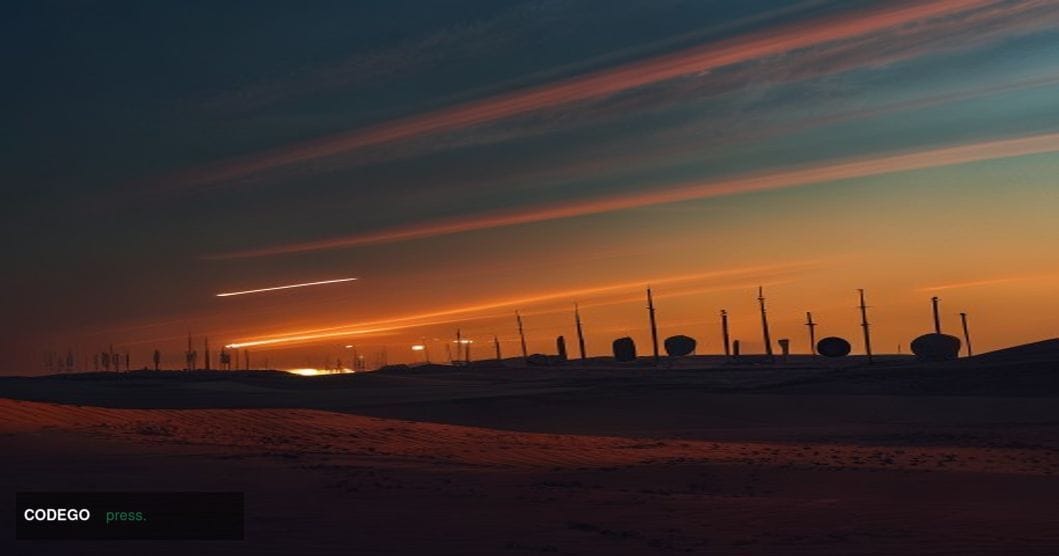
Qatar's air defense forces have intercepted multiple Iranian missile strikes directed at Al Udeid Air Base, one of the most strategically significant military installations in the Middle East, in a development that signals a dangerous and escalating confrontation between Tehran and Doha with far-reaching consequences for global energy markets and regional diplomacy.
The repeated nature of the interceptions is what distinguishes this episode from a singular provocation. A single intercept might be framed as an isolated incident, a miscalculation, or a limited show of force. Multiple interceptions, however, constitute a pattern — and patterns in geopolitics carry weight that isolated incidents do not. They suggest sustained intent, evolving targeting strategies, and a willingness on Iran's part to press military action against a neighbor that hosts one of the largest United States military presences in the region.
Al Udeid Air Base, located southwest of Qatar's capital Doha, serves as the forward headquarters of the United States Air Forces Central Command and has long been the operational hub for American military activity across the broader Middle East theater. Its strategic importance cannot be overstated: any successful strike on the facility would represent not merely an attack on Qatari sovereign territory but a direct assault on American military infrastructure, triggering consequences that extend well beyond the Gulf Cooperation Council's internal dynamics.
The financial stakes embedded in this confrontation are equally significant. Qatar is one of the world's largest exporters of liquefied natural gas (LNG), supplying critical volumes to European and Asian markets at a moment when global energy security remains acutely sensitive following years of supply disruption. Any sustained military escalation in Qatari airspace or territorial waters risks disrupting LNG shipment corridors through the Persian Gulf, a chokepoint through which a substantial share of global hydrocarbon trade flows. Energy markets, already sensitive to geopolitical friction, would respond sharply to any perception that Qatari export capacity is under credible threat.
Iran's motivations for targeting Al Udeid, rather than pursuing diplomatic or economic pressure, reflect the broader deterioration in Tehran's strategic calculus across the region. International sanctions regimes, domestic economic pressure, and the failure of successive diplomatic overtures have left Iran with narrowing options for projecting influence. Military signaling, even when intercepted, serves the purpose of demonstrating capability and resolve to both adversaries and domestic constituencies. However, the cost of this approach — in terms of international legitimacy and the risk of catastrophic miscalculation — is growing with each successive incident.
For Qatar, the diplomatic calculus is extraordinarily complex. Doha has historically maintained a distinctive foreign policy posture within the Gulf region, cultivating relations with actors that its neighbors regard with deep suspicion, including maintaining channels of communication with Tehran. The missile strikes now directly challenge that posture, forcing Qatari leadership to reconcile its tradition of diplomatic neutrality with the existential security imperative of defending its territory and its critical alliance with Washington. The complications this introduces into Qatar's broader diplomatic relationships — including with other Gulf states watching closely — are substantial and unlikely to resolve quickly.
The broader regional architecture is also under strain. The Gulf Cooperation Council faces renewed pressure to coordinate defense responses to Iranian aggression, even as member states maintain varying degrees of economic and political exposure to Tehran. Any meaningful escalation risks drawing in actors across the region and triggering a chain of responses that the current diplomatic infrastructure is ill-equipped to contain.
What This Means for Markets and Geopolitical Stability
The immediate market implication centers on energy. LNG spot prices and crude oil futures are acutely sensitive to Persian Gulf security deterioration, and the repeated interception of Iranian missiles over Qatari territory constitutes precisely the kind of sustained threat that commodity traders price as systemic risk rather than transient noise. Financial institutions with exposure to Gulf sovereign debt, regional equity markets, or energy commodity positions should treat this escalation as a material risk factor requiring active reassessment. Beyond energy, the diplomatic complications ripple into trade flows, foreign direct investment pipelines, and the broader calculus of sovereign risk across the Gulf region. The pattern of repeated missile interceptions has moved this confrontation from the realm of incident management into the realm of structural instability — and structural instability in the world's most critical energy corridor demands serious and sustained attention from policymakers, risk managers, and market participants alike.
Written by the editorial team — independent journalism powered by Codego Press.