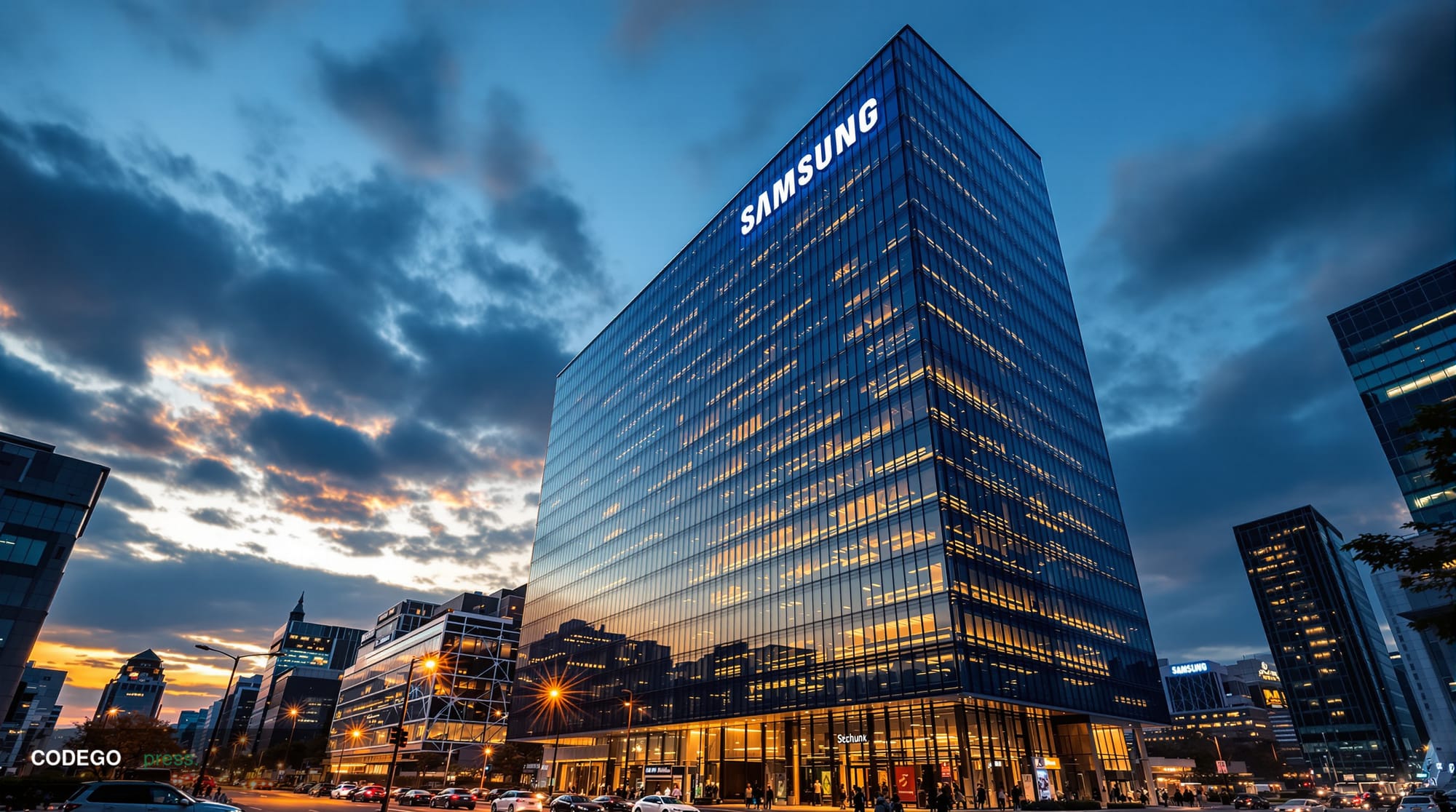
South Korea's technology conglomerate Samsung is making its most significant move into the cryptocurrency sector yet, with three of its key subsidiaries acquiring a combined 4% stake in Dunamu, the company behind the nation's largest digital asset exchange Upbit. The 612.8 billion won transaction, valued at approximately $408 million, represents a strategic pivot for Samsung as it positions itself at the center of South Korea's rapidly evolving digital finance ecosystem.
The investment structure reveals a calculated approach to cryptocurrency exposure across Samsung's diverse business portfolio. Samsung Securities will take the largest position with a 2% stake, while Samsung SDS and Samsung Card will each secure 1% ownership in Dunamu. This distribution allows Samsung to leverage its financial services expertise through Samsung Securities while simultaneously exploring blockchain infrastructure opportunities via Samsung SDS and payment integration through Samsung Card.
Strategic Timing Amid Market Consolidation
The timing of Samsung's investment coincides with a broader reshuffling of ownership in South Korea's cryptocurrency exchange landscape. Kakao, the technology giant behind the popular messaging app KakaoTalk, is simultaneously reducing its exposure to Upbit through this transaction. This shift suggests a strategic realignment where traditional technology companies are reassessing their cryptocurrency investments based on regulatory clarity and market maturity.
Dunamu's Upbit exchange has maintained its position as South Korea's dominant cryptocurrency trading platform, commanding significant market share in a country that has emerged as one of the world's most active digital asset markets. The exchange has successfully navigated South Korea's increasingly sophisticated regulatory framework, including the implementation of real-name verification systems and anti-money laundering protocols that have become the gold standard for cryptocurrency compliance in Asia.
Samsung's Expanding Digital Asset Footprint
This investment builds upon Samsung's existing cryptocurrency initiatives, which have included blockchain integration in its Galaxy smartphone series and partnerships with various digital asset service providers. The company's semiconductor division has also been a significant beneficiary of the cryptocurrency mining boom, positioning Samsung as both a hardware enabler and now a direct participant in the digital asset ecosystem.
The $408 million investment scale demonstrates Samsung's confidence in the long-term viability of cryptocurrency infrastructure in South Korea. Unlike speculative retail investments, this institutional commitment suggests Samsung views digital assets as a permanent fixture of the financial landscape rather than a temporary technological curiosity. The involvement of Samsung Securities particularly signals an intention to develop sophisticated cryptocurrency financial products for institutional and retail clients.
Regulatory Environment and Market Implications
South Korea's cryptocurrency market operates under some of the world's most comprehensive digital asset regulations, requiring exchanges to partner with domestic banks for customer fund custody and implement robust know-your-customer protocols. Upbit's compliance record and market leadership position make it an attractive investment target for traditional corporations seeking cryptocurrency exposure without regulatory uncertainty.
The investment also reflects the maturation of South Korea's cryptocurrency market, where daily trading volumes regularly exceed those of traditional stock exchanges. Samsung's entry as a significant stakeholder could accelerate the integration of cryptocurrency services with traditional financial products, potentially leading to new payment solutions and investment vehicles that bridge conventional and digital finance.
What This Means for the Industry
Samsung's substantial investment in Dunamu represents more than a financial transaction; it signals the normalization of cryptocurrency infrastructure within South Korea's corporate establishment. As one of the nation's most influential conglomerates, Samsung's endorsement through ownership could encourage other traditional corporations to reconsider their cryptocurrency strategies.
The deal also highlights the evolving dynamics of technology company involvement in cryptocurrency markets. While some companies retreat from direct exposure amid regulatory uncertainty, Samsung is doubling down on integration opportunities that leverage its existing technological capabilities and market position. This strategic differentiation could prove decisive as the cryptocurrency sector continues its transition from speculative asset class to integral financial infrastructure.
Written by the editorial team — independent journalism powered by Codego Press.