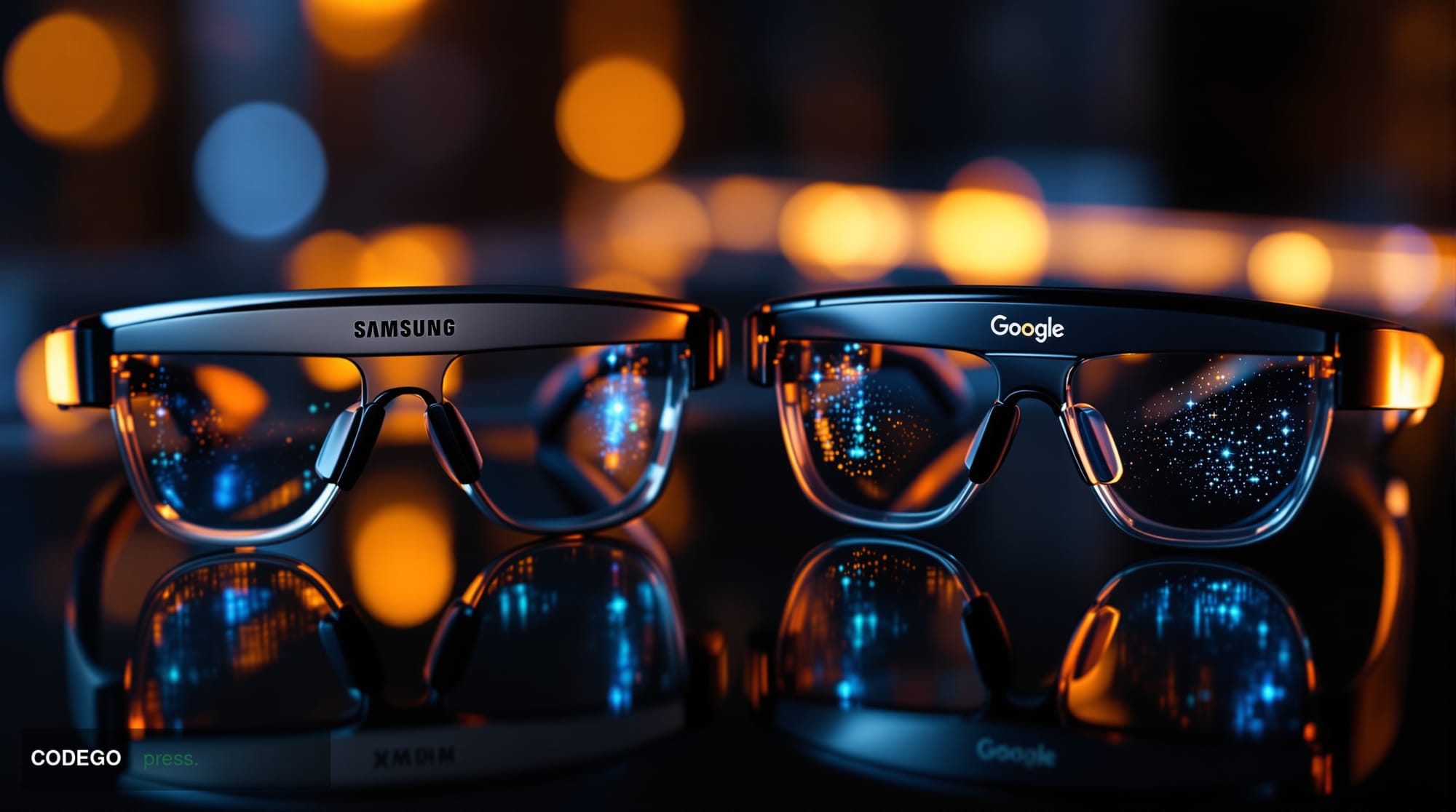
When Samsung takes the stage at its Galaxy Unpacked event in London on July 22, 2026, it will do so with one of the most closely watched hardware launches in recent memory: a pair of smart glasses built on the Android XR platform, developed in close collaboration with Google and powered by Gemini artificial intelligence. The announcement marks a direct and deliberate challenge to Meta's growing dominance in the AI-powered wearable eyewear category — and it signals that the smart glasses market is entering a new and intensely competitive phase.
A Strategic Alliance Years in the Making
The Samsung-Google partnership on Android XR has been building quietly, and the Galaxy Unpacked event in London represents the first major public unveiling of its most visible consumer product. By centering the glasses on Android XR — Google's dedicated extended reality operating platform — the two companies are betting that a familiar, developer-friendly ecosystem can attract the kind of broad adoption that purpose-built hardware platforms have historically struggled to achieve. The integration of Gemini AI as the audio intelligence layer adds a further dimension: rather than relying on passive voice commands, the glasses are positioned to deliver contextually aware, conversational AI assistance through the ear, with minimal visual intrusion.
This approach mirrors, yet deliberately differentiates from, what Meta has built with its Ray-Ban smart glasses lineup — a product that has quietly become one of the tech industry's surprise hits of the mid-2020s. Meta's glasses won early converts through their lightweight form factor and increasingly capable AI assistant, setting a consumer expectation that Samsung and Google now must meet or exceed. The fact that Samsung is announcing a fall 2026 commercial launch suggests the product is far enough along in development to survive the scrutiny of a live London event.
London as a Statement
The choice of London for the Galaxy Unpacked reveal is itself a calculated message. Samsung has used international venues before to signal the global ambition of a product line, and situating this particular launch in one of Europe's most prominent technology and finance hubs underlines that the addressable market extends well beyond North America. Europe represents a critical battleground for wearable AI hardware, particularly as regulators on the continent continue to develop frameworks around AI-embedded consumer devices — a compliance dimension that both Samsung and Google will need to navigate carefully ahead of a fall rollout.
The Gemini Differentiator
Among the technical details confirmed ahead of the event, the Gemini AI audio capability stands out as the feature most likely to define the product's market positioning. Audio-first AI in a glasses form factor is a meaningful design philosophy: it acknowledges that most consumers are not yet ready to wear heads-up display hardware in daily life, while still delivering AI utility in a hands-free, socially acceptable package. Google's Gemini, already embedded across Android devices and the broader Google ecosystem, brings with it a vast context graph — search history, calendar data, location awareness — that could make the glasses' AI responses meaningfully more useful than those of standalone assistants.
Whether that integration translates into a compelling everyday experience will depend heavily on latency, battery performance, and the quality of the audio hardware — none of which have been detailed publicly ahead of the July 22 reveal. Investors and analysts watching the wearable AI space will be scrutinizing these specifics closely, as the gap between a compelling demonstration and a commercially durable product has historically been wide in the extended reality category.
What This Means for the Wearable AI Market
The broader stakes of Samsung's London announcement extend well beyond a single product launch. The entry of two of the world's largest technology companies — operating in formal hardware and software partnership — into the smart glasses category reshapes the competitive landscape in ways that smaller players and Meta alike will need to reckon with. Samsung's global retail distribution, combined with Google's software ecosystem and Gemini's AI capabilities, represents a formidable go-to-market combination that few rivals can match at scale.
For the fintech and digital payments sector, the emergence of AI-powered wearables carries its own significance. Smart glasses with persistent, contextually aware AI assistants are natural candidates for hands-free payments, real-time financial alerts, and on-the-go banking interactions — use cases that payments networks and neobanks have been quietly exploring as the wearable category matures. A fall 2026 commercial launch, if it arrives on schedule, would place Android XR glasses in consumers' hands at precisely the moment when embedded finance in wearables is moving from concept to product roadmap across the industry.
Galaxy Unpacked on July 22 will answer many of the remaining hardware questions. What it has already confirmed is that the competition for the future of AI wearables is no longer Meta's to lose alone.
Written by the editorial team — independent journalism powered by Codego Press.