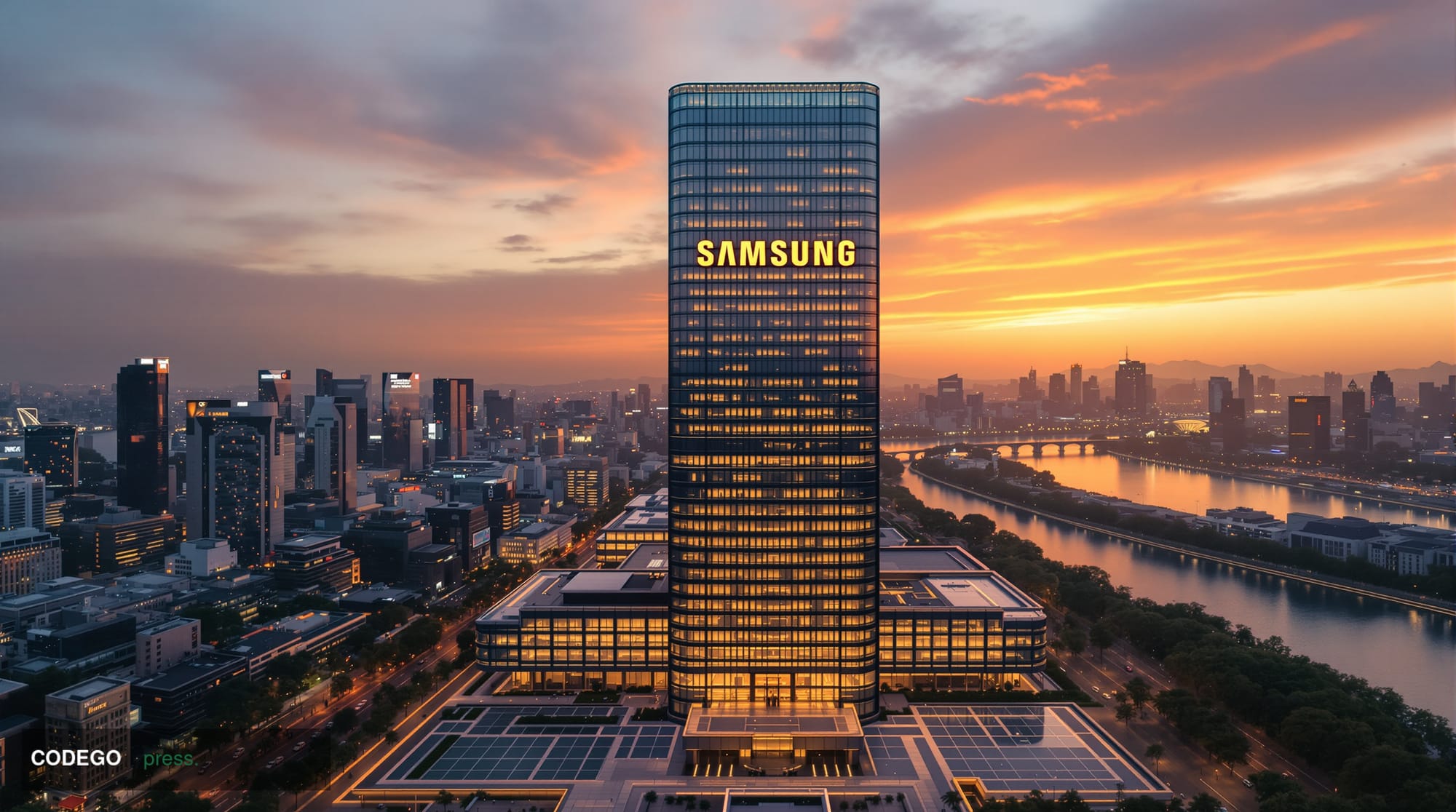
The corporate landscape has witnessed a seismic shift as Samsung ascended to the exclusive trillion-dollar market capitalization club this week, joining a select group of 15 companies that increasingly define the power structures of the modern global economy. This milestone represents more than a numerical achievement—it signals the South Korean technology giant's evolution into a critical architect of the connected economy that underpins contemporary commerce and communication.
The trillion-dollar threshold has become the new benchmark for corporate influence, separating companies that merely participate in markets from those that shape them. Samsung's entry expands a roster that spans familiar technology titans alongside enterprises that might appear disparate but share a common thread: they control essential infrastructure components of our interconnected economic system. This elite group now wields unprecedented influence over everything from semiconductor supply chains to consumer behavior patterns.
The Connected Economy's Power Brokers
What unites these 15 trillion-dollar entities is their strategic positioning within the connected economy's critical nodes. Samsung's ascension reflects its transformation from a traditional electronics manufacturer into a comprehensive technology ecosystem provider. The company's semiconductor division supplies chips that power everything from smartphones to data centers, while its consumer electronics arm shapes how billions interact with digital services daily. This dual influence across hardware infrastructure and consumer touchpoints exemplifies the type of comprehensive market control that drives trillion-dollar valuations.
The connected economy rewards companies that can establish themselves as indispensable intermediaries in digital value chains. Unlike previous economic eras where size and scale dominated corporate valuations, today's trillion-dollar companies derive their worth from network effects, platform control, and ecosystem lock-in. Samsung's memory chips enable cloud computing, its displays facilitate mobile commerce, and its appliances collect data that feeds artificial intelligence systems—creating multiple revenue streams while building dependencies that competitors struggle to replicate.
Market Concentration and Economic Control
The emergence of this 15-company trillion-dollar tier raises profound questions about market concentration and economic power distribution. These firms collectively represent several trillion dollars in market capitalization, concentrating enormous economic influence within a remarkably small group of entities. Their decisions regarding product development, pricing strategies, and market entry can reshape entire industries and affect millions of jobs worldwide.
Samsung's inclusion in this group is particularly significant given its role as a critical supplier to competitors. The company manufactures components for firms it directly competes with in consumer markets, creating complex interdependencies that blur traditional competitive boundaries. This dual role as both competitor and essential supplier grants Samsung unique leverage within the technology ecosystem and helps explain investor confidence in its trillion-dollar valuation.
The geographic distribution of trillion-dollar companies also reflects shifting global economic power. Samsung's achievement marks another victory for Asian technology firms in reaching this milestone, demonstrating how innovation centers have expanded beyond Silicon Valley. This geographic diversification of corporate power could reshape international trade relationships and technology policy as governments recognize the strategic importance of hosting trillion-dollar enterprises.
Implications for Financial Markets
The expansion of the trillion-dollar club signals a fundamental shift in how financial markets value companies in the connected economy era. Traditional metrics like revenue and profit margins, while important, increasingly take backseat to platform control, data access, and ecosystem influence when determining valuations. Samsung's rise reflects investor recognition that companies controlling essential infrastructure components can command premium valuations regardless of cyclical industry fluctuations.
This valuation approach creates new challenges for portfolio managers and institutional investors who must evaluate companies based on their positioning within interconnected digital networks rather than standalone business metrics. The trillion-dollar threshold has become a proxy for companies with sufficient scale and influence to weather economic disruptions while potentially benefiting from increased digitalization trends.
Samsung's achievement also demonstrates how companies can leverage manufacturing excellence and technological innovation to build sustainable competitive advantages in the connected economy. Unlike purely digital platforms, Samsung combines physical infrastructure capabilities with software and services, creating multiple defensive moats around its business model. This hybrid approach may represent a template for other technology manufacturers seeking similar market recognition.
The continued expansion of the trillion-dollar club suggests that market concentration within the connected economy will intensify rather than diminish. As these 15 companies strengthen their positions across critical infrastructure layers, they create increasingly difficult barriers for potential competitors while generating the cash flows necessary to fund continued innovation and market expansion. Samsung's entry into this exclusive group marks another step toward a global economy dominated by a small number of technology-enabled giants whose decisions will shape commercial and social interactions for years to come.
Written by the editorial team — independent journalism powered by Codego Press.