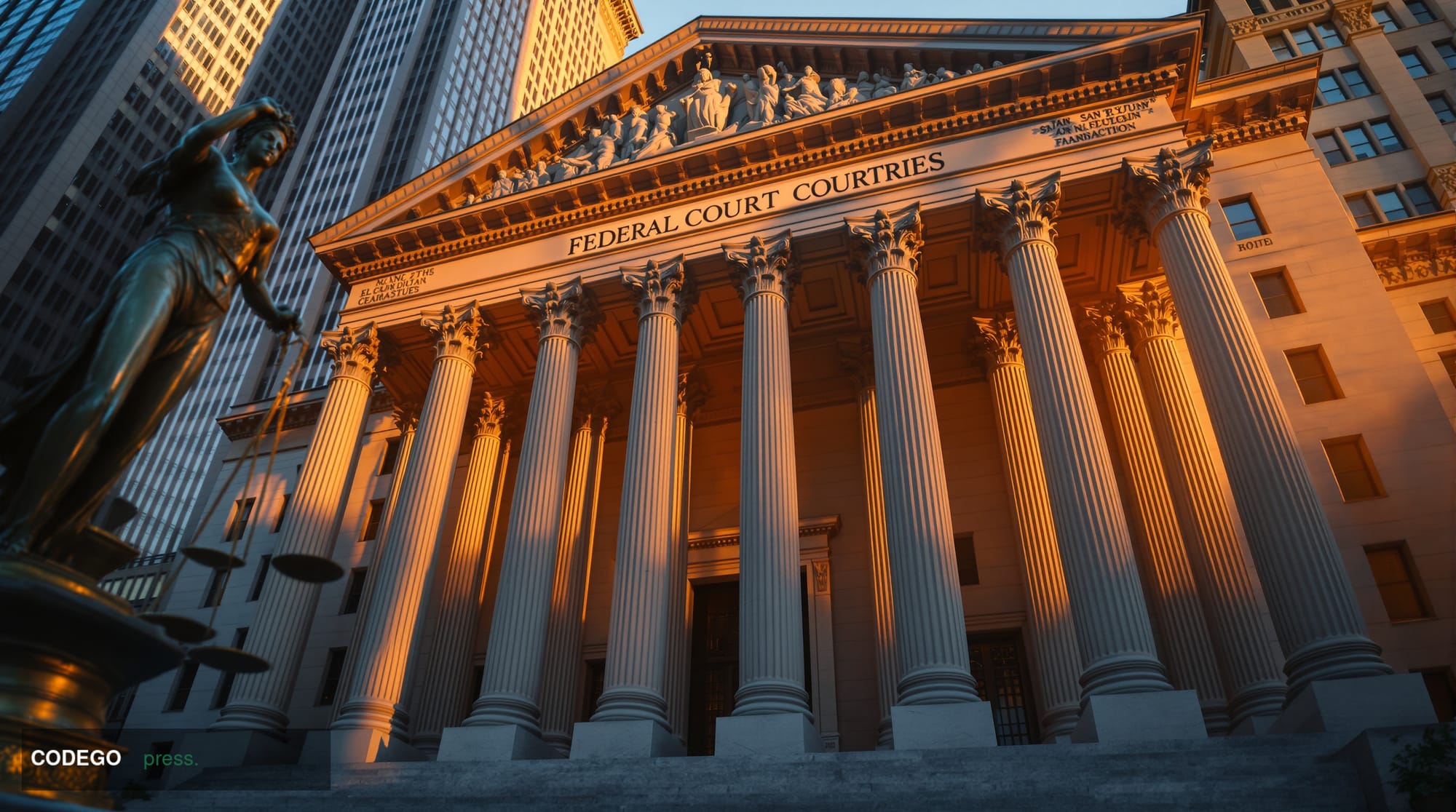
The cryptocurrency industry's most notorious criminal case reached its definitive conclusion today as a federal appeals court decisively rejected Sam Bankman-Fried's attempt to overturn his fraud conviction and 25-year prison sentence. The ruling marks the end of the disgraced FTX founder's legal challenges over the $8 billion collapse that devastated countless investors and triggered a crisis of confidence across digital asset markets.
The appeals court's rejection of Bankman-Fried's claims of an unfair trial represents more than just the closure of a single case—it establishes a precedent that could reshape how the justice system approaches cryptocurrency-related fraud moving forward. The court's unwillingness to entertain arguments that the original proceedings were compromised sends an unmistakable signal that crypto executives cannot expect special treatment or leniency when their actions cross into criminal territory.
The $8 billion figure at the heart of this case represents one of the largest financial fraud schemes in American history, placing Bankman-Fried's crimes alongside those of Bernie Madoff and other notorious white-collar criminals. The sheer scale of the losses, combined with the systematic nature of the fraud that prosecutors demonstrated during the original trial, made this case a watershed moment for cryptocurrency regulation and enforcement. The appeals court's decision to let the conviction stand reinforces that the magnitude of harm caused by FTX's collapse warranted the severe punishment originally imposed.
From a regulatory perspective, today's ruling arrives at a critical juncture for the digital asset ecosystem. Federal agencies including the Securities and Exchange Commission and Commodity Futures Trading Commission have been working to establish clearer frameworks for cryptocurrency oversight, often facing resistance from industry participants who argue that existing regulations are insufficient or inappropriate for digital assets. The finality of Bankman-Fried's conviction provides regulators with a concrete example of how traditional fraud statutes can be effectively applied to cryptocurrency schemes.
The appeals court's decision also carries significant implications for other high-profile cryptocurrency cases currently working their way through the judicial system. Executives at various digital asset firms facing their own legal challenges will likely view this outcome as an indication that courts are prepared to impose substantial penalties for cryptocurrency-related misconduct. The rejection of Bankman-Fried's appeal arguments—which presumably included claims about the complexity and novelty of cryptocurrency business models—suggests that judges are becoming increasingly sophisticated in their understanding of digital asset fraud schemes.
For the broader financial services industry, the conclusion of the Bankman-Fried case provides a measure of clarity about the boundaries of acceptable conduct in the cryptocurrency space. Traditional financial institutions that have been cautiously expanding their digital asset offerings can now point to established legal precedent when developing compliance programs and risk management protocols. The 25-year sentence serves as a stark reminder that the innovative nature of cryptocurrency technology does not create exemptions from fundamental principles of fiduciary responsibility and customer protection.
The timing of this appeals decision coincides with renewed congressional interest in comprehensive cryptocurrency legislation. Lawmakers who have been grappling with how to balance innovation with consumer protection can now reference a clear example of how existing legal frameworks can address even the most complex digital asset fraud schemes. The successful prosecution and conviction of Bankman-Fried demonstrates that additional regulatory tools, while potentially valuable, are not necessary prerequisites for holding cryptocurrency executives accountable for criminal conduct.
What this means for the cryptocurrency industry extends far beyond the fate of one disgraced executive. The finality of Bankman-Fried's conviction and sentence represents a maturation moment for digital assets, marking the end of an era when cryptocurrency entrepreneurs could operate with relative impunity under the assumption that legal authorities lacked the expertise or tools to effectively prosecute complex fraud schemes. The appeals court's decision establishes that cryptocurrency businesses are subject to the same standards of honesty and transparency that govern traditional financial institutions, regardless of the technological sophistication of their operations or the novelty of their business models.
Written by the editorial team — independent journalism powered by Codego Press.