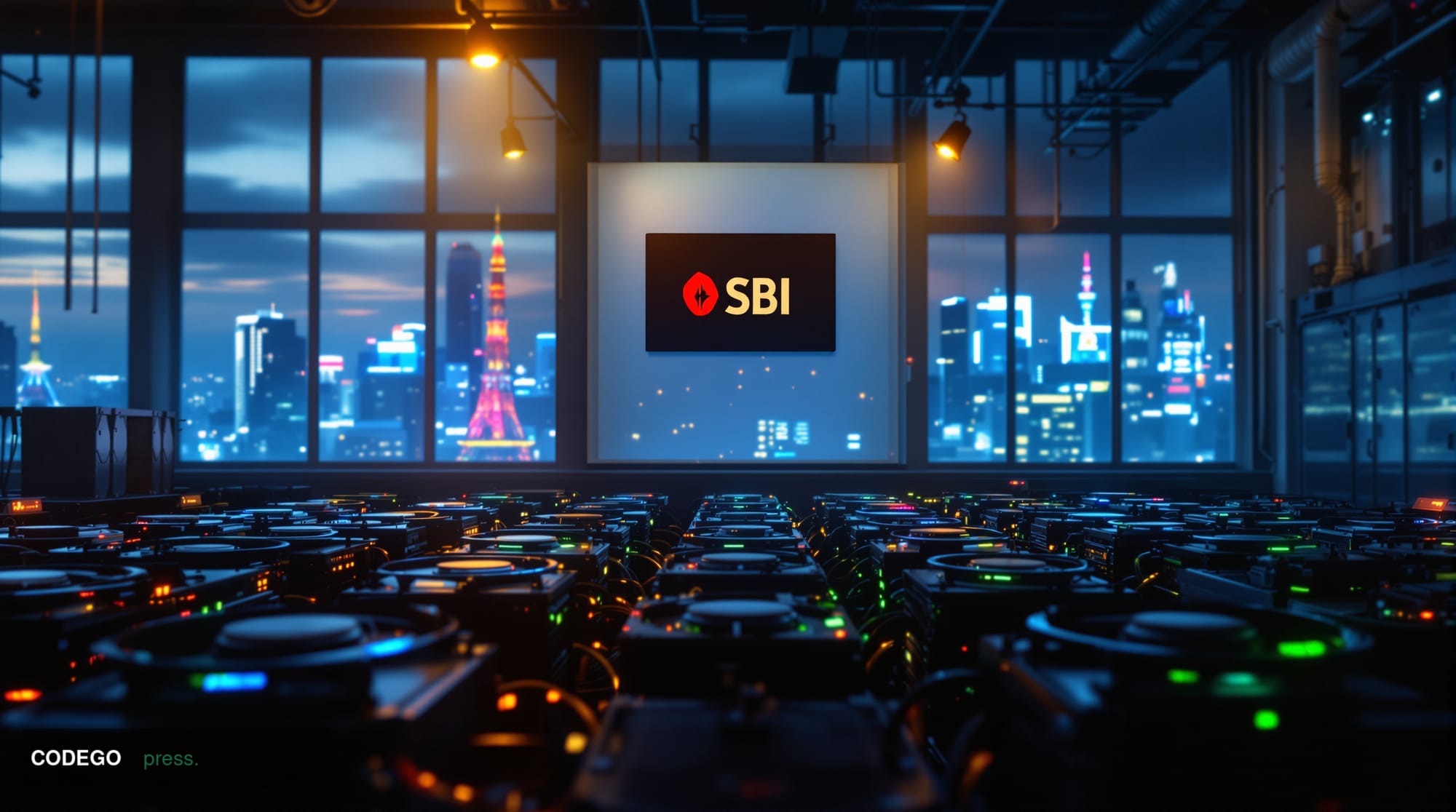
SBI Crypto, the dedicated digital-asset mining subsidiary of SBI Group — one of Japan's most prominent financial conglomerates — is closing its Bitcoin mining pool, marking a significant institutional retreat from a sector that has faced mounting structural and economic pressures. The decision positions SBI among a growing cohort of established financial players stepping back from direct cryptocurrency mining infrastructure, raising fresh questions about the long-term viability of institutionally operated mining pools in an era of thinning margins and intensifying competition.
SBI Group has long occupied an unusual position in global finance: a Tokyo-based holding company spanning securities brokerage, banking, insurance, and asset management, yet simultaneously one of the most aggressively crypto-forward institutions in the traditional financial world. Its mining subsidiary, SBI Crypto, was a tangible expression of that ambition — a bet that institutional discipline and deep capital reserves could carve out a durable position in the notoriously cyclical world of Bitcoin mining. The decision to shutter that operation signals a meaningful recalibration of where SBI believes its digital-asset edge actually lies.
The Economics of Institutional Mining Under Pressure
Bitcoin mining has never been a business for the faint-hearted, but the structural dynamics of the past several years have made it especially unforgiving for pool operators who cannot continuously compress their cost base. The April 2024 halving event — which cut the block subsidy from 6.25 BTC to 3.125 BTC — slashed miner revenue per block overnight, forcing every participant in the ecosystem to reassess their operational math. For pools aggregating the hash power of multiple miners and distributing rewards proportionally, the squeeze is compounded: pool operators depend on volume and scale, and when individual miners shut down unprofitable rigs, the entire pool's economics deteriorate in tandem.
Industrial-scale miners in regions with access to stranded energy — West Texas, the Alberta oil fields, parts of Central Asia — have been able to offset some of this compression through extraordinarily low power costs, sometimes below two cents per kilowatt-hour. Japanese operations face an entirely different energy reality. Japan's electricity prices are among the highest in the developed world, a structural disadvantage that no amount of operational sophistication can fully overcome. For SBI Crypto, competing against miners whose cost curves are anchored to cheap energy was an asymmetric battle that the halving made significantly harder to justify.
A Broader Institutional Pattern
SBI Crypto is, as the sourcing makes clear, the latest in a line of firms to exit Bitcoin mining operations rather than the first. This pattern of institutional withdrawal is worth examining in its own right. When large, well-capitalized financial entities enter a sector and subsequently exit, it typically signals one of two things: either the sector has matured past the point where institutional participation offers differentiated returns, or the operational realities proved more demanding than initial projections suggested. In Bitcoin mining's case, the honest answer is probably both.
What distinguishes SBI's exit from the quieter departures of smaller pool operators is the reputational and strategic weight it carries. SBI Group is not a fringe actor hedging into cryptocurrency on a speculative basis — it is a systemically significant Japanese financial institution with regulated entities across multiple jurisdictions. When a firm of that caliber decides that running a Bitcoin mining pool is no longer worth the capital allocation, the market listens. The signal is not necessarily that Bitcoin mining is dying, but that the business of aggregating and managing mining pools demands a specialization and cost structure that generalist financial conglomerates are increasingly unwilling to maintain.
SBI's Broader Crypto Strategy Remains Intact
It would be a mistake to read SBI Crypto's mining pool closure as a wholesale retreat from digital assets by the parent group. SBI Group has constructed one of the most diversified crypto-adjacent portfolios of any traditional financial institution in Asia, with investments and partnerships spanning crypto exchanges, blockchain infrastructure, and digital-asset financial services. The group's stake in Ripple and its operation of SBI VC Trade, a regulated Japanese crypto exchange, illustrate that the strategic commitment to the asset class remains substantive. Mining pools represent just one layer of the broader digital-asset stack, and SBI appears to be making a deliberate choice to concentrate resources on layers where its financial expertise confers a genuine competitive advantage.
This kind of portfolio rationalization is precisely what mature institutional engagement with crypto should look like — not undifferentiated exposure to every corner of the ecosystem, but disciplined allocation toward segments where the institution can genuinely compete. In that sense, the closure of SBI Crypto's mining pool may ultimately be remembered less as a retreat and more as a strategic pruning.
What This Means for the Mining Sector
For the Bitcoin mining industry, the exit of another institutional pool operator reinforces a consolidation thesis that has been building since the 2024 halving. Hash rate is increasingly concentrating among a smaller number of highly specialized, energy-cost-advantaged operators — predominantly publicly listed North American miners who have access to capital markets, long-term power purchase agreements, and in some cases, proprietary next-generation hardware. The space for generalist or geographically disadvantaged pool operators is narrowing, and SBI Crypto's closure is a data point that confirms rather than creates that trajectory. For investors and analysts tracking the mining sector, the takeaway is clear: institutional pedigree alone is no longer sufficient insulation against the relentless economics of proof-of-work competition.
Written by the editorial team — independent journalism powered by Codego Press.