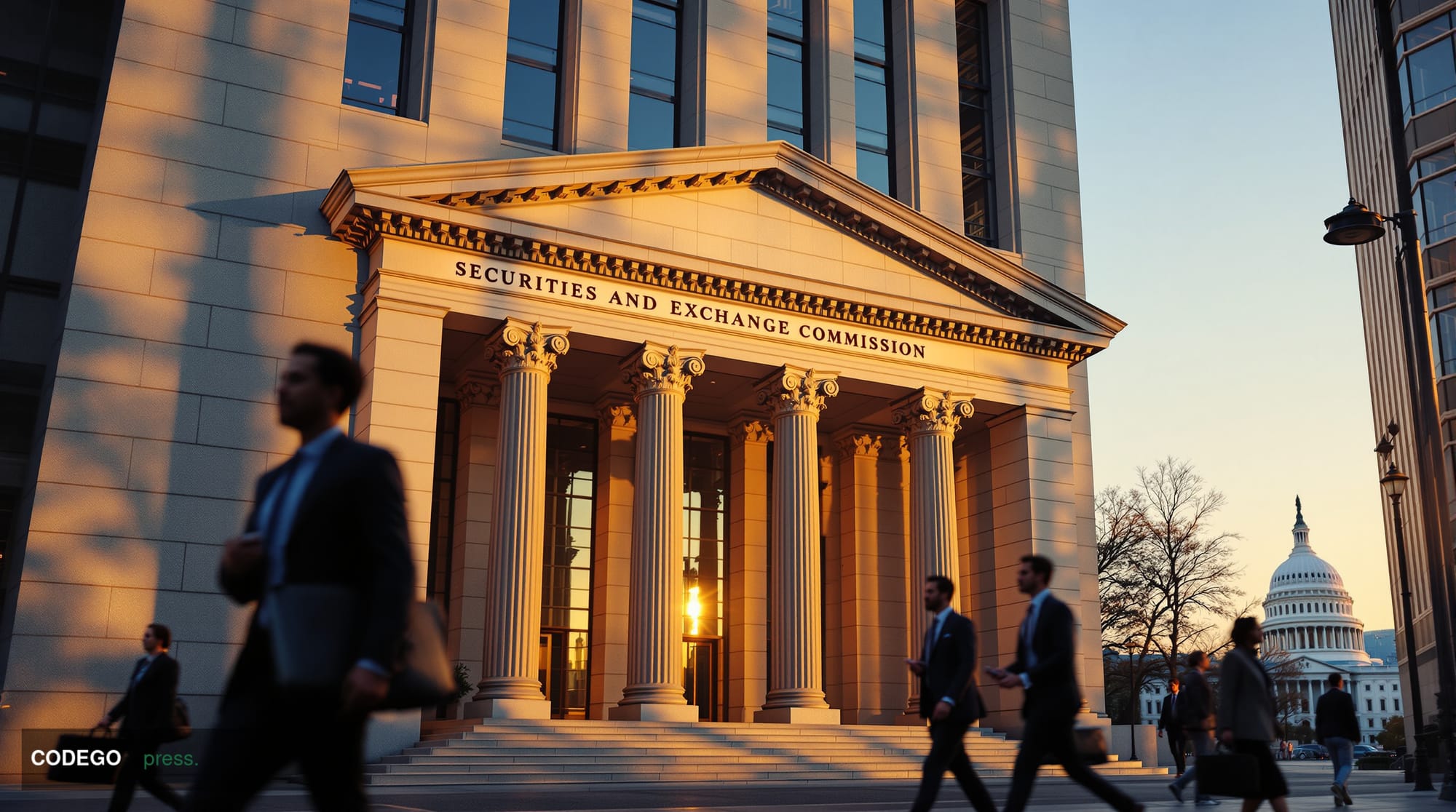
The regulatory landscape for blockchain-based financial markets received renewed attention this week as Securities and Exchange Commission Chairman Paul S. Atkins called for comprehensive legislative action to establish clear rules governing on-chain trading activities. Speaking at the Special Competitive Studies Project's AI+ Expo on Friday, Atkins emphasized the urgent need for regulatory clarity in digital asset markets that have evolved far beyond traditional oversight frameworks.
Atkins' remarks signal a potential shift in the SEC's approach to blockchain regulation, moving away from enforcement-first strategies toward proactive rule-making that could provide market participants with the certainty they have long sought. The chairman's public endorsement of the CLARITY Act represents a significant regulatory development, as congressional action on digital asset legislation has faced repeated delays despite growing industry pressure for definitive guidance.
The CLARITY Act's Strategic Importance
The Chairman's continued encouragement for Congress to pass the CLARITY Act underscores the SEC's recognition that existing securities laws may be inadequate for addressing the complexities of decentralized financial systems. The proposed legislation aims to establish a comprehensive framework for digital asset regulation, potentially resolving years of regulatory uncertainty that has constrained innovation and institutional adoption in the United States.
Current SEC guidance relies heavily on decades-old precedents that predate blockchain technology, creating a regulatory environment where market participants must navigate unclear boundaries between securities and commodities regulations. Atkins' acknowledgment that the SEC must provide greater clarity suggests internal recognition that the commission's current approach may be hindering rather than protecting market integrity.
On-Chain Markets Demand New Frameworks
The timing of Atkins' comments at an AI+ Expo highlights the intersection between artificial intelligence and blockchain technologies, both of which challenge traditional regulatory approaches. On-chain financial markets operate through automated smart contracts and decentralized protocols that blur the lines between intermediaries, exchanges, and direct peer-to-peer transactions. These technological realities require regulatory frameworks that can accommodate programmable money and autonomous financial systems.
The chairman's emphasis on "future-proofing" regulatory efforts indicates awareness that emerging technologies will continue to evolve rapidly, necessitating adaptive rather than static oversight mechanisms. This approach contrasts sharply with the SEC's historically reactive stance on digital assets, which has relied primarily on enforcement actions to establish regulatory boundaries.
Industry Implications and Market Response
Atkins' public statements carry significant weight for financial institutions and technology companies operating in the digital asset space. Major cryptocurrency exchanges, decentralized finance protocols, and traditional financial institutions exploring blockchain integration have operated under constant regulatory uncertainty, limiting their ability to develop compliant products and services.
The chairman's call for legislative action also reflects broader industry pressure from both domestic and international sources. Competing financial centers in Europe and Asia have moved ahead with comprehensive digital asset regulations, potentially creating advantages for their domestic markets while U.S. companies face continued uncertainty.
Congressional Dynamics and Implementation Challenges
While Atkins' endorsement of the CLARITY Act provides regulatory momentum, congressional action on complex financial legislation remains unpredictable. The proposed framework would need to balance innovation incentives with investor protection measures, requiring careful coordination between multiple regulatory agencies including the Commodity Futures Trading Commission and banking regulators.
The success of any comprehensive digital asset legislation will depend heavily on industry input and technical expertise, areas where Congress has previously struggled to develop nuanced understanding of blockchain technology's implications for financial markets. Atkins' technical background and industry engagement may prove crucial in bridging this knowledge gap.
What This Means for Digital Finance
Chairman Atkins' call for regulatory clarity represents a potential inflection point for U.S. digital asset policy, moving beyond the current patchwork of guidance and enforcement toward comprehensive legislative frameworks. The emphasis on future-proofing suggests recognition that blockchain technology will continue evolving, requiring adaptive rather than restrictive regulatory approaches. For market participants, this signals possible relief from the regulatory uncertainty that has constrained innovation and institutional adoption. However, the actual implementation of clearer rules will depend on congressional action and inter-agency coordination, factors that remain outside the SEC's direct control. The coming months will reveal whether Atkins' advocacy can translate into concrete legislative progress or whether the regulatory status quo will persist despite growing industry demands for certainty.
Written by the editorial team — independent journalism powered by Codego Press.