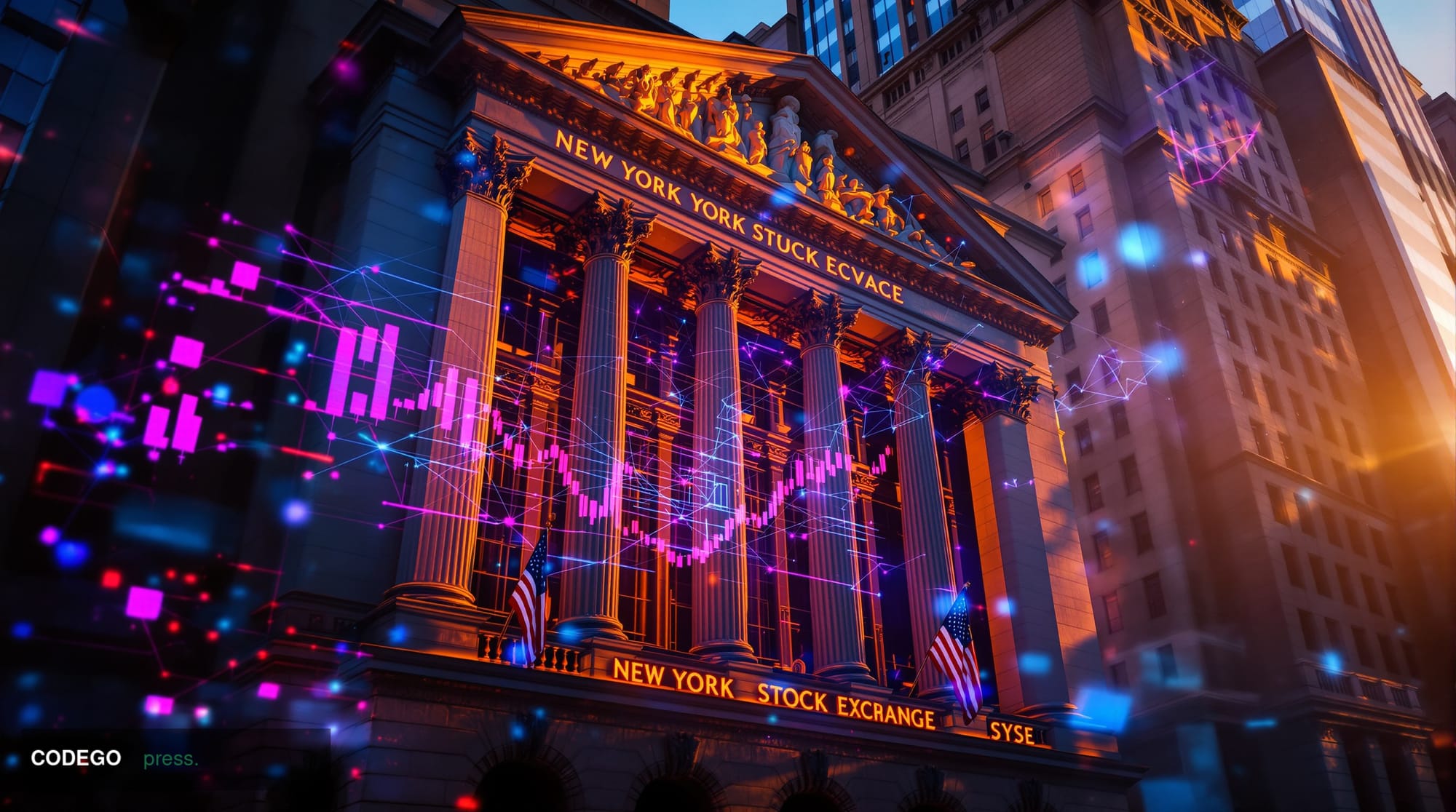
Securitize, the digital asset securities platform, made history on Friday when it simultaneously debuted on the New York Stock Exchange and issued tokenized versions of its own shares on two of the leading public blockchains — Solana and Avalanche. It is the first time any newly public company has tokenized its equity on the very day of its stock market debut, a milestone that signals the accelerating convergence of traditional capital markets and blockchain-based infrastructure.
The debut itself was met with a positive market reception, with Securitize shares gaining on their first day of trading — a vote of confidence from investors in both the company's underlying business and the broader thesis it represents. That thesis is straightforward but consequential: the rails of public equity markets and the programmable ledgers of blockchain networks are no longer parallel universes. They can, and increasingly will, operate as one.
A First of Its Kind Milestone
The decision to issue tokenized shares on both Solana and Avalanche simultaneously on debut day was deliberate and symbolically loaded. Securitize did not wait until it had established itself as a listed company before experimenting with on-chain equity representation. It launched both simultaneously, treating blockchain issuance not as an afterthought or a marketing exercise, but as an integral component of what it means to be a modern public company. This dual-chain approach also reflects the competitive landscape among layer-one blockchain networks, where Solana and Avalanche have both positioned themselves as serious contenders for institutional-grade financial applications.
For years, the tokenization of real-world assets — particularly equities — has been discussed as an inevitable evolution of financial markets. The ability to represent ownership of a publicly listed company's shares as a digital token on a blockchain offers a range of potential advantages: programmable settlement, around-the-clock transferability, reduced counterparty friction, and the ability to reach a global pool of investors without the traditional gatekeeping of brokerage infrastructure. Securitize's NYSE debut transforms that theoretical promise into a live, market-tested reality.
Securitize's Strategic Position
Securitize is not an incidental player in this story. The company has spent years building the compliance and technology infrastructure required to issue, manage, and transfer digital securities in a manner consistent with United States regulatory requirements. Its platform has been used to tokenize assets for a range of major financial institutions, and its decision to apply that same framework to its own equity issuance is a powerful demonstration of the technology's maturity. By eating its own cooking, so to speak, Securitize answers the skeptics who argue that tokenized equities remain a concept rather than a functioning product.
The choice of Solana and Avalanche as the networks on which to issue the tokenized shares is also significant. Both ecosystems have aggressively courted institutional adoption. Solana, known for its high throughput and low transaction costs, has attracted a growing number of financial product launches, while Avalanche has made the case for its subnet architecture as a vehicle for compliance-friendly, permissioned financial applications. Issuing tokenized shares simultaneously across both networks avoids the appearance of picking a single winner in what remains a competitive and fast-evolving market.
What This Means for Capital Markets
The broader implications of Securitize's debut extend well beyond the company itself. If a newly public firm can list on a traditional stock exchange and simultaneously make its shares available as on-chain tokens from day one, the template is now set for others to follow. Investment banks, underwriters, and exchange operators will be watching closely to understand how the tokenized shares perform relative to their exchange-listed counterparts — whether liquidity migrates, how settlement dynamics differ, and whether regulatory frameworks hold up under the strain of real market activity.
Regulators, too, will be paying attention. The U.S. Securities and Exchange Commission has been navigating an increasingly complex relationship with digital asset markets, and the Securitize dual issuance provides a concrete, regulated test case for policymakers to study. The company's long-standing emphasis on regulatory compliance means that this is not a gray-area experiment — it is a deliberate, above-board demonstration of what compliant tokenized equity markets can look like.
For institutional investors, asset managers, and the technologists building the next generation of financial infrastructure, Securitize's NYSE debut with simultaneous tokenized share issuance on Solana and Avalanche is the clearest signal yet that the tokenization of public equities has moved from aspiration to operational reality. The first domino has fallen; the question now is how quickly the rest will follow.
Written by the editorial team — independent journalism powered by Codego Press.