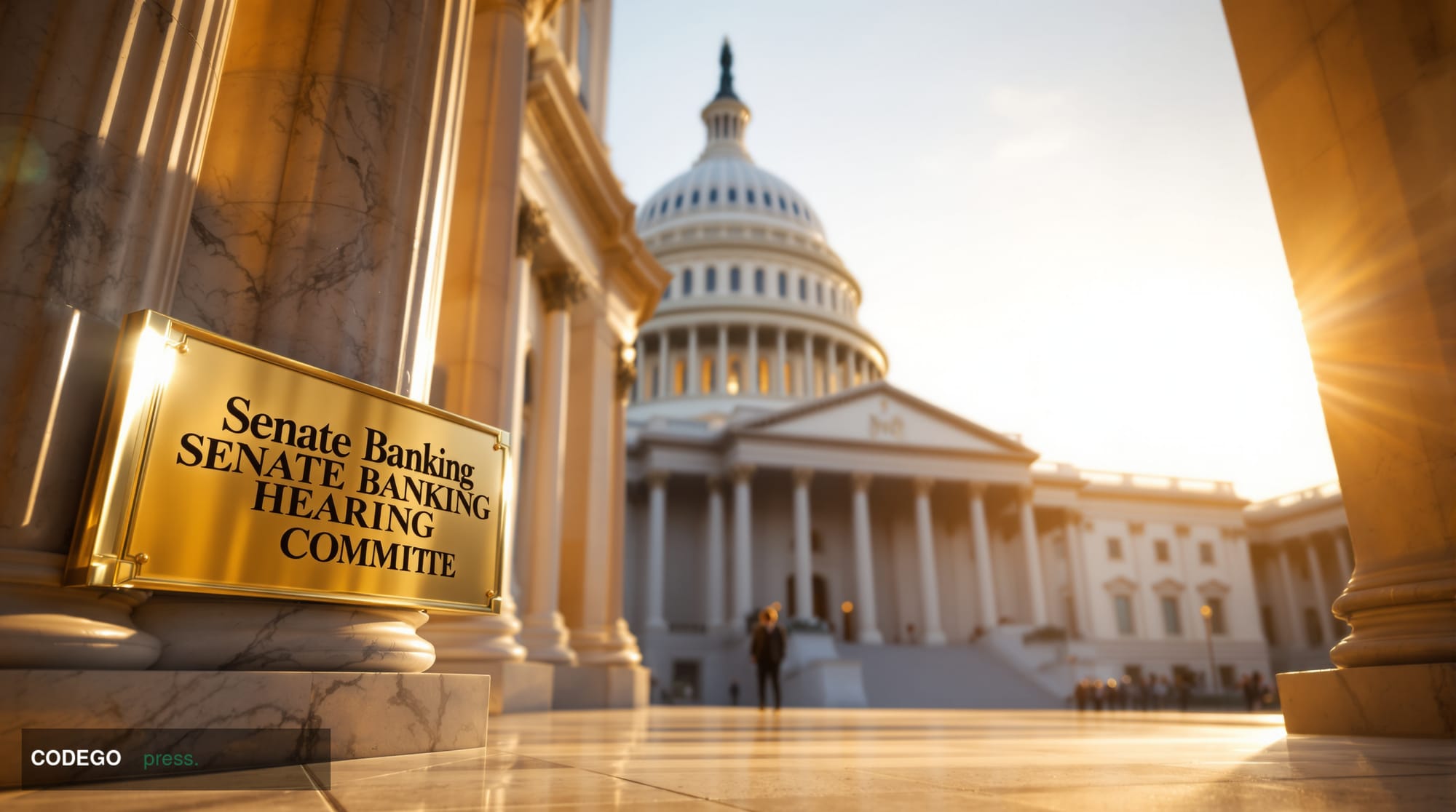
The American cryptocurrency industry stands at a regulatory crossroads as the Senate Banking Committee prepares to mark up the CLARITY Act this Thursday, May 14. This procedural vote represents one of the most significant legislative moments in the decade-long struggle to establish comprehensive digital asset regulations in the United States.
The CLARITY Act, if advanced through the markup process, would create the first formal market structure framework specifically designed for cryptocurrencies and digital assets. This framework addresses a regulatory vacuum that has persisted since Bitcoin's emergence, leaving digital asset companies operating in legal uncertainty while navigating a patchwork of existing financial regulations never designed for blockchain-based technologies.
Thursday's markup session carries extraordinary weight for an industry that has grown to represent trillions of dollars in global market capitalization while remaining largely unaddressed by comprehensive federal legislation. The Senate Banking Committee's decision to schedule this markup signals a potential shift from regulatory hesitancy toward active engagement with digital asset policy formation. Unlike previous congressional hearings that focused primarily on risk assessment and consumer protection concerns, this markup represents concrete legislative action.
The timing proves particularly significant given the current regulatory landscape. Digital asset companies have faced enforcement actions from multiple federal agencies, including the Securities and Exchange Commission and the Commodity Futures Trading Commission, often operating under interpretations of decades-old securities laws. The CLARITY Act's market structure framework would provide explicit guidance on how digital assets should be classified, regulated, and supervised across federal jurisdictions.
Industry stakeholders have long argued that regulatory clarity represents the primary obstacle to mainstream institutional adoption of digital assets in American markets. Major financial institutions, including traditional banks and asset managers, have repeatedly cited regulatory uncertainty as a barrier to offering comprehensive cryptocurrency services to their clients. A formal market structure framework could potentially unlock significant institutional capital that has remained sidelined pending clearer regulatory guidance.
The markup process itself represents a critical procedural step in the legislative journey. During markup, committee members review the proposed legislation line by line, offering amendments and modifications before determining whether to advance the bill to the full Senate for consideration. The outcome of Thursday's session will indicate whether bipartisan support exists for comprehensive digital asset regulation or whether partisan divisions will continue to stall progress on this front.
Beyond immediate industry implications, the CLARITY Act's advancement would position the United States to compete more effectively with international jurisdictions that have already established comprehensive digital asset regulatory frameworks. The European Central Bank and other global regulators have implemented structured approaches to digital asset oversight, potentially creating competitive advantages for companies operating within those jurisdictions.
The broader economic implications extend to innovation policy and technological competitiveness. Digital asset technologies, including blockchain infrastructure and decentralized finance protocols, represent emerging sectors where American leadership remains contested. Clear regulatory frameworks typically accelerate innovation by providing entrepreneurs and investors with predictable operating parameters, potentially strengthening America's position in these rapidly evolving technological domains.
Thursday's markup represents more than procedural advancement; it signals whether Congress is prepared to engage substantively with the regulatory challenges posed by digital assets. The cryptocurrency industry's evolution from experimental technology to trillion-dollar asset class has outpaced legislative responses, creating the regulatory uncertainty that the CLARITY Act aims to resolve. The Senate Banking Committee's decision will determine whether this defining week delivers the regulatory clarity that has eluded the American digital asset industry for over a decade.
Written by the editorial team — independent journalism powered by Codego Press.