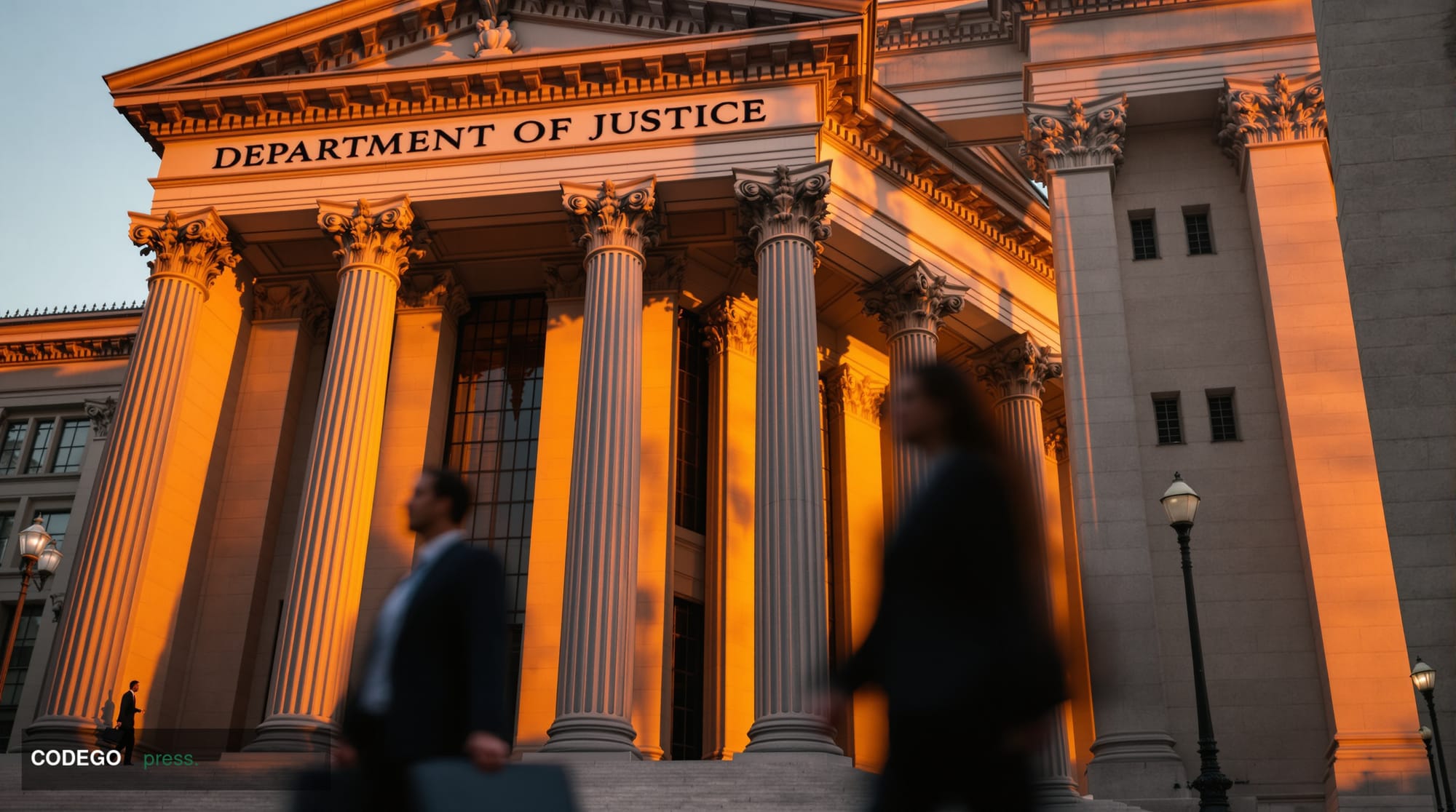
A United States Senate investigation has placed four of the cryptocurrency industry's most prominent and politically connected entities — Binance, Tether, and two firms associated with former President Donald Trump's crypto ventures including World Liberty Financial — on a hard deadline to produce internal records, with Senator Richard Blumenthal warning of escalating consequences if the firms fail to comply. The move marks one of the most direct congressional confrontations with the digital-asset sector in recent memory, arriving at a moment when the industry has been aggressively courting political legitimacy.
Senator Blumenthal's office has instructed the four firms to begin submitting requested documentation by November 30, with the full production of records required no later than January 4. The senator explicitly cautioned that failure to meet the January 4 deadline would trigger further Senate action — language that signals the investigation is prepared to escalate beyond voluntary requests toward more coercive legislative mechanisms. While the precise scope of the records being sought has not been fully disclosed publicly, the breadth of entities targeted — spanning a global exchange giant, the world's largest stablecoin issuer, and organizations bearing the political brand of a former and potentially future president — signals that the inquiry is wide-ranging in both financial and political ambition.
Why These Four Firms, Why Now
The selection of Binance, Tether, and Trump-affiliated crypto entities as subjects of this Senate probe is not incidental. Binance, the world's largest cryptocurrency exchange by trading volume, has spent the past several years navigating an extraordinarily turbulent regulatory environment globally, including landmark enforcement actions in the United States that resulted in a historic settlement with the Department of Justice. That history of compliance failures and deferred accountability makes the exchange a natural focal point for any serious legislative inquiry into industry conduct.
Tether, the issuer of the USDT stablecoin — which commands the dominant share of stablecoin market capitalization globally — has long faced questions from regulators, journalists, and market participants about the composition and auditability of the reserves backing its token. Despite repeated assurances and periodic attestations, Tether has never completed a full independent audit to the satisfaction of its critics. A Senate records request aimed at the firm would, if complied with substantively, represent the most significant transparency exercise the company has undergone under any governmental authority.
The inclusion of Trump-linked crypto ventures — specifically World Liberty Financial — introduces a dimension that is as politically charged as it is financially significant. World Liberty Financial launched amid considerable public attention, drawing scrutiny over the intersection of presidential political ambitions and digital-asset commercial interests. For a Senate body to formally request records from such an entity places congressional oversight directly in the path of one of the most sensitive conflicts-of-interest debates in contemporary American public life. Senator Blumenthal's willingness to pursue this line of inquiry reflects a determination to subject politically connected crypto ventures to the same scrutiny applied to industry incumbents.
The Mechanics of Senate Pressure
It is worth understanding precisely what leverage a Senate records request carries. While a congressional records request does not carry the immediate enforcement weight of a federal subpoena issued through the judiciary, non-compliance with Senate demands creates significant legal and reputational risk. Senators possess the authority to issue formal subpoenas, hold witnesses in contempt, and refer matters to the Department of Justice. Senator Blumenthal's explicit warning of "further action" in the event of non-compliance is a pointed signal that the investigation is prepared to traverse each of those escalating steps if the firms choose to stonewall or delay.
For firms like Binance and Tether — both of which maintain complex international corporate structures that have historically complicated U.S. regulatory reach — the question of jurisdictional compliance will be front and centre in the coming weeks. Legal teams at each organisation will be assessing what records fall within the scope of what can reasonably be demanded, and how much cooperation serves their long-term regulatory relationships in Washington versus what exposure voluntary disclosure might create.
What This Means for the Broader Industry
The Blumenthal investigation arrives at an inflection point for crypto regulation in the United States. Congressional appetite for robust digital-asset oversight has grown considerably, even as parts of the industry have attempted to position themselves as mainstream financial participants deserving of lighter-touch treatment. The targeting of firms with direct political associations — alongside established industry players — signals that Senate investigators are unwilling to accept the premise that crypto's growing Washington presence should translate into reduced scrutiny.
For institutional investors, banking partners, and compliance officers tracking the sector, the January 4 deadline now functions as a significant calendar marker. Whether Binance, Tether, World Liberty Financial, and the fourth implicated entity meet that deadline in good faith — or contest the requests — will reveal much about the industry's true posture toward governmental accountability. The outcome could shape the legislative and regulatory trajectory of digital assets well into the next congressional session, making this Senate investigation one of the most consequential oversight actions the crypto industry has faced on Capitol Hill to date.
Written by the editorial team — independent journalism powered by Codego Press.