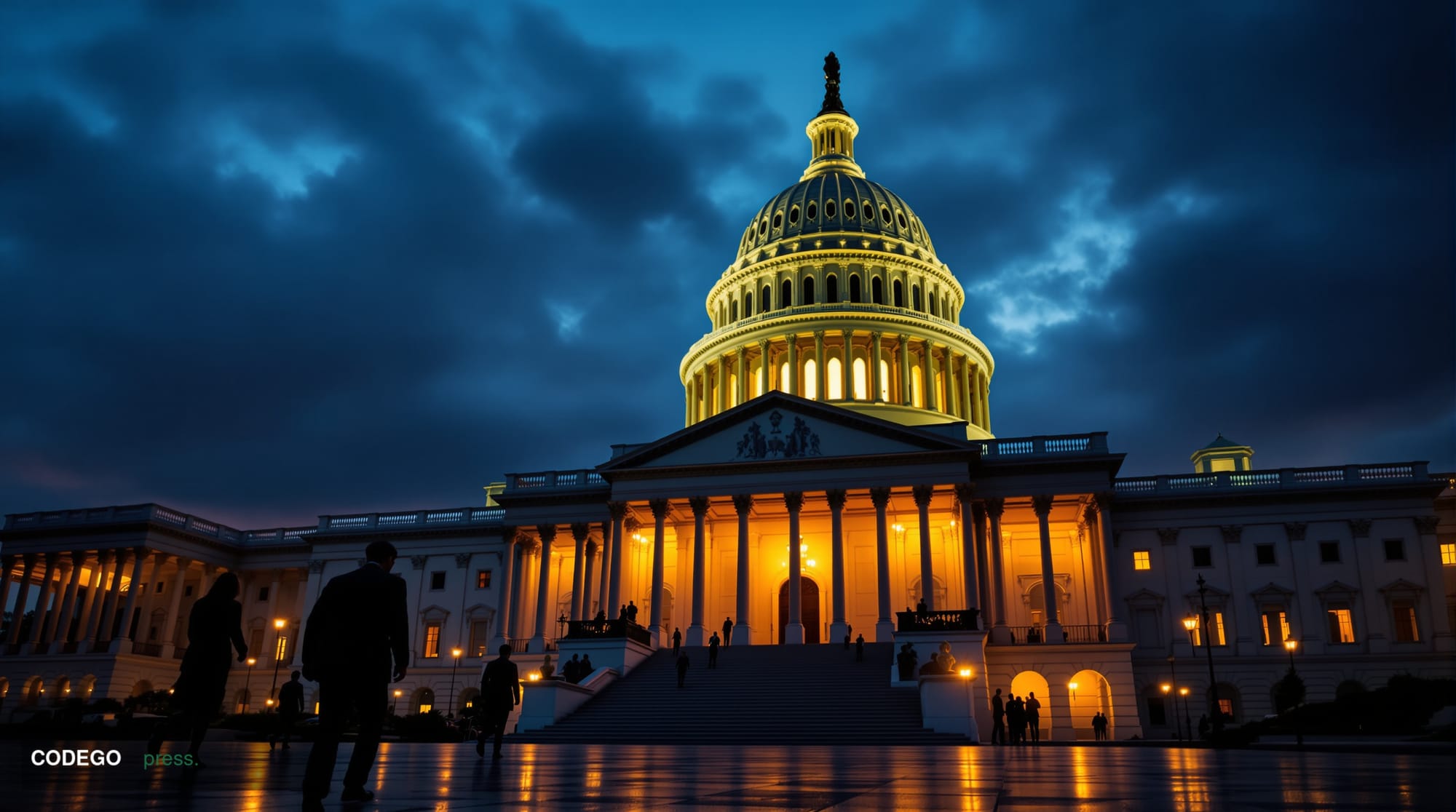
The Senate's decision to block the extension of the Foreign Intelligence Surveillance Act (FISA) ahead of its June 12 expiration has exposed a complex web of implications for the cryptocurrency sector that extends far beyond traditional surveillance concerns. While the legislative gridlock appears centered on privacy and national security debates, buried within the proposed extension were provisions that could have fundamentally altered the regulatory landscape for digital assets and central bank digital currencies.
The timing of this legislative standoff carries particular significance for the digital assets industry, which has been operating under increasing regulatory scrutiny. The FISA extension's failure highlights the broader tension between government surveillance capabilities and the decentralized, privacy-focused principles that underpin much of the cryptocurrency ecosystem. This intersection of surveillance law and digital currency regulation represents a critical juncture where traditional financial oversight mechanisms collide with emerging technologies designed to operate outside conventional monitoring frameworks.
The crypto-related provisions embedded within the surveillance legislation reflect a growing recognition among policymakers that digital currencies pose unique challenges to existing regulatory structures. These buried implications suggest that lawmakers are increasingly viewing cryptocurrency regulation through the lens of national security and surveillance capabilities, rather than treating digital assets as purely financial instruments. This approach signals a potential shift toward more invasive monitoring requirements for cryptocurrency transactions and exchanges operating within US jurisdiction.
The Senate's rejection of the FISA extension creates immediate uncertainty for cryptocurrency businesses that have been preparing for potential new compliance requirements. Without clear legislative direction, digital asset companies find themselves navigating an increasingly complex regulatory environment where surveillance laws, financial regulations, and emerging technology policies intersect in unpredictable ways. This regulatory ambiguity could prove particularly challenging for decentralized finance protocols and privacy-focused cryptocurrencies that operate on principles fundamentally at odds with traditional surveillance frameworks.
The ongoing tensions revealed by this legislative impasse extend beyond immediate surveillance concerns to encompass broader questions about the future of financial privacy and governmental oversight in the digital age. The fact that cryptocurrency provisions were buried within surveillance legislation demonstrates how digital assets have become intertwined with national security considerations, potentially subjecting the industry to oversight mechanisms originally designed for entirely different purposes.
For central bank digital currencies, the blocked FISA extension creates additional complications as policymakers grapple with balancing the surveillance capabilities that CBDCs could provide with public concerns about financial privacy. The legislative gridlock suggests that any future Federal Reserve digital currency initiatives will face intense scrutiny regarding their potential surveillance applications and privacy implications.
The failure to extend FISA with its embedded crypto provisions leaves the industry in a state of regulatory limbo that could persist well beyond the June 12 deadline. Future attempts to address surveillance authorities will likely face even greater scrutiny regarding their implications for digital assets, as lawmakers become more aware of the interconnected nature of these policy areas. This heightened awareness could lead to more explicit debates about cryptocurrency regulation rather than allowing such provisions to remain buried within unrelated legislation.
What this means for the cryptocurrency industry is a period of continued uncertainty as the intersection of surveillance law and digital asset regulation remains unresolved. The Senate's action demonstrates that crypto-related provisions cannot simply be tucked away within broader legislative packages without facing serious political resistance. Moving forward, any regulatory framework for digital currencies will need to explicitly address privacy concerns and surveillance capabilities, forcing a more transparent debate about the balance between financial oversight and individual privacy rights in the digital economy.
Written by the editorial team — independent journalism powered by Codego Press.