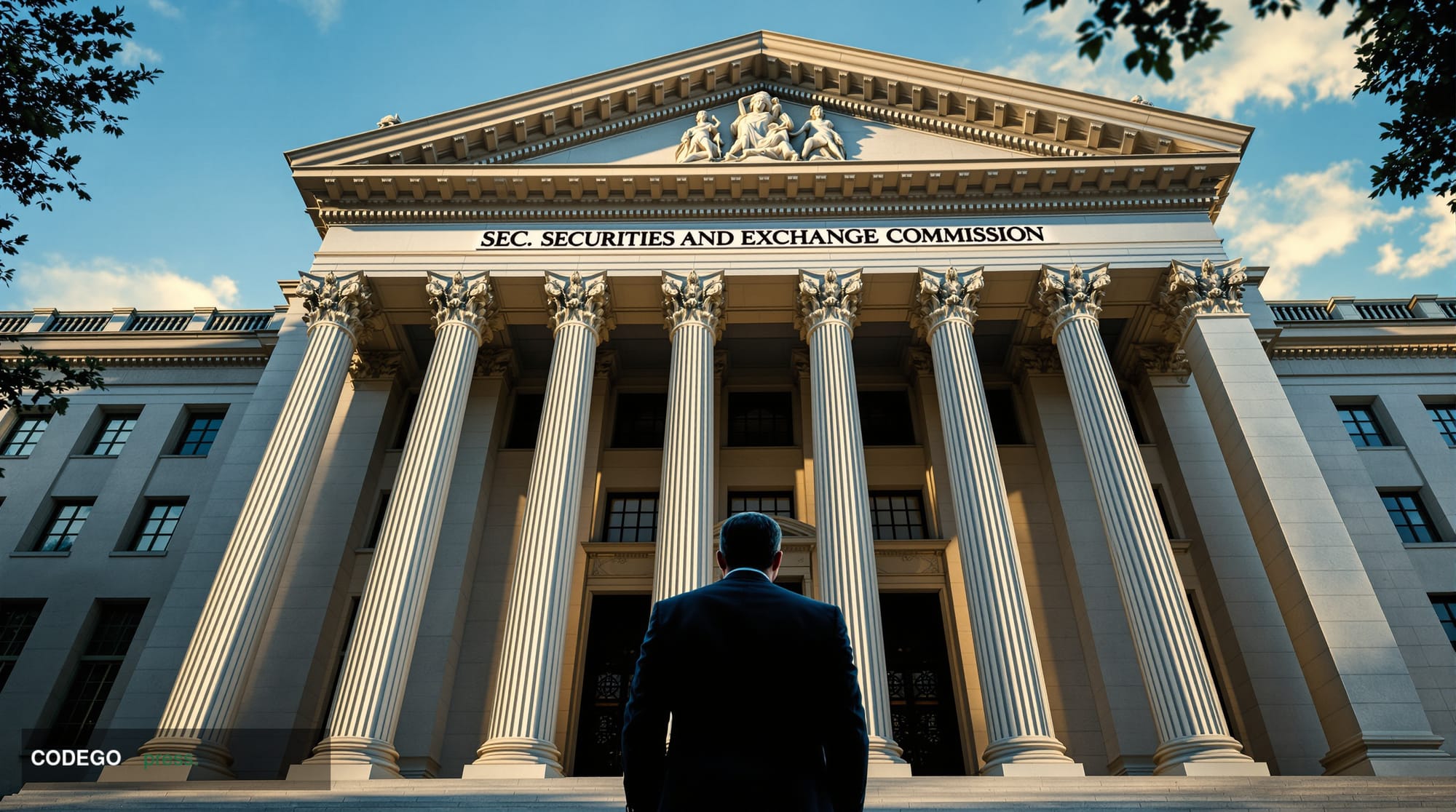
A former Silvergate executive has emerged from regulatory silence to challenge the constitutional validity of settlement terms that had prevented her from publicly defending herself, marking a rare instance of a financial services professional directly confronting the Securities and Exchange Commission's enforcement practices.
Kate Fraher, who served as an executive at the now-defunct crypto-focused bank, broke her silence this week after the SEC lifted restrictions that had barred her from sharing her perspective on the regulatory settlement. Fraher characterized the gag provision as unconstitutional, raising fundamental questions about due process rights in financial regulatory enforcement actions.
The development represents a significant moment in the ongoing tension between regulatory agencies and financial institutions operating in the cryptocurrency sector. Silvergate, once a key banking partner for major crypto exchanges and institutions, collapsed in March 2023 amid regulatory pressure and deposit flight following the FTX bankruptcy. The bank's demise sent shockwaves through the digital asset industry, which had relied heavily on Silvergate's services for fiat currency conversions and institutional banking needs.
Fraher's public statement illuminates the human cost of high-profile regulatory enforcement actions, where individual executives often face restrictions on their ability to defend their reputations and professional conduct. The constitutional challenge she raises touches on First Amendment protections and the broader question of whether regulatory settlements can legitimately silence participants from discussing their experiences.
The timing of the SEC's decision to lift the gag order suggests potential vulnerability in the agency's enforcement approach under Chair Gary Gensler's leadership. Gensler has pursued an aggressive regulatory stance toward the cryptocurrency industry, resulting in numerous enforcement actions against exchanges, token issuers, and service providers. However, constitutional challenges to SEC enforcement tactics have gained momentum in federal courts, with several judges questioning the agency's authority and methods.
For the broader financial services industry, Fraher's case establishes important precedent regarding settlement negotiations and post-agreement communications. Traditional banking regulators have long used confidentiality provisions to limit public discussion of enforcement matters, but the constitutional dimensions of such restrictions remain largely untested in appellate courts.
The Silvergate case also reflects the unique challenges facing financial institutions that served the cryptocurrency sector during its rapid expansion and subsequent regulatory crackdown. Banks like Silvergate found themselves caught between serving a growing customer base and satisfying increasingly stringent regulatory expectations, often with limited guidance on compliance requirements for digital asset-related activities.
As regulatory enforcement in the cryptocurrency space continues to evolve, Fraher's willingness to challenge settlement terms publicly may encourage other industry participants to resist what they perceive as overreaching regulatory demands. The constitutional questions she raises could influence how future settlements are structured and whether gag provisions can withstand First Amendment scrutiny in federal court.
The ultimate resolution of these constitutional issues will likely shape the balance between regulatory enforcement effectiveness and individual rights in financial services regulation. For an industry already grappling with regulatory uncertainty, the outcome of challenges like Fraher's could determine whether executives and institutions maintain meaningful ability to defend themselves in the court of public opinion alongside formal legal proceedings.
Written by the editorial team — independent journalism powered by Codego Press.