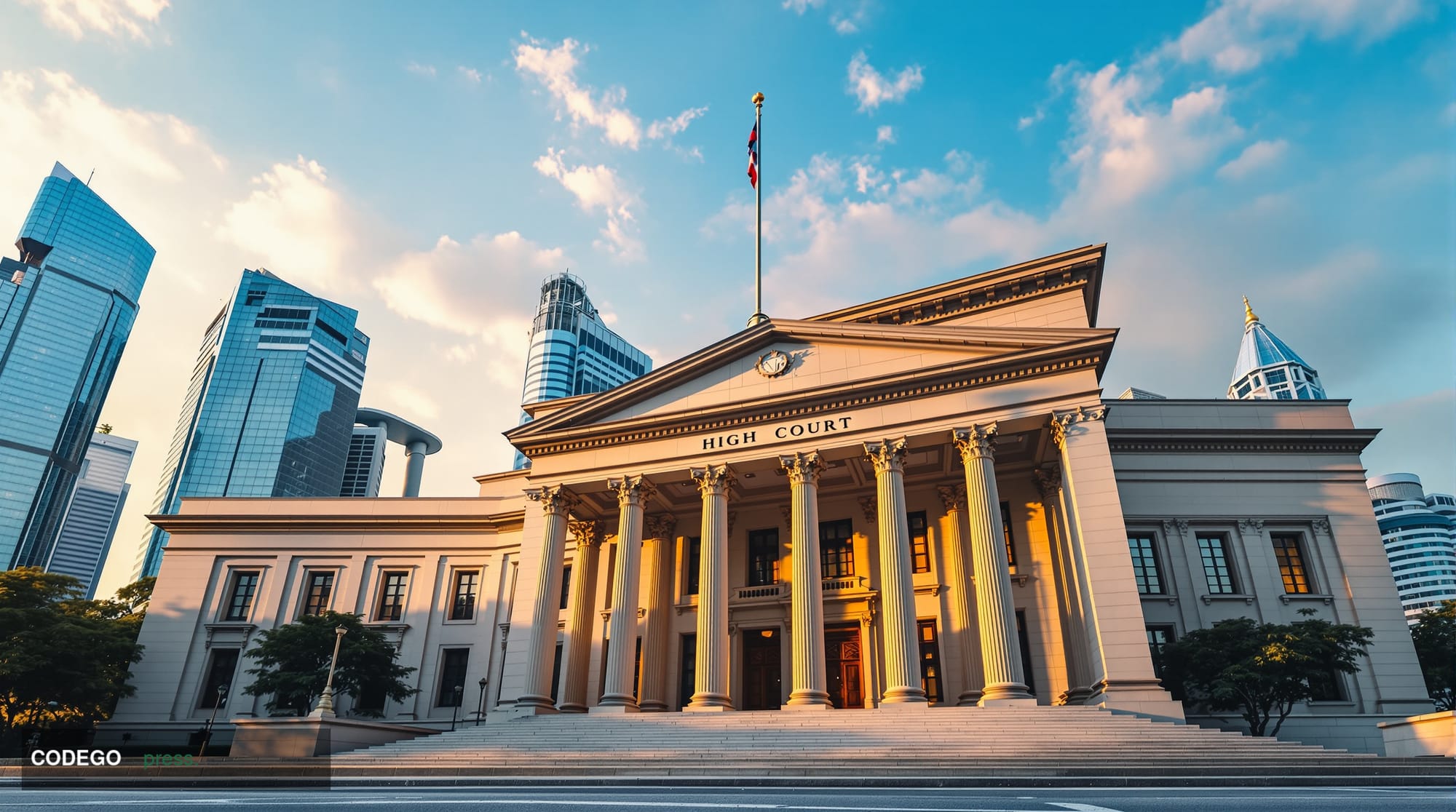
A significant enforcement action in Singapore's fintech sector has escalated into court-ordered asset seizures, as the Singapore High Court moves to recover a substantial arbitration award through the seizure of equity stakes held by aviation conglomerate Capital A in prominent Southeast Asian financial technology companies.
The court has issued a formal notice directing the seizure of shares held by Move Digital, a subsidiary of Capital A, in both digital wallet operator BigPay and logistics platform Teleport. This enforcement mechanism represents the judicial system's attempt to collect on a US$14.7 million arbitration award, equivalent to RM59.85 million, that remains outstanding to BigPay's co-founders Christopher Davison and Navin Rajagopalan.
The seizure order illuminates the complex web of corporate relationships within Southeast Asia's fintech ecosystem, where Capital A—formerly known as AirAsia Group—has maintained strategic investments across multiple digital financial services platforms. BigPay, which launched as a digital wallet and prepaid card service targeting the underbanked population across Malaysia, Singapore, and Thailand, has positioned itself as a key player in the region's push toward financial inclusion and digital payment adoption.
The substantial nature of the US$14.7 million arbitration award suggests this dispute involves significant operational or strategic disagreements between the fintech's founding team and its corporate backers. Arbitration awards of this magnitude typically stem from complex commercial disputes involving equity arrangements, management control, or breach of fiduciary duties. The involvement of both co-founders as beneficiaries indicates the dispute likely centers on fundamental governance or compensation issues that emerged during BigPay's development and expansion phases.
Capital A's exposure through its Move Digital subsidiary extends beyond BigPay to include stakes in Teleport, the logistics and delivery platform that has become increasingly valuable as Southeast Asian e-commerce and last-mile delivery markets have expanded. The inclusion of Teleport assets in the seizure order demonstrates the court's comprehensive approach to asset recovery, targeting the full portfolio of Move Digital's fintech-adjacent investments to satisfy the outstanding arbitration award.
This enforcement action occurs against the backdrop of Singapore's increasingly sophisticated approach to cross-border commercial dispute resolution. The city-state has positioned itself as a premier arbitration hub for Asia-Pacific commercial disputes, with its courts demonstrating consistent willingness to enforce arbitration awards through robust asset seizure mechanisms. The involvement of Malaysian-listed Capital A and its various digital subsidiaries showcases how Singapore's legal framework extends effectively across regional corporate structures.
The seizure proceedings may have broader implications for Capital A's digital transformation strategy, which has relied heavily on its portfolio of fintech and logistics investments to diversify beyond its traditional aviation business. With the aviation sector facing ongoing challenges, these digital assets have represented crucial value drivers for the conglomerate's long-term positioning. The court-ordered seizure introduces uncertainty into this strategic pivot, potentially constraining Capital A's ability to leverage these investments for future expansion or refinancing activities.
For BigPay specifically, the dispute highlights the ongoing challenges that Southeast Asian fintech companies face in balancing founder vision with corporate investor expectations. As digital payment platforms across the region compete for market share and regulatory compliance, internal governance disputes can significantly impact operational stability and growth trajectory. The resolution of this arbitration award through asset seizures may ultimately reshape the ownership structure and strategic direction of both BigPay and related platforms within Capital A's digital ecosystem.
Written by the editorial team — independent journalism powered by Codego Press.