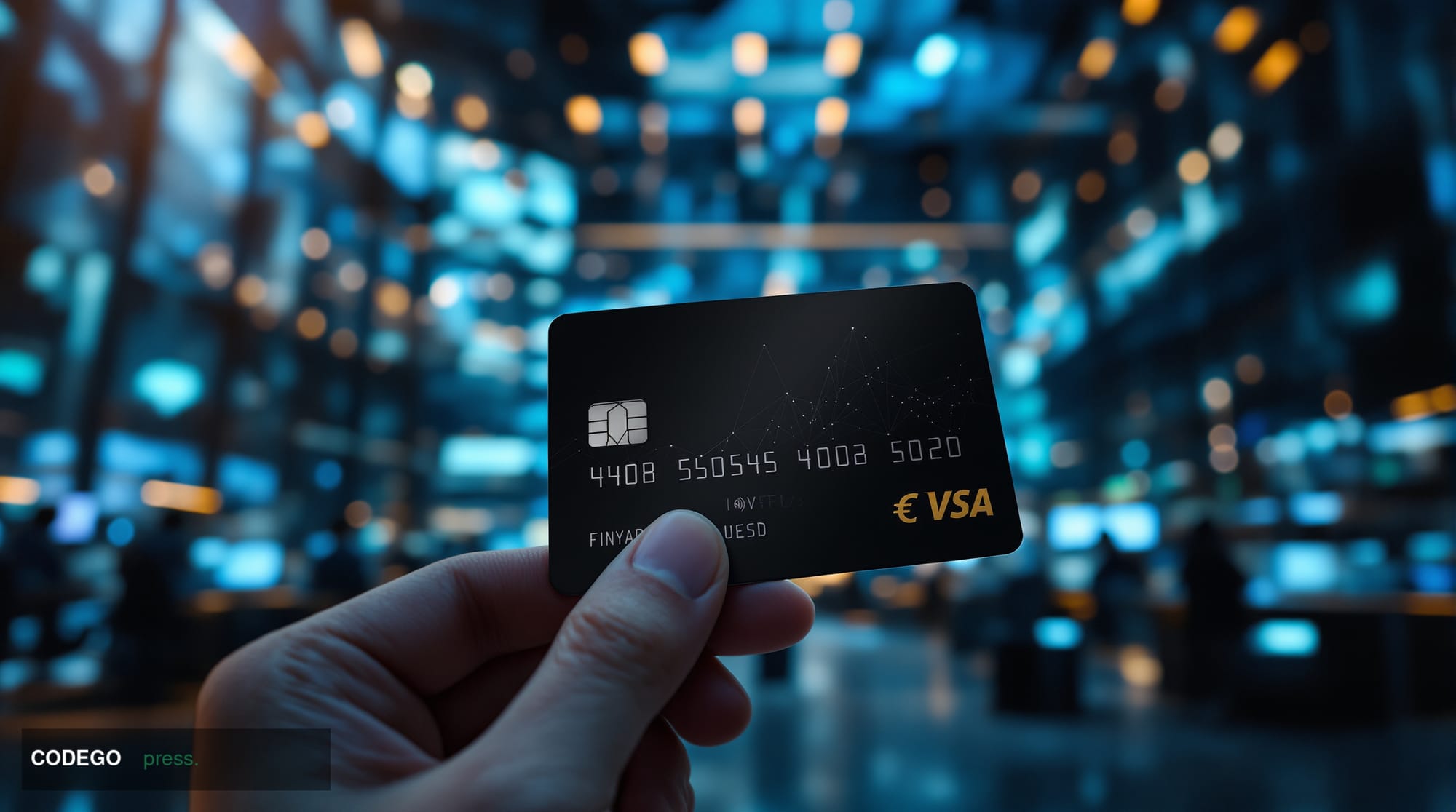
The cryptocurrency payments landscape has gained another significant entrant as Solayer introduces a Visa-compatible card that enables direct spending of USD Coin (USDC) balances through traditional payment infrastructure. The launch represents a notable advancement in bridging the gap between digital assets and everyday commerce, offering users seamless access to their cryptocurrency holdings through established payment networks.
Solayer's new card supports the full spectrum of modern payment methods, allowing users to conduct online purchases, in-store transactions, and contactless payments directly from their USDC balances. The integration with Visa's global network ensures broad merchant acceptance, while the inclusion of ATM withdrawal capabilities in supported regions provides users with additional liquidity options for their digital assets.
The timing of this launch reflects the growing maturation of the cryptocurrency payments sector, as financial technology companies increasingly focus on practical utility rather than speculative trading. By leveraging USDC—a stablecoin pegged to the US dollar—Solayer addresses one of the primary barriers to cryptocurrency adoption in everyday commerce: price volatility. Users can maintain the purchasing power stability of traditional currency while enjoying the technological advantages of blockchain-based payments.
Infrastructure Convergence Accelerates
The technical implementation of cryptocurrency spending through traditional payment rails represents a significant infrastructure achievement. Solayer's card effectively translates blockchain transactions into formats compatible with existing point-of-sale systems, eliminating the need for merchants to adopt new hardware or software to accept digital asset payments. This approach has proven successful for other cryptocurrency payment providers, suggesting a viable path toward mainstream adoption.
The choice to focus on USDC specifically demonstrates strategic thinking about regulatory compliance and user experience. As a regulated stablecoin with substantial market capitalization and institutional backing, USDC offers more predictable value transfer compared to volatile cryptocurrencies like Bitcoin or Ethereum. This stability makes it more suitable for everyday transactions while maintaining the programmable and borderless characteristics of digital assets.
For financial institutions and payment processors, the emergence of such products signals the continuing evolution of money movement infrastructure. Traditional payment networks like Visa have demonstrated increasing openness to cryptocurrency integration, recognizing both the technological innovation and market demand driving this sector.
Market Implications and Competitive Dynamics
Solayer's entry into the cryptocurrency payments market occurs amid heightened competition among fintech companies seeking to capture the growing demand for digital asset utility. Established players in this space have already demonstrated significant user adoption, while traditional financial institutions continue exploring their own cryptocurrency payment solutions.
The success of such products typically depends on factors including geographic coverage, fee structures, customer support quality, and regulatory compliance. Solayer's mention of ATM withdrawal availability "in supported regions" suggests a phased rollout approach, which has become standard practice for fintech companies navigating varying regulatory environments across different jurisdictions.
From an industry perspective, the proliferation of cryptocurrency payment cards represents validation of the practical utility thesis for digital assets. Rather than serving primarily as investment vehicles, cryptocurrencies and stablecoins are increasingly positioned as legitimate alternatives to traditional payment methods, particularly for cross-border transactions and regions with limited banking infrastructure.
The broader implications extend beyond individual consumer convenience to encompass the fundamental architecture of global payments. As more companies successfully integrate cryptocurrency spending with traditional payment networks, the distinction between "digital" and "traditional" money continues to blur, potentially accelerating the transition toward a more unified financial ecosystem.
Written by the editorial team — independent journalism powered by Codego Press.