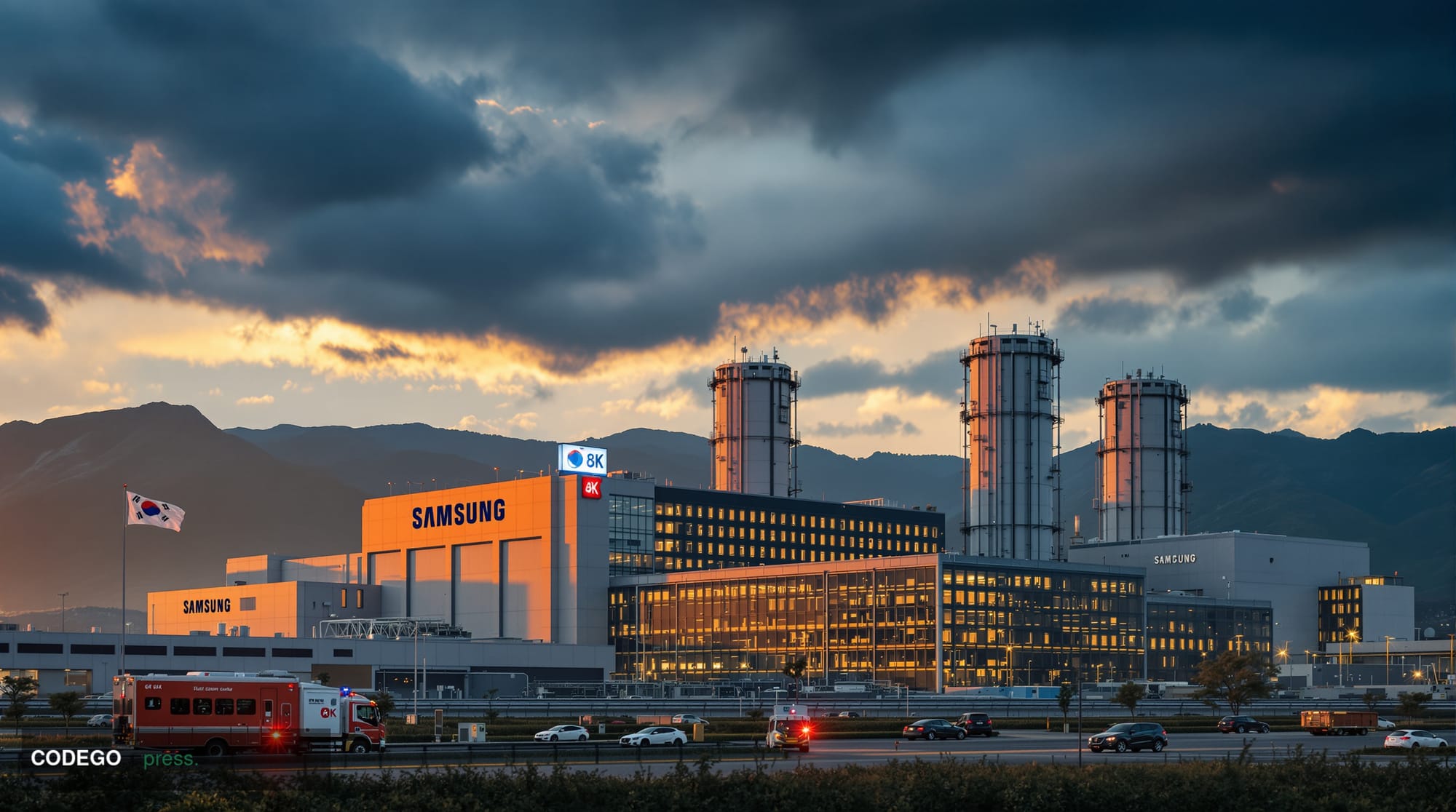
South Korea's government has initiated emergency arbitration proceedings to prevent a potentially catastrophic labor strike at Samsung, as the dispute threatens to inflict $67 billion in economic damage and disrupt global technology supply chains. The unprecedented intervention underscores the enormous stakes involved when labor disputes collide with critical national economic infrastructure in the world's most interconnected technology ecosystem.
The proposed strike represents far more than a typical labor disagreement—it threatens to trigger a cascade of disruptions across industries that depend on Samsung's vast manufacturing capabilities. From semiconductors powering everything from smartphones to data centers, to display panels essential for consumer electronics, Samsung's production facilities serve as critical nodes in the global technology supply network. The $67 billion cost estimate reflects not just immediate production losses but the broader economic ripple effects across interconnected supply chains.
Seoul's decision to pursue emergency arbitration reveals the government's recognition that Samsung's operations have transcended traditional corporate boundaries to become essential national economic infrastructure. The company's semiconductor division alone accounts for a significant portion of global memory chip production, while its display technologies power devices manufactured by competitors and partners alike. Any extended disruption would reverberate through technology companies worldwide, potentially affecting product launches, inventory management, and ultimately consumer pricing across multiple sectors.
The labor dispute illuminates the fundamental tension between worker rights and economic stability in highly interconnected global markets. While employees deserve fair compensation and working conditions, the scale of Samsung's operations means that traditional labor negotiation tactics carry outsized systemic risks. This dynamic has created a new category of "too big to strike" companies whose labor disputes require novel approaches to balance legitimate worker concerns with broader economic stability requirements.
Emergency arbitration represents an attempt to find middle ground that addresses worker grievances while maintaining production continuity. The process typically involves independent mediators working to craft binding agreements that satisfy both parties' core interests without the economic disruption of a full work stoppage. However, the effectiveness of such interventions depends heavily on both sides' willingness to engage constructively rather than using the process to delay inevitable confrontations.
The timing of this dispute proves particularly challenging given existing supply chain pressures across the technology sector. Global semiconductor shortages have already strained manufacturing schedules and inventory management across industries, from automotive to consumer electronics. A Samsung production halt would exacerbate these existing tensions, potentially forcing companies to redesign products around alternative components or accept significant delays in bringing new products to market.
For financial markets, the Samsung situation represents a stress test of how modern economies handle labor disputes at systemically important companies. The $67 billion economic impact estimate suggests that traditional cost-benefit analyses of strikes no longer apply when dealing with companies whose operations underpin entire industrial sectors. This reality may necessitate new frameworks for managing labor relations at companies whose operational continuity affects national economic security.
The resolution of this dispute will likely establish precedents for handling similar conflicts at other major technology companies whose operations have achieved comparable scale and systemic importance. As technology companies continue growing in size and economic influence, governments worldwide may need to develop new mechanisms for balancing labor rights with economic stability concerns that extend far beyond traditional employer-employee relationships.
Written by the editorial team — independent journalism powered by Codego Press.