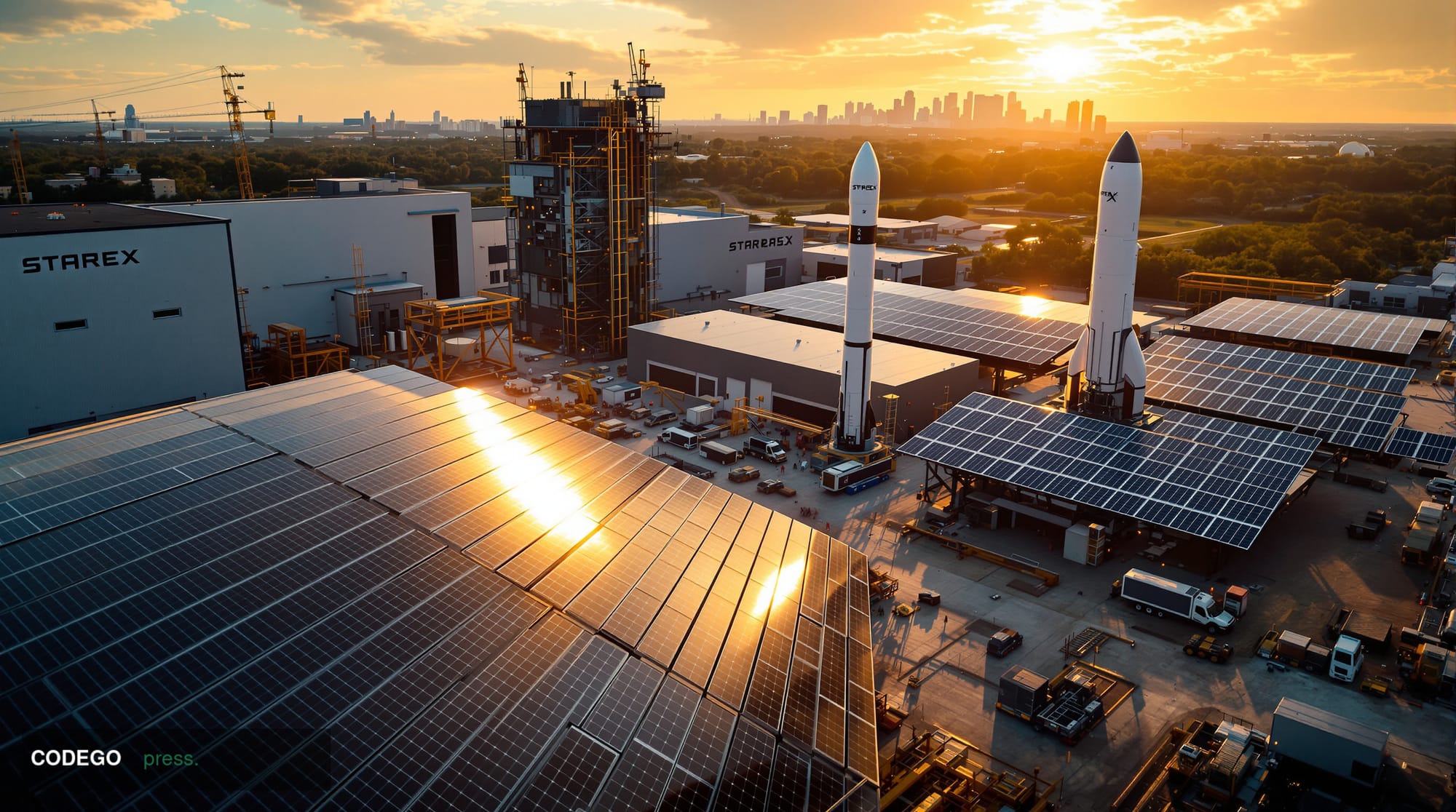
Elon Musk's SpaceX has unveiled plans for a massive 10-gigawatt solar manufacturing facility near Austin, marking a pivotal moment where aerospace ambitions converge with renewable energy infrastructure. The facility represents far more than a conventional solar project, positioning itself as the backbone for an emerging paradigm in artificial intelligence infrastructure that extends beyond Earth's atmosphere.
The 10-gigawatt capacity facility would rank among the world's largest solar manufacturing operations, dwarfing many existing installations and signaling SpaceX's serious commitment to vertical integration across energy production. This scale of manufacturing capability suggests the company anticipates substantial demand for solar technology, particularly given the facility's strategic alignment with space-based data center operations that require continuous, reliable power sources independent of terrestrial grid limitations.
The revolutionary aspect of this initiative lies in its targeting of space-based data centers, a concept that addresses fundamental constraints plaguing terrestrial AI infrastructure. Ground-based data centers consume enormous amounts of electricity and generate significant heat, requiring extensive cooling systems that further increase energy demands. Space-based facilities could theoretically operate with vastly superior thermal management through radiative cooling in the vacuum of space, while solar panels would function with greater efficiency absent atmospheric interference.
For the artificial intelligence sector, this development could prove transformative. Current AI model training and inference operations are increasingly constrained by power availability and cooling costs, factors that have driven major tech companies to seek alternative solutions. Space-based data centers powered by SpaceX's solar technology could provide continuous operation without weather-related interruptions, grid failures, or the geographical limitations that affect terrestrial renewable energy installations.
The facility's Austin-area location leverages Texas's favorable regulatory environment for both aerospace and energy projects, while positioning SpaceX near existing supply chains and talent pools. Texas has emerged as a hub for renewable energy manufacturing, providing SpaceX with potential partnerships and regulatory frameworks conducive to large-scale solar production. The proximity to SpaceX's Starbase facility in South Texas also creates logistical advantages for integrating solar technology into space missions.
From a broader energy sector perspective, SpaceX's entry into solar manufacturing introduces a formidable competitor with unique advantages. The company's expertise in advanced materials, precision manufacturing, and supply chain management—honed through rocket production—could translate into solar panels with superior performance characteristics or cost efficiencies. Additionally, SpaceX's vertical integration philosophy suggests the facility will serve primarily internal needs rather than competing directly with traditional solar manufacturers for terrestrial installations.
The implications extend beyond energy and aerospace into financial technology and digital infrastructure. Space-based data centers could enable new forms of decentralized computing networks, potentially supporting blockchain operations, high-frequency trading systems, and other applications requiring ultra-reliable uptime. The continuous power availability and reduced latency for certain applications could create entirely new markets for space-based computational services.
This convergence of space technology, renewable energy, and AI infrastructure represents a fundamental shift in how companies approach large-scale computational challenges. SpaceX's 10-gigawatt solar facility near Austin positions the company not merely as a launch provider, but as an architect of space-based digital infrastructure that could reshape multiple industries. The success of this initiative will likely influence other aerospace companies and tech giants to explore similar integrated approaches to space-based computing and energy generation, potentially accelerating the timeline for commercial space-based data operations and establishing new paradigms for sustainable AI infrastructure development.
Written by the editorial team — independent journalism powered by Codego Press.