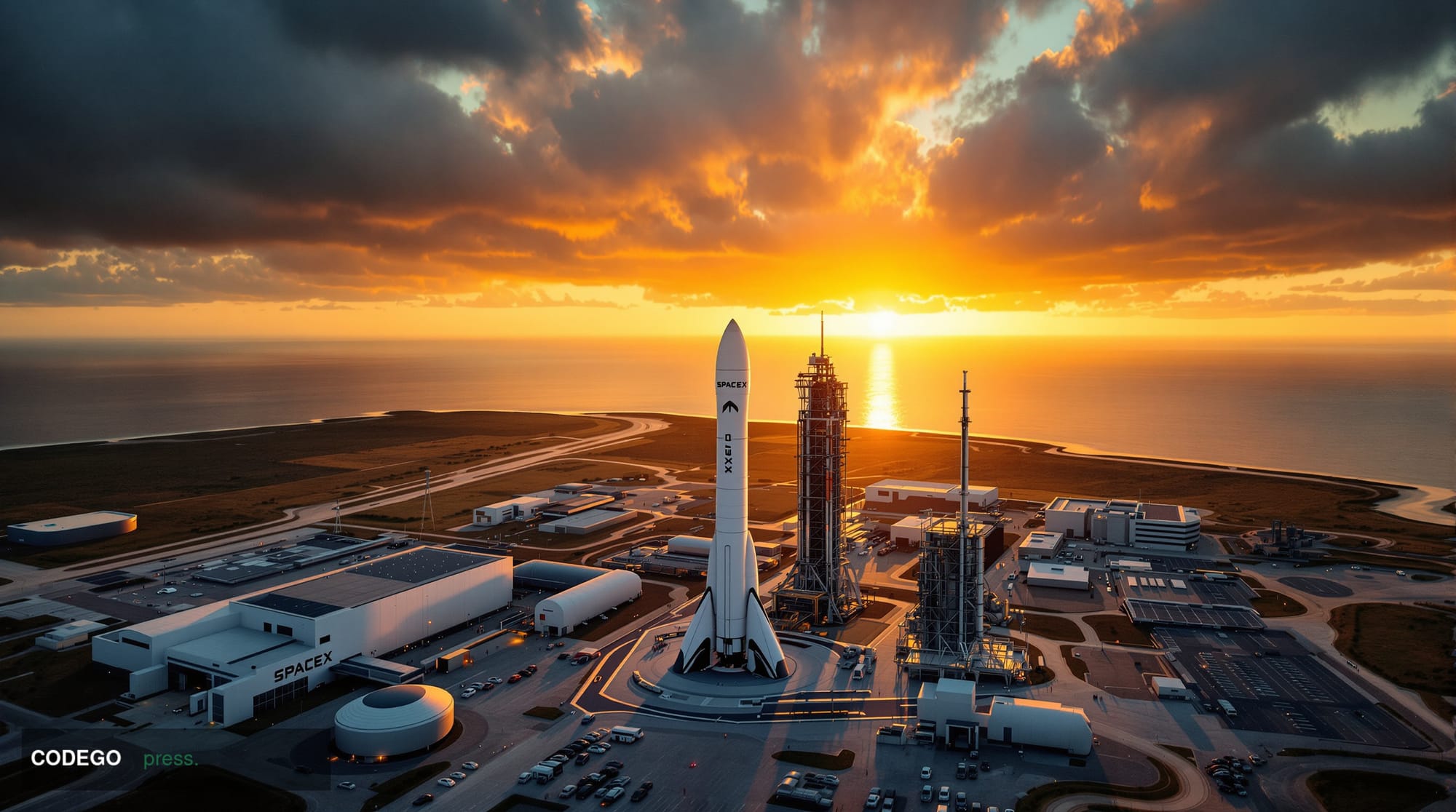
SpaceX has achieved a remarkable milestone by surpassing a $2 trillion valuation despite recording substantial losses of $5 billion in 2025, marking a striking paradox in contemporary corporate finance. The aerospace company's astronomical market capitalization places it among the most valuable private enterprises globally, even as its financial statements reveal significant operational deficits that would traditionally concern investors in more conventional sectors.
The juxtaposition between SpaceX's massive losses and its soaring valuation reflects a broader shift in how investors evaluate high-growth technology companies, particularly those operating in capital-intensive industries like aerospace and space exploration. Traditional financial metrics appear secondary to the company's perceived potential in revolutionizing space travel, satellite deployment, and interplanetary commerce. This investor sentiment has propelled the company's worth beyond the $2 trillion threshold, positioning it alongside tech giants that have fundamentally transformed global commerce and communication.
However, the company's strategic decision to hold volatile digital assets, particularly Bitcoin, introduces a new dimension of financial risk that could amplify both gains and losses in future reporting periods. Cryptocurrency holdings on corporate balance sheets have become increasingly common among technology companies, but the inherent volatility of these assets can significantly impact quarterly and annual financial performance. For a company already reporting substantial losses, Bitcoin's price fluctuations could create additional uncertainty for investors attempting to assess SpaceX's underlying operational performance.
The $5 billion loss figure represents more than just operational expenses; it reflects the enormous capital requirements inherent in developing cutting-edge aerospace technology, conducting numerous test flights, and scaling manufacturing capabilities for both rockets and satellites. SpaceX's ambitious projects, including the Starship program and the Starlink satellite constellation, require unprecedented upfront investments that may not generate returns for years or even decades. This long-term investment horizon aligns with investor expectations that current losses are necessary sacrifices for future market dominance in space commerce.
Despite these substantial losses, investor confidence appears unshaken, suggesting that the market views SpaceX's current financial performance as a temporary condition rather than a fundamental weakness. The company's track record of achieving previously impossible milestones, such as successfully landing and reusing rocket boosters, has established credibility with investors who believe that current expenditures are building the foundation for future profitability. This confidence is further bolstered by SpaceX's growing revenue streams from commercial satellite launches, government contracts, and the expanding Starlink internet service.
The incorporation of Bitcoin into SpaceX's treasury strategy adds complexity to its risk profile, particularly given the cryptocurrency's notorious price volatility. While digital assets can serve as a hedge against inflation and currency devaluation, they also introduce quarterly earnings volatility that can obscure operational performance metrics. For a company already navigating the inherent uncertainties of aerospace development, cryptocurrency holdings represent an additional variable that could either enhance or diminish overall financial performance depending on market conditions.
This development positions SpaceX at the intersection of two of the most dynamic and volatile sectors in modern finance: aerospace innovation and cryptocurrency adoption. The company's ability to maintain investor confidence while managing both operational losses and digital asset volatility will serve as a critical test case for how markets evaluate companies that blend traditional industrial operations with modern financial instruments. As SpaceX continues pursuing its ambitious goals of Mars colonization and global internet coverage, its financial strategy and risk management approach will likely influence how other high-growth companies structure their balance sheets and treasury operations.
Written by the editorial team — independent journalism powered by Codego Press.