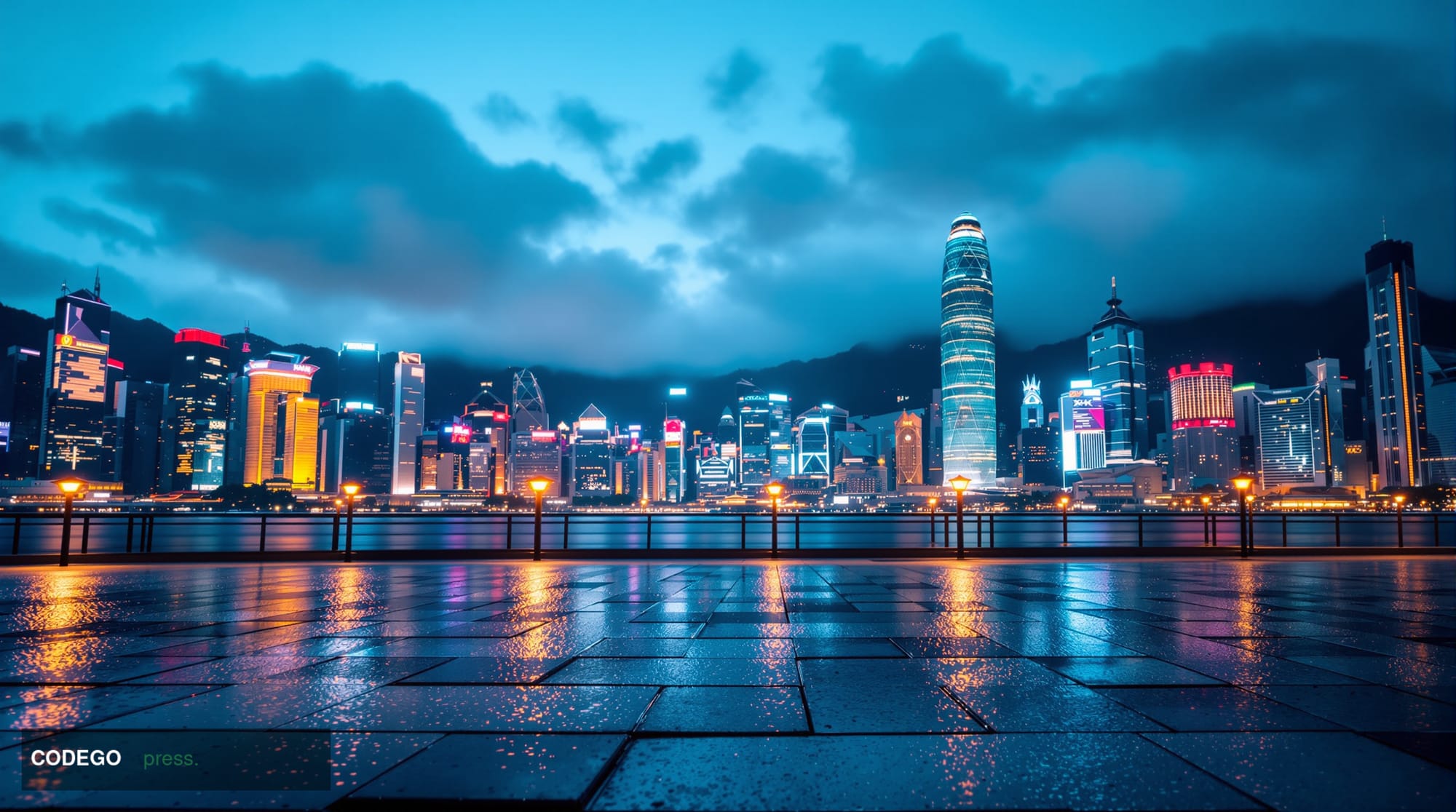
Hong Kong's ambition to cement itself as Asia's preeminent hub for regulated digital assets has taken a concrete and consequential step forward. Standard Chartered, Animoca Brands, and HKT — Hong Kong's leading telecommunications group — have jointly launched HKDAP, the city's first regulated Hong Kong Dollar (HKD) stablecoin. The milestone marks a pivotal moment not only for the three institutions involved but for the broader regional contest to define the future of sovereign-currency-pegged digital money in Asia.
A Consortium Built for Credibility
The composition of this consortium is far from accidental. Standard Chartered brings deep institutional banking infrastructure and a long track record of navigating complex regulatory environments across Asia, Africa, and the Middle East. Animoca Brands contributes its considerable expertise at the intersection of blockchain technology, digital assets, and the Web3 economy — a sphere in which the Hong Kong-headquartered firm has established global influence. HKT, meanwhile, adds the critical dimension of mass-market distribution and technology infrastructure, with reach into millions of households and businesses across the territory. Together, the three partners create a formation that is simultaneously credentialed in traditional finance, digitally native, and operationally scalable — precisely the combination regulators and institutional clients require before extending trust to a new form of digital money.
What HKDAP Represents
HKDAP — the Hong Kong Dollar Anchored Payment token — is pegged to the Hong Kong Dollar and operates under a regulated framework, distinguishing it sharply from the vast universe of unregulated or loosely governed stablecoins that have proliferated globally over the past several years. The collapse of algorithmic stablecoins and the persistent scrutiny of asset-backed alternatives have made regulatory standing the single most important signal of legitimacy for any stablecoin project seeking adoption beyond speculative crypto markets. By launching under a regulated structure from inception, the HKDAP consortium is making a deliberate statement: this instrument is designed for real economic activity, not for yield-chasing or speculative trading.
The significance of the "first regulated" designation cannot be overstated. Hong Kong's Hong Kong Monetary Authority (HKMA) has been developing its stablecoin regulatory framework with considerable deliberation, consulting widely with the industry before codifying its requirements. Any entity receiving regulatory approval to issue a Hong Kong Dollar stablecoin has therefore cleared a demanding set of hurdles relating to reserve management, redemption rights, anti-money laundering (AML) controls, and know-your-customer (KYC) protocols. HKDAP's emergence as the first to achieve this status signals that Standard Chartered, Animoca Brands, and HKT have satisfied those standards — a commercially and reputationally meaningful achievement.
Hong Kong's Strategic Position in Asia's Digital Currency Race
The launch arrives at a moment of intensifying competition among Asian financial centres to attract digital asset businesses and establish credibility in the emerging regulated stablecoin sector. Singapore has long positioned itself as a regional blockchain hub, while Japan has moved to clarify its own stablecoin legislation, and jurisdictions including the United Arab Emirates have pursued aggressive licensing regimes. Hong Kong, after a period in which its regulatory posture toward crypto was read as cautious or even restrictive, has in recent years adopted a notably more structured and open approach — one designed to attract serious institutional players while maintaining the robust oversight that underpins the city's reputation as a global financial centre.
HKDAP fits neatly within this strategic reorientation. The token's potential applications span cross-border payments, trade finance settlement, retail digital payments, and integration with broader Web3 infrastructure — each of which represents a domain where Hong Kong has competitive advantages rooted in its role as a gateway between mainland Chinese capital markets and the global financial system. For Animoca Brands in particular, a regulated HKD stablecoin opens practical pathways for settling digital asset transactions, funding Web3 projects, and enabling programmable financial products within a compliant structure that global counterparties can accept.
Implications for Regional and Global Stablecoin Markets
Beyond Hong Kong's borders, HKDAP carries implications for how other jurisdictions think about the relationship between sovereign currency pegs, private issuers, and regulatory oversight. The consortium model — combining a global bank, a Web3 enterprise, and a telecommunications operator — may itself become a template. It distributes risk, pools complementary capabilities, and creates the kind of multi-stakeholder legitimacy that purely crypto-native stablecoin projects have historically struggled to generate. As the Bank for International Settlements (BIS) and national central banks continue to refine their thinking on the coexistence of private stablecoins and central bank digital currencies (CBDCs), regulated private stablecoins like HKDAP will serve as important empirical reference points.
What This Means
The launch of HKDAP by Standard Chartered, Animoca Brands, and HKT is more than a product announcement — it is a structural signal about the direction of Hong Kong's financial system. By producing the territory's first regulated HKD stablecoin, the consortium demonstrates that the infrastructure for compliant digital money is no longer theoretical. As Hong Kong moves to position itself as a leader in regulated digital currency across Asia, HKDAP will serve as both a proof of concept and a competitive benchmark. The question for market participants, rival financial centres, and regulators elsewhere is no longer whether regulated stablecoins anchored to major currencies are viable — it is how quickly they can build equivalent frameworks of their own.
Written by the editorial team — independent journalism powered by Codego Press.