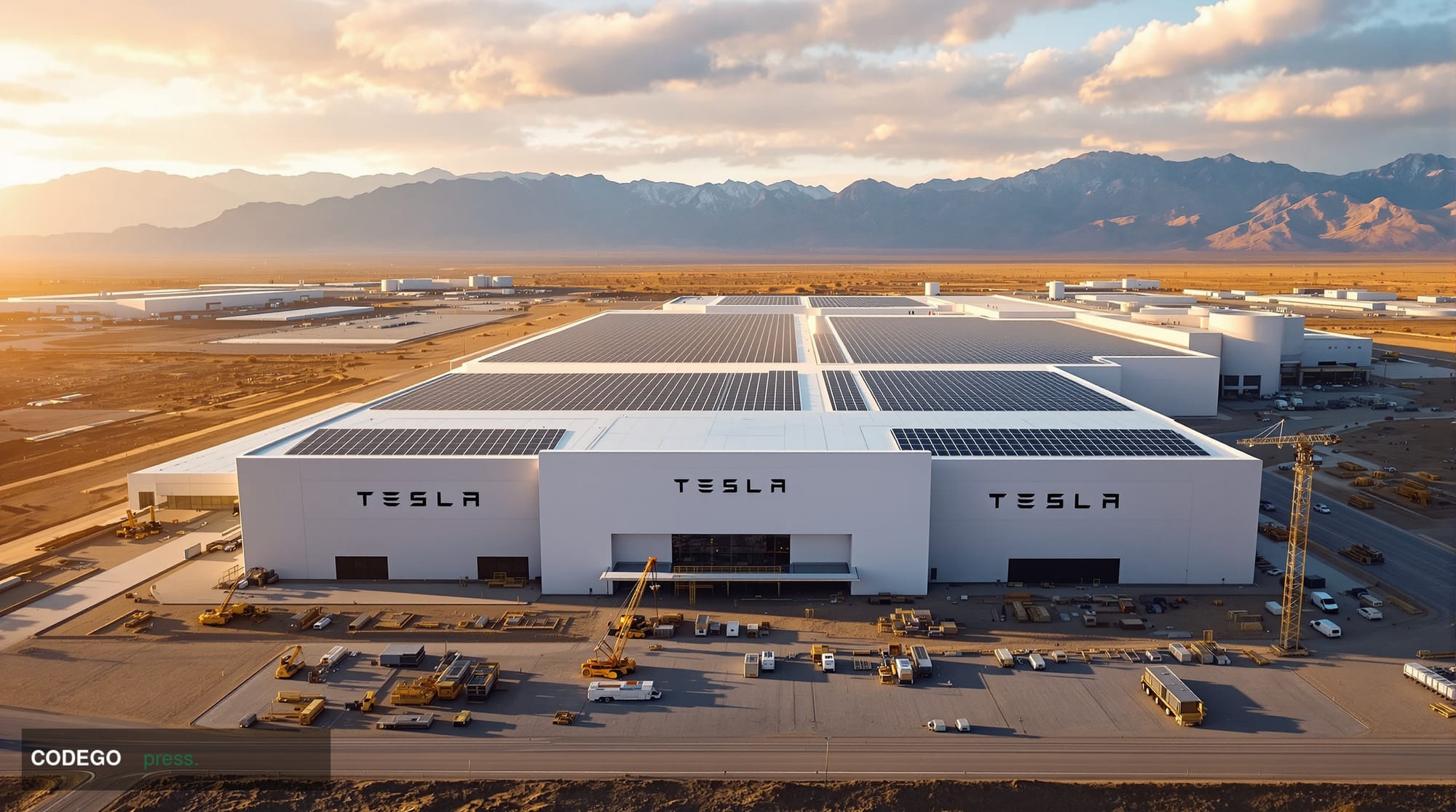
Tesla's announcement of a $119 billion investment in its Terafab chip manufacturing facility represents one of the most ambitious industrial undertakings in modern corporate history, signaling a fundamental transformation of the electric vehicle pioneer into a vertically integrated technology powerhouse. The investment magnitude positions Tesla to potentially reshape global semiconductor supply chains while establishing unprecedented control over the critical components driving automotive and energy innovation.
The Terafab initiative marks Tesla's boldest move yet to eliminate dependence on external chip suppliers, a vulnerability that has plagued the automotive industry throughout recent supply chain disruptions. By centralizing chip production within its operational framework, Tesla aims to achieve supply chain sovereignty that could provide competitive advantages across its vehicle, energy storage, and autonomous driving divisions. The facility's scale suggests production capacity far exceeding Tesla's internal requirements, potentially positioning the company as a significant player in the broader semiconductor market.
This strategic pivot reflects broader trends in technological vertical integration, where companies seek greater control over critical supply chain components. The $119 billion commitment dwarfs many national semiconductor initiatives and underscores Tesla's confidence in both its technological capabilities and long-term market positioning. Such massive capital allocation typically signals management's belief that internal chip production will generate superior returns compared to external procurement, suggesting Tesla anticipates either significant cost savings or performance advantages from proprietary semiconductor designs.
The timing of this investment coincides with intensifying global competition in semiconductor manufacturing, particularly as governments worldwide prioritize domestic chip production capabilities. Tesla's entry into this space could disrupt traditional semiconductor market dynamics, potentially challenging established players while creating new competitive pressures. The centralized production model proposed for Terafab could streamline design-to-manufacturing cycles, enabling more rapid iteration and customization than traditional chip procurement relationships allow.
From a financial perspective, the $119 billion investment represents a substantial bet on Tesla's ability to execute complex manufacturing operations beyond its core automotive expertise. Semiconductor fabrication requires entirely different technological competencies, quality control systems, and operational disciplines compared to vehicle assembly. The success of this venture will largely depend on Tesla's capacity to recruit specialized talent, develop proprietary process technologies, and achieve the precision manufacturing standards essential for advanced chip production.
The broader implications for global supply chains could prove transformative, particularly if Tesla's centralized production model demonstrates superior efficiency or reliability compared to distributed semiconductor manufacturing networks. Success could inspire other technology companies to pursue similar vertical integration strategies, potentially fragmenting current semiconductor supply chains while creating new centers of production. Conversely, execution challenges could highlight the complexity barriers that have historically maintained specialized divisions between chip design, fabrication, and system integration.
Tesla's Terafab investment ultimately represents a fundamental recalibration of the company's strategic identity, evolving from an electric vehicle manufacturer into a comprehensive technology infrastructure provider. The $119 billion commitment signals management's conviction that semiconductor control constitutes a critical competitive advantage in an increasingly digital automotive landscape. Whether this massive investment generates anticipated returns will likely influence how other technology companies approach supply chain vertical integration decisions, potentially reshaping industrial organization across multiple technology sectors for decades to come.
Written by the editorial team — independent journalism powered by Codego Press.