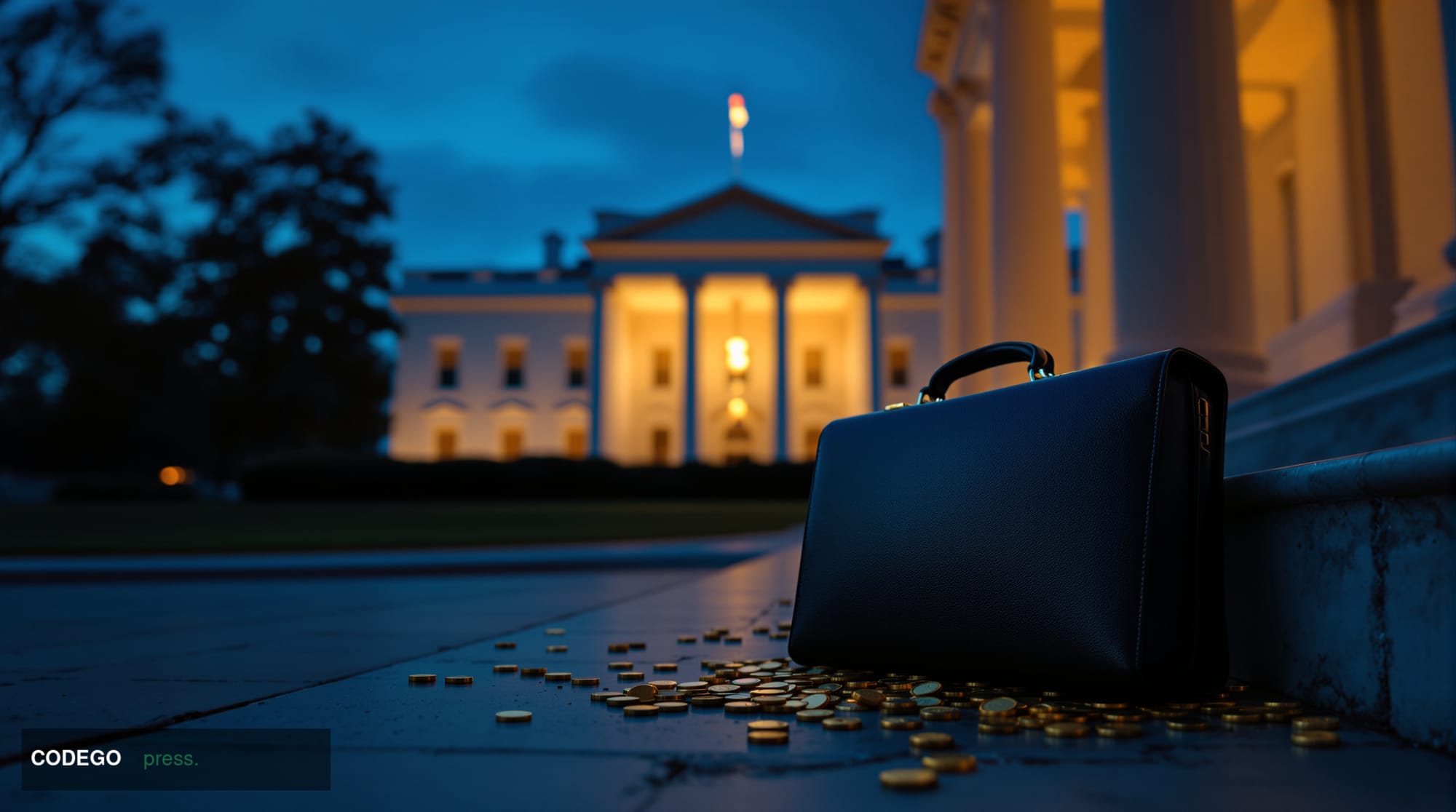
A deepening conflict-of-interest controversy is threatening to reshape the trajectory of stablecoin legislation in the United States: Tether, the world's largest stablecoin issuer by market capitalization, paid millions of dollars to a firm called NXUM — an entity linked to Bo Hines — during the same period in which Hines held a position at the White House. The revelation raises acute questions about the integrity of the regulatory process governing digital dollar instruments at one of the most consequential moments in their legislative history.
Bo Hines, who served in a crypto-policy advisory capacity within the White House, was simultaneously connected to NXUM, a firm that received substantial payments from Tether. The precise nature of those payments — whether for consulting, advisory services, or another contractual arrangement — has not been fully detailed in public disclosures, but the dual financial and governmental roles Hines occupied are now at the center of serious scrutiny from observers across the political and regulatory spectrum. When a senior figure involved in shaping national digital-asset policy maintains financial ties to one of the industry's most powerful actors, the legitimacy of any resulting framework is immediately placed under a cloud.
The timing could hardly be more consequential. The United States Congress has spent the better part of two years attempting to craft a coherent stablecoin regulatory regime, with competing legislative proposals debated in both chambers. Tether, which operates the USDT stablecoin and holds a dominant position in global crypto trading volumes, has made no secret of its ambitions to establish a stronger footprint in the American market. Any regulatory framework that emerges from Washington will directly determine whether Tether can continue to compete with domestic rivals — or faces restrictions that favor US-domiciled issuers. That context makes the nature of Tether's financial relationships with White House-connected individuals a matter of obvious public interest.
Conflicts of interest in financial regulation are not novel — the revolving door between Wall Street and Washington has long been a subject of bipartisan concern. Yet the stablecoin sector presents a distinct set of risks. Unlike traditional banking, the stablecoin market has grown to represent hundreds of billions of dollars in circulating supply with comparatively limited federal oversight. The decisions made in the next regulatory cycle will determine reserve requirements, audit standards, issuer eligibility, and consumer protections for an asset class that underpins a vast proportion of global cryptocurrency liquidity. If those decisions are influenced, even in perception, by undisclosed financial relationships, the credibility of the entire legislative effort suffers irreparable damage.
Tether's US market expansion efforts now face a turbulence that is not rooted in its balance sheet or reserve composition, but in the political optics of its business development activities. The company has invested heavily in improving its public profile in recent years, publishing attestation reports and engaging more openly with Western policymakers. Those efforts are now at risk of being overshadowed by the NXUM payments story, which feeds a pre-existing narrative among Tether critics that the firm operates with a level of opacity incompatible with its systemic importance to the global crypto ecosystem.
The episode also places renewed pressure on the White House to clarify the ethical guardrails applied to officials working on digital asset policy. The intersection of cryptocurrency lobbying, government service, and private compensation arrangements is an area where existing ethics rules — designed largely for traditional financial industries — may be inadequately equipped to address the speed and informality with which crypto firms cultivate policy influence. Federal conflict-of-interest statutes prohibit certain officials from participating in matters affecting their personal financial interests, but enforcement and disclosure requirements vary significantly depending on the nature of an appointment.
For the broader stablecoin industry, the consequences of this controversy extend well beyond Tether or Hines individually. Legislators who have worked to build bipartisan consensus around a workable stablecoin bill now face fresh ammunition for opponents who argue that the crypto industry has captured key elements of the policymaking apparatus. Any bill that moves forward under this shadow will be vulnerable to challenge on procedural and ethical grounds, potentially delaying the regulatory clarity that both issuers and institutional adopters have long sought.
What This Means for Stablecoin Regulation
The Tether-NXUM-Hines triangle represents more than a political embarrassment — it is a stress test for the institutional mechanisms that are supposed to insulate financial rulemaking from the private interests of those who draft it. If the United States is to produce a stablecoin regulatory framework that commands international respect and domestic trust, the process by which that framework is built must be demonstrably free from undisclosed financial entanglements. The millions paid to Hines' firm while he occupied a White House role are now a matter of public record, and the scrutiny they invite will not dissipate quickly. Regulators, legislators, and industry participants alike will need to reckon with what this episode reveals about the state of crypto governance in America — and how urgently cleaner standards are needed.
Written by the editorial team — independent journalism powered by Codego Press.