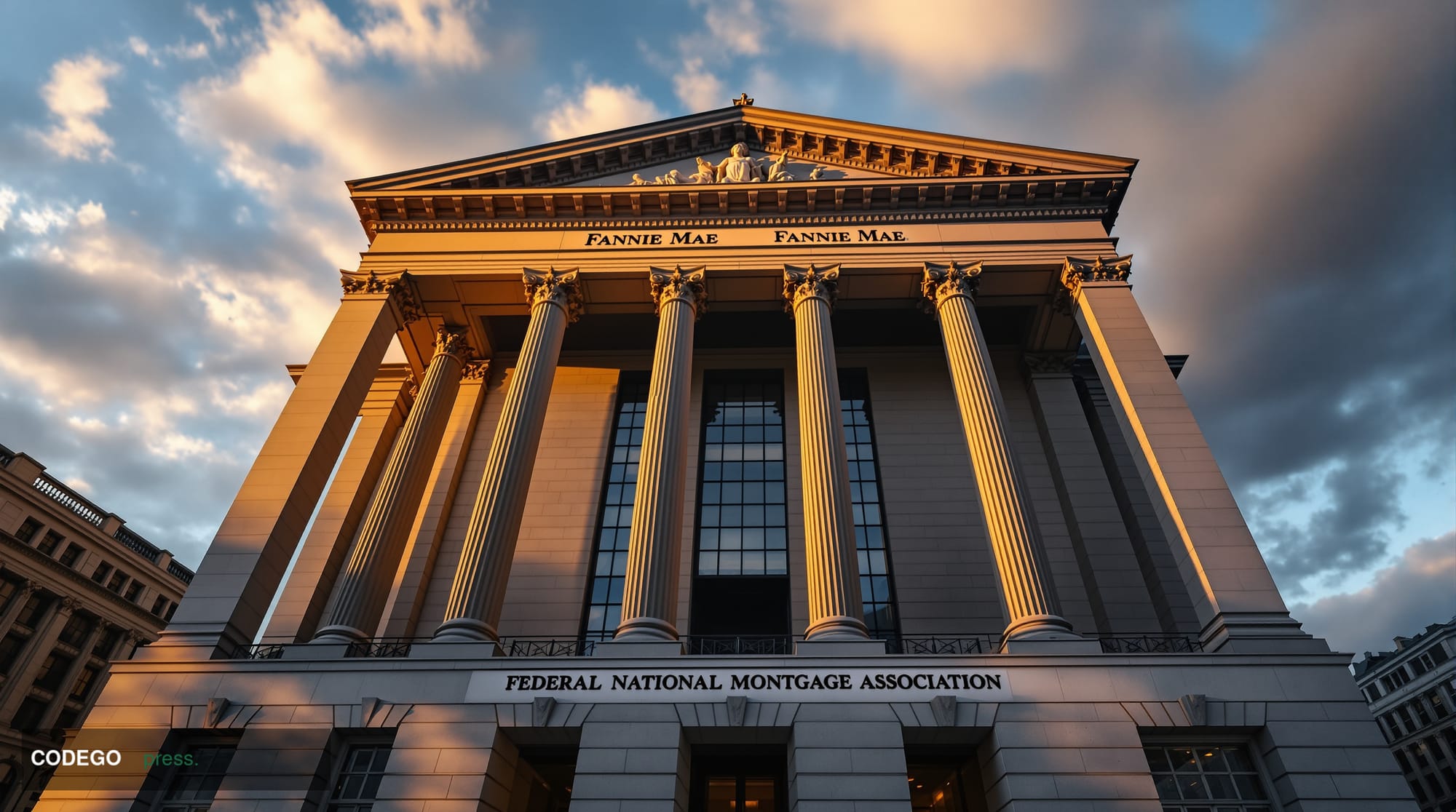
Former President Donald Trump's estimation that Fannie Mae and Freddie Mac hold a combined value of $1 trillion has intensified discussions around the potential privatization of America's largest government-sponsored housing finance enterprises. This valuation assessment comes as policymakers continue to grapple with the future structure of entities that have remained under federal conservatorship since the 2008 financial crisis, when their near-collapse threatened the entire mortgage market.
The scale of Trump's valuation underscores the enormous financial stakes involved in any privatization effort. Fannie Mae and Freddie Mac together guarantee or own roughly half of all outstanding residential mortgages in the United States, representing approximately $7 trillion in mortgage debt. Their current government-controlled status has provided crucial market stability during periods of economic uncertainty, but has also created what critics describe as an implicit taxpayer backstop for private mortgage risk.
Any move toward privatization would fundamentally reshape the housing finance landscape that has operated under the current conservatorship model for over a decade and a half. Since 2008, both enterprises have remitted their profits to the US Treasury while operating under strict regulatory oversight, creating a hybrid public-private structure that has drawn criticism from across the political spectrum. Conservative policymakers have long advocated for full privatization to reduce government involvement in housing markets, while progressive voices worry about potential impacts on affordable housing access.
The implications for mortgage rates represent perhaps the most immediate concern for American homeowners and prospective buyers. Under the current system, Fannie Mae and Freddie Mac's government backing allows them to purchase mortgages from lenders at rates that reflect their implicit federal guarantee. Privatization could potentially increase borrowing costs if markets demand higher yields to compensate for the removal of government backing, though supporters argue that competitive market forces could ultimately drive down costs through improved efficiency.
Market dynamics would likely experience significant shifts under a privatized structure. The current duopoly could face new competition as private capital markets develop alternative channels for mortgage securitization. However, the transition period poses substantial risks, particularly regarding the continued availability of 30-year fixed-rate mortgages that have become a cornerstone of American homeownership. Private markets have historically shown less willingness to hold long-term interest rate risk without government support.
The $1 trillion valuation also raises critical questions about execution mechanics should privatization move forward. Determining fair market value, structuring the transition away from conservatorship, and ensuring continued market liquidity during the changeover would require unprecedented coordination between federal regulators, Congressional oversight, and private market participants. Previous attempts at housing finance reform have foundered on similar complexities, despite bipartisan acknowledgment that the current system requires modification.
Broader Financial System Implications
Beyond housing markets, privatization would reverberate throughout the broader financial system. Banks and credit unions that currently rely on Fannie Mae and Freddie Mac to purchase their mortgage originations would need to develop new funding sources or retain more loans on their balance sheets. This shift could particularly impact smaller regional lenders that lack the scale to efficiently securitize mortgages independently, potentially accelerating consolidation within the banking sector.
The timing of any privatization effort will prove crucial given current economic conditions. Rising interest rates have already pressured housing affordability, and removing government support during a period of market stress could exacerbate volatility. Conversely, supporters argue that delaying reform only increases the eventual fiscal exposure to taxpayers and perpetuates market distortions that have developed under the conservatorship model.
Trump's trillion-dollar assessment ultimately represents more than a valuation exercise—it signals a potential policy direction that could fundamentally alter how Americans finance homeownership. Whether such a transformation enhances market efficiency or compromises housing accessibility will depend heavily on implementation details that remain largely theoretical. The stakes for the broader economy, housing market stability, and taxpayer exposure ensure that any privatization effort will face intense scrutiny from multiple constituencies with competing priorities.
Written by the editorial team — independent journalism powered by Codego Press.