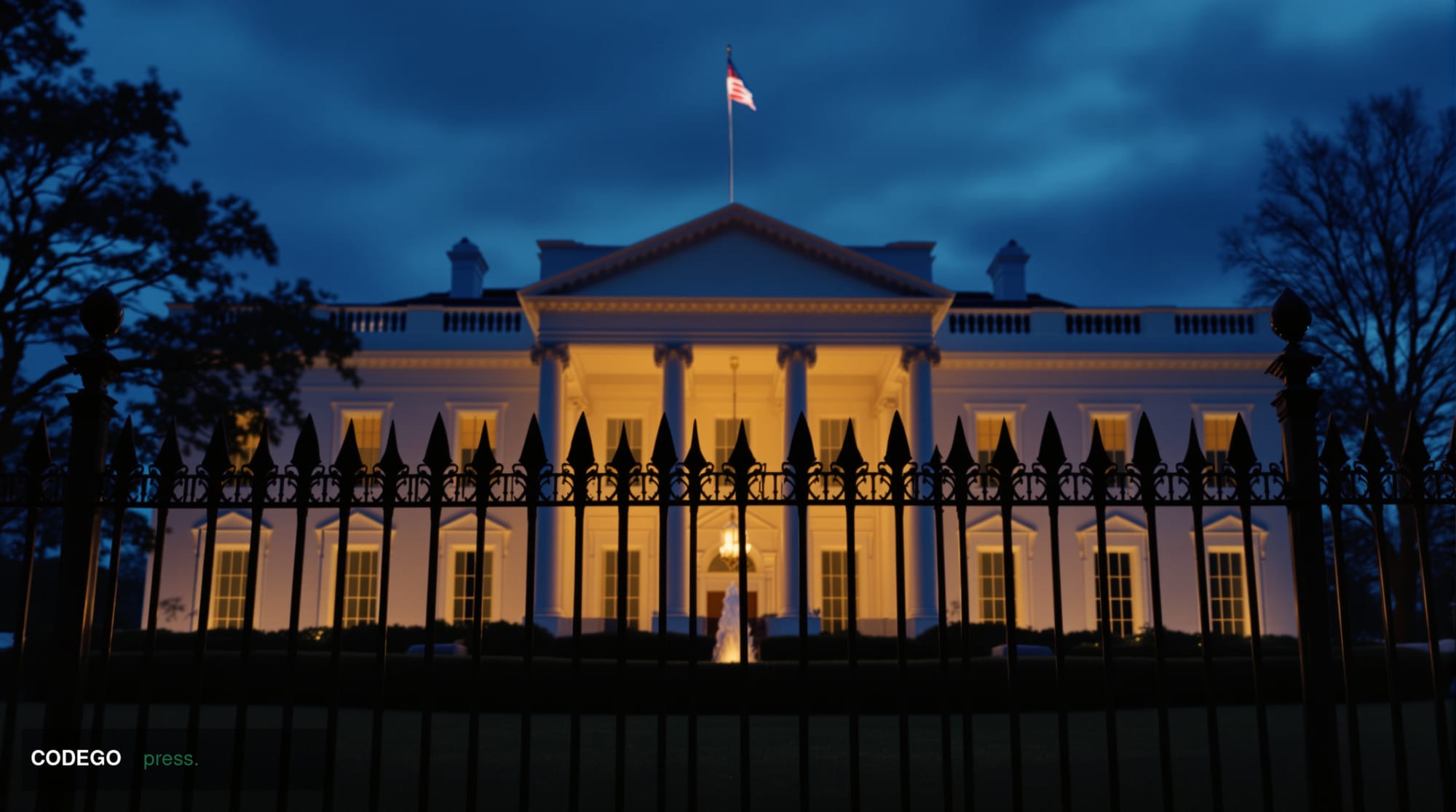
President Donald Trump summoned industry leaders, lawmakers, and regulators to the White House on Wednesday for a high-stakes crypto policy summit, using the occasion to publicly demand that Congress pass what he described as a "fair version" of the Clarity Act — the sweeping legislative framework designed to delineate regulatory jurisdiction over digital assets between the Securities and Exchange Commission and the Commodity Futures Trading Commission. The call to action represents one of the most direct presidential interventions in the American crypto legislative debate to date, and signals that the White House is no longer content to leave the industry's legal architecture to the slower rhythms of Capitol Hill.
The meeting, convened at the White House on August 19, 2026, served as a platform for Trump to showcase what his administration characterizes as a series of pro-innovation policy achievements since taking office. The president highlighted the regulatory posture his team has adopted — one that frames digital assets as a legitimate and strategically vital sector of the American economy rather than a source of systemic financial risk to be suppressed. That framing has defined the administration's approach since early in the term and received renewed emphasis at Wednesday's gathering, where Trump positioned his government as a facilitator of crypto's next phase of domestic growth.
The Clarity Act itself has been one of the more contentious items on the legislative agenda for the digital assets industry. Proponents argue that without clear statutory guidance defining which tokens constitute securities and which are commodities, American exchanges, developers, and institutional investors will continue to operate in a legally ambiguous environment that advantages offshore competitors. Detractors, particularly those aligned with more cautious regulatory philosophies, worry that premature clarity could entrench frameworks that fail to adequately protect retail investors. By publicly calling for a "fair version," Trump appeared to acknowledge that the bill's current draft retains elements that require negotiation — a signal to both industry stakeholders and congressional skeptics that the White House is willing to engage on the fine print.
Perhaps the most operationally significant disclosure to emerge from the summit was the confirmation that U.S. regulators are actively engaged in efforts to bring Hyperliquid, the decentralized perpetuals exchange that has attracted significant trading volume among sophisticated market participants, into a domestically compliant framework. Hyperliquid's rise has been notable precisely because its architecture has allowed it to operate at the margins of traditional regulatory reach, drawing liquidity away from registered American venues. The acknowledgment that regulators are now working to onboard rather than merely restrict such platforms marks a meaningful shift in enforcement philosophy — one that prioritizes competitive parity and capital retention within U.S. borders over punitive exclusion.
The Hyperliquid development is emblematic of a broader strategic calculus the Trump administration appears to have embraced: that the United States cannot afford to cede ground in decentralized finance to jurisdictions with lighter regulatory touch. By channeling regulatory energy toward integration rather than prohibition, the administration is betting that it can capture tax revenues, employment, and innovation ecosystems that might otherwise migrate to the Monetary Authority of Singapore-governed exchanges, European Markets in Crypto-Assets-compliant platforms, or unregulated offshore venues. Whether that bet pays off depends significantly on how quickly and coherently Congress responds to the president's legislative push.
The timing of the White House summit also carries political weight. With the Clarity Act still navigating committee dynamics on Capitol Hill, a direct presidential appeal creates pressure on both Republican and Democratic legislators to demonstrate that they can deliver a workable bill. The administration's willingness to host a high-profile industry convening — and to use it to make specific legislative demands — suggests a degree of confidence that the votes exist, or can be assembled, for a revised version of the bill. It also signals to the industry that crypto policy has migrated from the margins of the presidential agenda to its active center.
What This Means for the Industry
For market participants and institutional stakeholders, the White House summit carries implications that extend well beyond its immediate policy announcements. A successfully passed Clarity Act would resolve years of regulatory uncertainty that has complicated product launches, institutional custody arrangements, and exchange listings across the domestic market. The simultaneous effort to bring Hyperliquid into a compliant U.S. structure suggests regulators are developing frameworks that can accommodate decentralized exchange architecture — a technical and legal challenge that has stymied previous regulatory attempts. Together, these developments point toward a regulatory environment that is becoming more structured, but also potentially more accommodating, than the enforcement-first posture that characterized earlier periods. The critical variable remains congressional execution: Trump can set the agenda, but only Capitol Hill can write it into law.
Written by the editorial team — independent journalism powered by Codego Press.