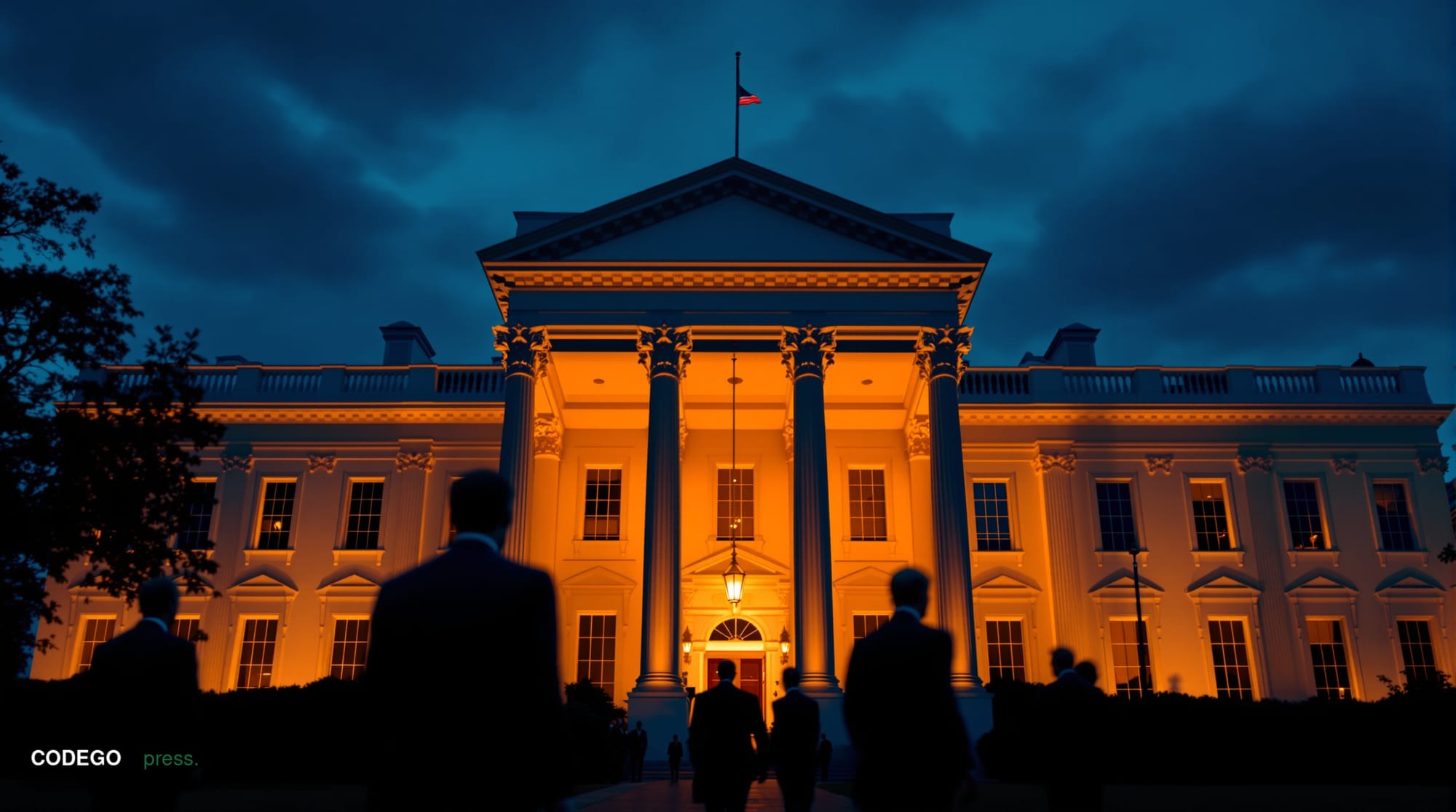
The White House is set to convene one of the most consequential gatherings in the brief history of digital asset policy: a direct meeting between President Donald Trump, senior administration officials, and the chief executives of some of the most prominent names in cryptocurrency and prediction markets. Scheduled for Wednesday, August 19, the summit — first reported by CoinDesk citing sources briefed on the plans — brings together the leadership of Coinbase, Gemini, Kalshi, Polymarket, Ripple, and Robinhood, signaling that digital finance has firmly secured a seat at the most powerful table in American governance.
The optics alone are striking. That a sitting American president is expected to personally attend a roundtable with crypto chief executives — figures who, not many years ago, were treated with deep suspicion by Washington's regulatory apparatus — underscores how dramatically the political calculus around digital assets has shifted. Under the Trump administration, the posture of the federal government toward the crypto industry has moved from antagonism to active engagement, and this meeting represents perhaps the clearest institutional expression of that transformation to date.
A Broad Industry Coalition
The breadth of the invitee list is itself analytically significant. This is not a narrow convening focused solely on Bitcoin advocacy or blockchain infrastructure. By including the CEOs of prediction market platforms Kalshi and Polymarket alongside established crypto exchanges and payment networks, the Trump administration appears to be casting a wide net over the entire spectrum of decentralized and event-driven financial markets. Prediction markets, which allow participants to trade contracts tied to real-world outcomes — from election results to macroeconomic data releases — have gained considerable mainstream traction in recent years, attracting both retail and institutional interest. Their inclusion in a White House summit suggests that policymakers are beginning to consider the regulatory and policy implications of this asset class in earnest, rather than treating it as a regulatory afterthought.
Ripple's presence is equally telling. The payments-focused blockchain company spent years locked in a bruising legal battle with the United States Securities and Exchange Commission (SEC) over whether its XRP token constituted an unregistered security. The resolution of that dispute, and Ripple's subsequent inclusion in a presidential-level dialogue, reflects the evolving posture of the current administration toward companies that were previously ensnared by enforcement-first regulatory approaches. For Ripple's leadership, a seat at the White House table is a pointed symbol of rehabilitation — and of how profoundly the regulatory environment has been reoriented.
Policy Agenda and Regulatory Stakes
While the specific agenda of the August 19 meeting has not been publicly confirmed, the gathering arrives at a moment when several consequential legislative and regulatory frameworks are under active development in Washington. Stablecoin legislation, the broader question of crypto market structure, and the delineation of authority between the SEC and the Commodity Futures Trading Commission (CFTC) over digital assets all remain live and unresolved policy debates. Industry executives attending a direct session with the president have a rare opportunity to shape the framing of these debates at the highest level — before statutory language is finalized and regulatory mandates are locked in.
For companies like Coinbase and Robinhood, whose business models are heavily exposed to the regulatory treatment of crypto trading and asset classification, the stakes of such engagement could not be higher. A favorable market structure framework could unlock new product lines and institutional participation. A poorly calibrated stablecoin regime could constrain liquidity mechanisms that underpin much of the sector's trading volume. The executives in that room will be acutely aware that what is said — and heard — on August 19 may reverberate through their compliance departments, product roadmaps, and balance sheets for years to come.
Political Dimensions of Digital Asset Diplomacy
It would be analytically incomplete to ignore the political dimensions of this engagement. The Trump administration has cultivated a notably warm relationship with the crypto industry, and the industry has responded with substantial financial support for politically aligned initiatives. Critics will note that the concentration of private-sector executives in a direct presidential meeting, absent equivalent engagement with consumer advocates or independent regulators, raises legitimate questions about the balance of influence in the policymaking process. Whether the outcomes of Wednesday's session reflect broad public interest or narrower commercial priorities is a question that regulators, legislators, and observers will be watching closely in the weeks that follow.
What This Means
The convening of crypto and prediction market CEOs at the White House, with President Trump expected in attendance, marks a defining moment in the maturation of digital assets as a recognized pillar of American financial infrastructure. The meeting does not guarantee any specific legislative or regulatory outcome, but it firmly establishes that the leadership of this industry — from exchange operators to blockchain payment networks to event-contract platforms — now operates within the gravitational field of executive branch policymaking. How that proximity translates into durable, well-calibrated regulation will determine whether August 19 is remembered as a turning point toward a coherent digital asset framework, or simply as a high-visibility moment of access without substantive consequence. The industry, and the public, deserves clarity on which of those outcomes is being pursued.
Written by the editorial team — independent journalism powered by Codego Press.