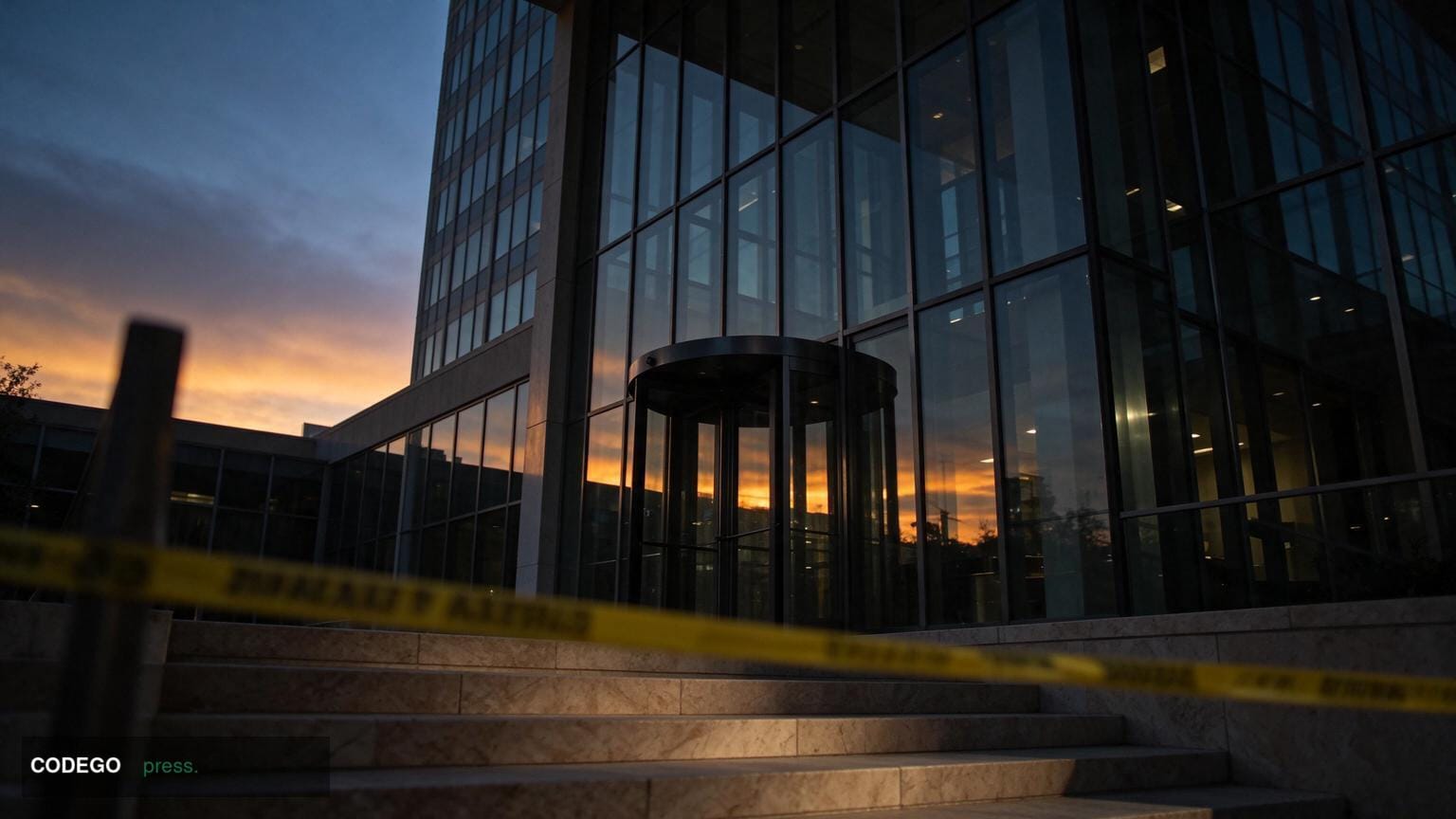
The United States banking sector absorbed another significant shock this week as regulators moved to shutter United Fidelity Bank, marking the largest bank failure the country has witnessed since 2024. The Federal Deposit Insurance Corporation has projected that the collapse will cost its deposit insurance fund an estimated $1.83 billion — a figure that underscores both the scale of this individual institution's difficulties and the broader questions it raises about the health of regional and mid-tier American lenders heading into the final stretch of this decade.
Bank failures, while never commonplace, follow a recognizable trajectory. Regulators identify deteriorating capital ratios, loan book stress, or liquidity shortfalls; supervisory pressure mounts; and ultimately, when no private-sector solution materialises, the institution is placed into receivership. What distinguishes the United Fidelity failure is the magnitude of the projected FDIC loss. At $1.83 billion, it signals that this was not a marginal community lender whose collapse could be absorbed quietly over a weekend. It is a systemic stress event that demands serious examination.
The last time the United States recorded a bank failure of comparable or greater consequence was in 2024 — itself a period that many analysts viewed as an echo of the stress that swept through the regional banking system in 2023, when institutions including Silicon Valley Bank and Signature Bank collapsed in rapid succession. The intervening period appeared to offer stability; deposit flows had normalized, interest-rate expectations had evolved, and the acute panic that accompanied those earlier failures had receded. The United Fidelity closure is a reminder that the structural vulnerabilities that produced those earlier failures — concentrated loan books, unrealized securities losses, sensitivity to rate movements — have not been fully resolved across the sector.
For the FDIC specifically, the $1.83 billion projected loss carries institutional weight beyond its headline figure. The deposit insurance fund exists precisely to backstop depositor confidence, and each significant draw on that fund revives longstanding debates about adequacy, premium assessment, and the moral hazard embedded in federal guarantees. Following the 2023 crisis, regulators imposed a special assessment on larger banks to replenish reserves depleted by those emergency interventions. If United Fidelity's failure proves to be a harbinger of further stress rather than an isolated event, the question of fund sufficiency will return to the foreground with renewed urgency.
The timing of this failure, arriving in the final weeks of November 2026, is also notable from a macroeconomic perspective. The United States has been navigating a complex interest-rate environment, with the Federal Reserve having undertaken one of the most aggressive monetary tightening cycles in modern history over the preceding years. Banks that loaded their balance sheets with longer-duration assets during the low-rate era of the early 2020s have faced persistent mark-to-market pressure as rates remained elevated. Commercial real estate exposures have added another layer of risk for institutions with concentrated lending in that sector. Without fuller disclosure of United Fidelity's specific balance sheet dynamics, it would be premature to assign a definitive cause — but the macroeconomic context in which this failure has occurred is not ambiguous.
Regulators and the broader financial services industry will now turn to two immediate priorities. The first is ensuring that depositors — to the extent their funds fall within or beyond the standard FDIC insurance threshold — receive clarity and access to their money as swiftly as possible. Deposit confidence is a fragile commodity, and any perception that resolution is slow or uncertain can generate contagion well beyond the failing institution's immediate customer base. The second priority is a credible and transparent accounting of what drove United Fidelity's failure, communicated in sufficient detail to allow peer institutions, analysts, and policymakers to assess whether comparable vulnerabilities exist elsewhere in the system.
From a fintech and payments perspective, the failure of a mid-to-large bank carries downstream consequences that extend beyond traditional depositors. Many fintech platforms rely on bank partnerships — sometimes described under the Banking-as-a-Service, or BaaS, framework — to hold customer funds, process transactions, and maintain regulatory standing. When a partner bank fails, those arrangements face immediate disruption. Whether United Fidelity had meaningful fintech or embedded-finance partnerships remains to be fully disclosed, but regulators and compliance teams across the sector will be conducting rapid due-diligence reviews in the days ahead.
What This Means for the Banking Sector
The United Fidelity failure is not, in isolation, evidence of a systemic crisis — but it is a data point that responsible observers cannot dismiss. A $1.83 billion projected FDIC loss on a single institution, arriving as the largest such failure since 2024, demands a candid conversation about the resilience of American regional banking. Supervisory frameworks put in place following the 2023 crisis were meant to sharpen early-warning detection and accelerate intervention before losses compound. That the FDIC is now absorbing a nearly two-billion-dollar hit suggests those frameworks, whatever their merits, could not fully prevent a failure of this magnitude. For depositors, investors, and policymakers alike, the closure of United Fidelity is a moment that calls for sober assessment rather than either alarm or complacency.
Written by the editorial team — independent journalism powered by Codego Press.