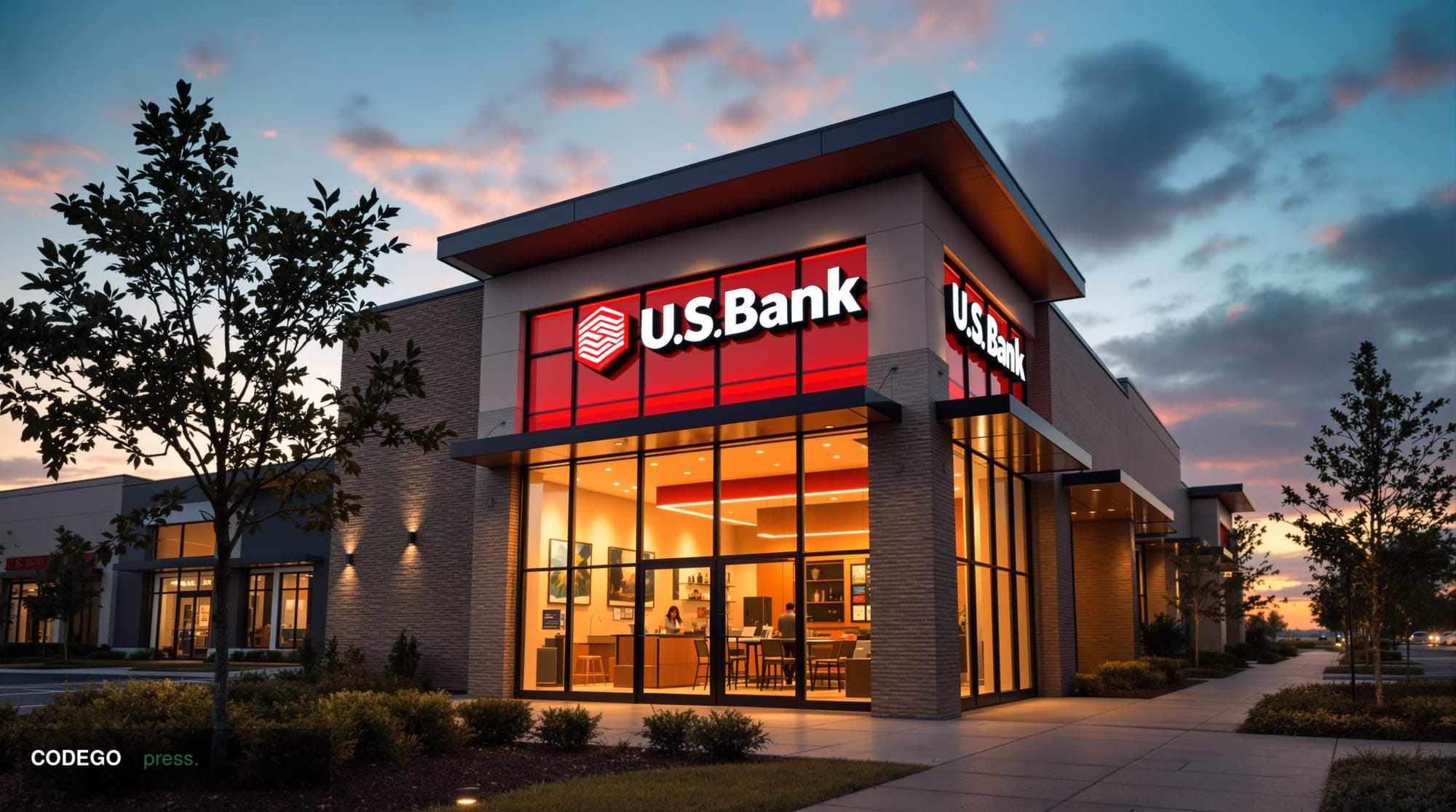
In an era where digital banking dominates headlines and branch closures make regular news, U.S. Bank is charting a distinctly measured course for its physical footprint expansion. Rather than announcing ambitious branch-building targets or following competitors into high-profile market entries, the Minneapolis-based institution is pursuing what executives describe as a "quieter" approach focused on strategic density improvements across its existing 26-state territory.
This methodology represents a significant departure from the traditional retail banking expansion playbook, where institutions typically trumpet specific branch construction commitments to signal growth ambitions to investors and communities alike. U.S. Bank's reluctance to commit to precise branch-building numbers suggests a more nuanced understanding of modern retail banking dynamics, where foot traffic patterns, demographic shifts, and digital adoption rates require constant recalibration of physical presence strategies.
The bank's emphasis on addressing "unevenness" across its substantial geographic footprint reveals the complexity of managing a retail network that spans from coast to coast. This territorial expanse, while providing diversification benefits, creates inherent challenges in maintaining consistent service levels and market penetration across vastly different economic environments. Some markets may be oversaturated with branches, while others present opportunities for strategic infill that could capture additional deposit growth and customer relationships.
Branch density optimization has emerged as a critical competitive factor in retail banking, particularly as institutions seek to balance convenience accessibility with operational efficiency. The strategic placement of branches in underserved corridors within existing markets often yields superior returns compared to expensive de novo market entries, which require substantial marketing investments and extended timelines to achieve profitability. U.S. Bank's approach acknowledges these economic realities while positioning the institution to respond flexibly to market opportunities as they emerge.
This cautious expansion strategy aligns with broader industry trends toward more disciplined capital allocation in retail banking infrastructure. While some regional competitors pursue aggressive geographic expansion or urban market penetration, U.S. Bank appears to be prioritizing sustainable growth that leverages existing market knowledge and operational capabilities. The absence of specific numerical commitments provides management with the flexibility to adjust branch investments based on evolving market conditions and customer behavior patterns.
The timing of this strategic approach proves particularly relevant as the banking industry grapples with post-pandemic shifts in customer preferences and branch utilization patterns. Many institutions discovered that certain locations maintained robust traffic while others experienced permanent declines, necessitating more sophisticated approaches to network planning. U.S. Bank's emphasis on density rather than raw expansion numbers suggests recognition that strategic placement often matters more than absolute branch counts in driving customer acquisition and retention.
For the broader banking sector, U.S. Bank's measured approach may signal a maturation in retail expansion strategies. As digital capabilities continue expanding and customer expectations evolve, the most successful institutions will likely be those that can optimize their physical presence for maximum strategic impact rather than pursuing expansion for its own sake. This quiet revolution in branch strategy could influence how other major institutions approach their own network development in increasingly competitive markets.
Written by the editorial team — independent journalism powered by Codego Press.