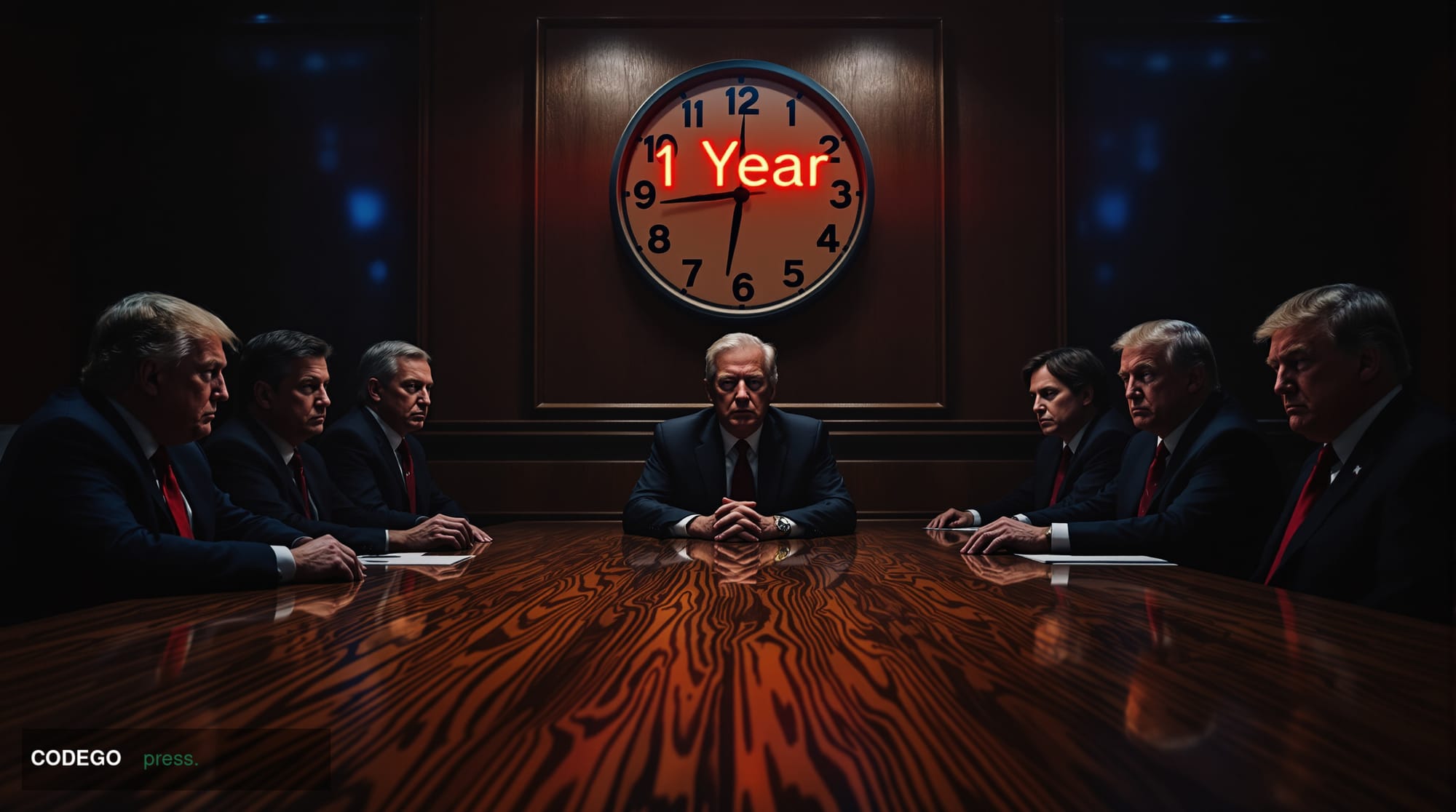
When the Guiding and Establishing National Innovation for US Stablecoins (GENIUS) Act was signed into law, it arrived with a clear legislative promise: within one year, federal regulators would deliver the finalized rules needed to bring order and legal clarity to the rapidly expanding stablecoin market. That deadline — July 18, 2026 — came and went without the required framework in place, leaving stablecoin issuers across the United States in what can only be described as a deepening compliance limbo.
The failure is not merely procedural. For an industry that has spent years operating in a regulatory gray zone, the GENIUS Act had represented something rare and meaningful: a legislative mandate with a hard timeline, designed to force Washington's notoriously slow-moving regulatory apparatus into action on digital assets. The one-year clock was not ambiguous. It was written into the statute precisely to prevent the kind of indefinite delay that has historically plagued crypto rulemaking in the United States. And yet, here we are.
The consequences of this missed deadline extend well beyond the bureaucratic. Federal Deposit Insurance Corporation, Federal Reserve, and Office of the Comptroller of the Currency — the principal regulatory bodies expected to collaborate on stablecoin oversight — now find themselves in a position where issuers have no finalized standards against which to measure their own compliance posture. Companies that have built business models explicitly anticipating the GENIUS Act's framework are now navigating without a map, unable to make binding decisions on reserve requirements, audit disclosures, or licensing structures.
The stablecoin sector has grown considerably since the act's passage. Major issuers including the operators behind dollar-pegged tokens have continued expanding their circulation and institutional reach, betting that regulatory certainty was imminent. The missed deadline now injects renewed uncertainty into that growth trajectory. Institutional investors and banking partners that were preparing to deepen their engagement with compliant stablecoin products may reasonably pause to reassess their risk exposure in the absence of finalized rules.
There is also a competitive dimension that Washington cannot afford to ignore. The European Securities and Markets Authority and the broader European Union regulatory apparatus have already implemented the Markets in Crypto-Assets (MiCA) framework, establishing a comprehensive stablecoin licensing regime that gives European issuers — and those seeking to operate in EU markets — a definitive legal foundation. Every month that US regulators fail to deliver equivalent clarity is a month in which European regulatory certainty becomes a comparative advantage. Capital and incorporation decisions are not made in a vacuum; legal predictability is a fundamental input.
The GENIUS Act's deadline was also meant to serve a signaling function — a declaration that the United States was prepared to lead on digital asset governance rather than cede that ground to foreign jurisdictions or allow the market to remain perpetually informal. That signal has now been muddied. Critics of crypto regulation, who have long argued that US regulators are structurally incapable of moving at the speed of financial innovation, will find fresh ammunition in this episode. Supporters of the legislation, meanwhile, face the uncomfortable task of defending a framework whose implementing rules do not yet exist.
What remains unclear is how regulators intend to address the gap. No formal extension mechanism was built into the GENIUS Act's deadline language, and the affected agencies have not, as of publication, issued a joint statement outlining a revised timeline or interim guidance for issuers seeking to operate in good faith. That silence is itself a regulatory position — one that prioritizes institutional process over market function.
What This Means for the Market
For stablecoin issuers, compliance officers, and their legal counsel, the operative reality as of July 19, 2026 is unchanged in the worst possible sense: there are still no finalized federal rules to comply with. Firms must continue to rely on state-level frameworks, informal agency guidance, and their own legal interpretations of the GENIUS Act's statutory text — a fragmented and legally precarious position. The pressure on Congress and the relevant agencies to accelerate rulemaking has never been higher, but pressure alone has not historically been sufficient to move federal regulatory timelines. Until finalized rules are published and open comment periods conclude, the stablecoin market will remain legally exposed in ways that undermine the very legislative intent the GENIUS Act was designed to fulfil.
Written by the editorial team — independent journalism powered by Codego Press.