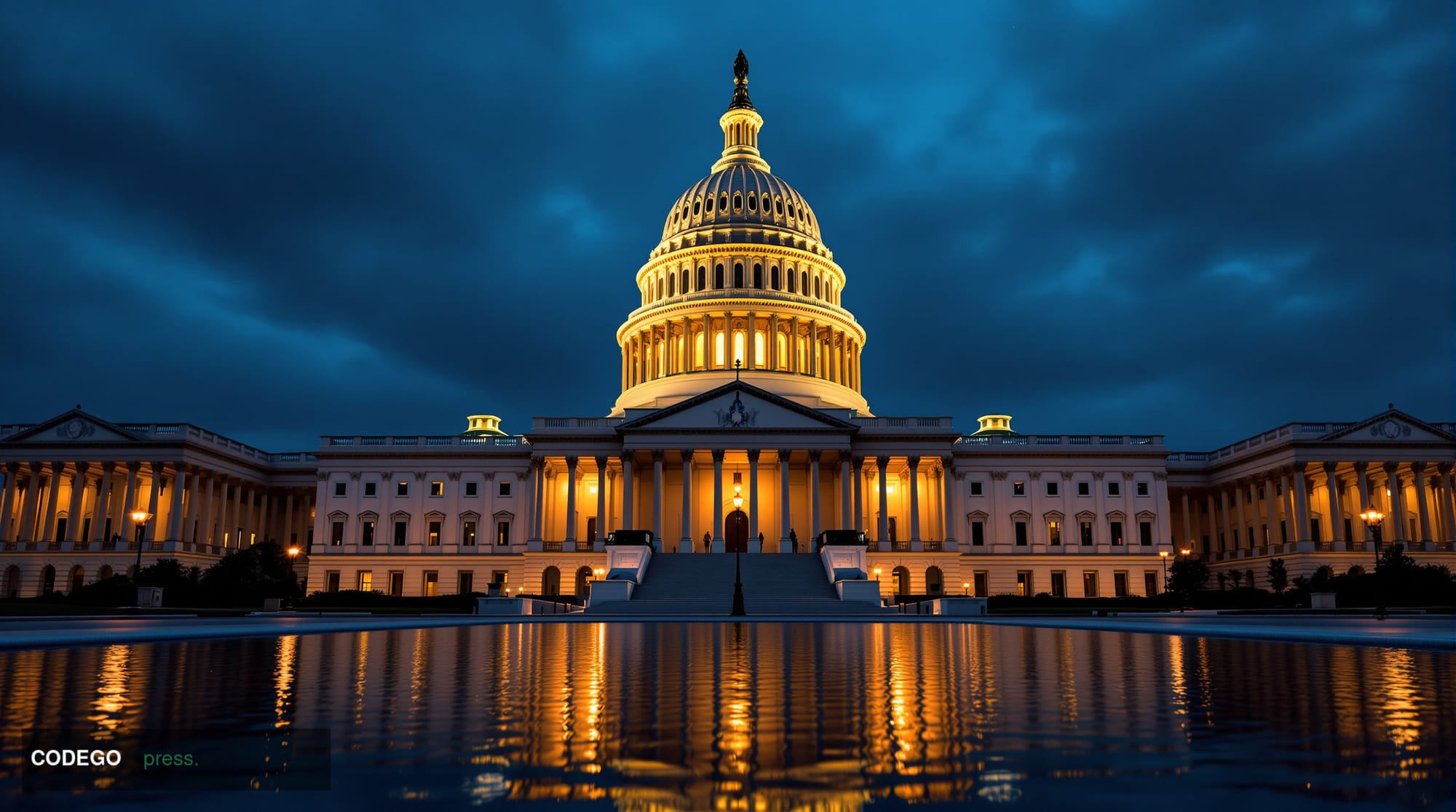
The United States Senate delivered a stark message to the digital asset industry on September 15, 2026: regulatory clarity, long promised and endlessly debated, remains out of reach. The CLARITY Act — widely considered the most consequential piece of cryptocurrency market-structure legislation to reach the Senate floor in years — failed to advance, a stumble that extends what has become one of the most protracted policy standoffs in modern financial regulation.
For an industry that has spent the better part of a decade demanding a coherent legal framework, the Senate's inability to move the CLARITY Act forward is more than a procedural setback. It is the latest chapter in a story of institutional hesitation, one that has left exchanges, asset managers, developers, and institutional investors operating under a patchwork of enforcement actions, guidance letters, and court rulings rather than clear statutory law. The United States has spent years insisting that the digital asset sector needs regulatory clarity. The events of September 15 suggest that delivering it remains another matter entirely.
Three Acts, One Unresolved Question
The CLARITY Act did not emerge in isolation. It is the latest in a succession of legislative efforts that have attempted to define the boundaries of the American digital asset market. The GENIUS Act and the GRANITE Act each represented earlier attempts to construct a workable framework — covering stablecoin issuance, market structure, and jurisdictional boundaries between the Securities and Exchange Commission and the Commodity Futures Trading Commission. The CLARITY Act was meant to synthesize and resolve what its predecessors left incomplete, addressing the fundamental question of how digital assets should be classified and regulated at the federal level.
That this third attempt has also faltered — at least for now — underscores the depth of disagreement within the legislative branch itself. The challenge has never been purely technical. Lawmakers remain divided on whether most cryptocurrencies constitute securities or commodities, which regulator should hold primary jurisdiction, and how consumer protection obligations should be assigned across a technology stack that did not exist when most existing financial law was written. These are not details. They are foundational disputes, and they do not resolve themselves simply because an industry demands urgency.
The Cost of Continued Ambiguity
The consequences of stalled legislation are not abstract. Every month without a coherent Digital Asset Market framework is a month in which institutional capital deployment is constrained by legal uncertainty, in which compliance officers must advise caution rather than engagement, and in which entrepreneurs face the real risk that a business model legal today may be deemed impermissible tomorrow. The regulatory vacuum has pushed several significant operations — exchanges, custodians, and protocol developers alike — to establish or expand their presence in jurisdictions that have moved more decisively: the Monetary Authority of Singapore, the European Securities and Markets Authority operating under the Markets in Crypto-Assets regulation, and the Financial Conduct Authority in the United Kingdom.
This competitive displacement is the overlooked cost of American legislative gridlock. Regulatory certainty is itself a form of market infrastructure. When it is absent in the world's largest capital market, activity does not simply pause — it migrates. The United States runs a genuine risk that by the time Congress reaches consensus, the most dynamic segments of digital asset market-making, custody, and structured product issuance will have built durable operations elsewhere.
What Comes Next
The Senate's failure to advance the CLARITY Act on September 15 does not necessarily kill the legislation permanently. Bills of this complexity frequently stall, are renegotiated, and return to the floor with amended language designed to secure the coalition of votes that eluded them the first time. The GENIUS Act and the GRANITE Act themselves progressed through multiple iterations before reaching their respective legislative endpoints. It is entirely possible — perhaps likely — that the CLARITY Act will resurface in modified form before the current congressional session closes.
What this episode confirms, however, is that speed cannot be assumed. The digital asset industry and its advocates entered September 15 with cautious optimism that a pivotal threshold would be crossed. Instead, the Senate demonstrated once again that on the question of cryptocurrency regulation, the distance between political consensus and legislative reality remains formidable. The years of argument for clarity have not yet produced the clarity itself.
For financial institutions weighing their digital asset strategies, for international regulators assessing the United States' posture, and for the entrepreneurs building on public blockchains, the message from Washington is uncomfortable but by now familiar: plan for more uncertainty, because the Senate's vote yesterday has ensured there will be plenty of it.
Written by the editorial team — independent journalism powered by Codego Press.