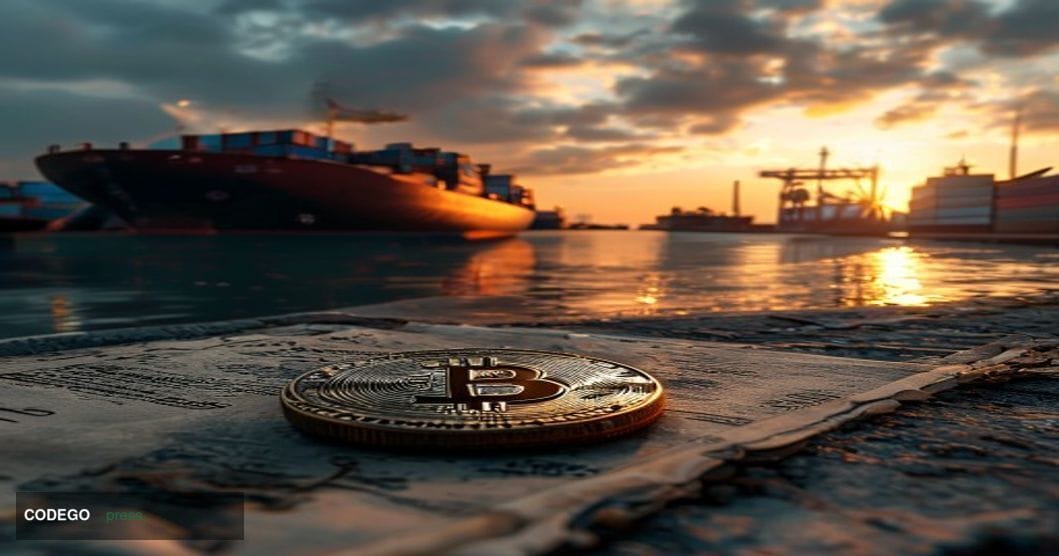
The U.S. Treasury Department has sanctioned HormuzSafe, an Iranian maritime company, accusing it of deliberately exploiting Bitcoin and other digital assets to circumvent existing U.S. financial restrictions — and, critically, to channel revenue directly to Iran's Islamic Revolutionary Guard Corps (IRGC). The designation marks one of the most explicit recent acknowledgments by U.S. authorities that state-linked actors are systematically weaponizing cryptocurrency infrastructure to undermine the global sanctions regime.
Cryptocurrency as a Sanctions Evasion Tool
For years, regulators and intelligence agencies have flagged the risk that rogue states and designated entities would eventually turn to digital assets as a workaround to the dollar-dominated financial system. The HormuzSafe case is a stark illustration of that threat materializing in practice. Rather than relying solely on informal value-transfer networks or front companies in third jurisdictions — the traditional playbook for sanctions evasion — HormuzSafe allegedly built Bitcoin and other digital asset acceptance directly into its revenue model, treating cryptocurrency rails as a functional alternative to the correspondent banking channels that sanctions effectively close off.
The maritime sector has long been identified as a vulnerability in the broader sanctions architecture. Shipping routes through the Strait of Hormuz carry an enormous volume of global energy trade, and Iranian entities with access to that corridor possess leverage that extends well beyond their domestic economy. When a firm operating in that environment can invoice counterparties in Bitcoin and receive settlement without touching a sanctioned bank, the enforcement gap becomes consequential at a macroeconomic scale. Treasury's action against HormuzSafe signals that Washington intends to treat cryptocurrency-enabled maritime sanctions evasion with the same seriousness it applies to traditional financial crime.
The IRGC Connection
The Treasury's allegation that HormuzSafe's digital asset revenues flowed to the IRGC adds a layer of national security gravity that distinguishes this case from ordinary sanctions violations. The IRGC is itself a designated foreign terrorist organization under U.S. law, meaning that facilitating its financing — regardless of the payment method — carries severe legal exposure for any counterparty, institution, or intermediary that knowingly participates. By explicitly naming the IRGC as the ultimate beneficiary of HormuzSafe's crypto revenues, Treasury is sending an unambiguous message to exchanges, over-the-counter desks, and wallet providers worldwide: processing transactions linked to this network risks secondary sanctions consequences.
That warning carries particular weight in the current regulatory environment. Cryptocurrency exchanges operating under Financial Crimes Enforcement Network (FinCEN) obligations and Anti-Money Laundering (AML) frameworks are required to screen transactions against the Office of Foreign Assets Control (OFAC) sanctions list. The HormuzSafe designation now places its known wallet addresses and associated entities squarely on that list, obligating compliant platforms to freeze any assets and refuse service. Non-compliant platforms — particularly offshore venues with limited Know Your Customer (KYC) infrastructure — become the immediate focus of follow-on enforcement attention.
A Pattern of Escalating Crypto Enforcement
The HormuzSafe action is not occurring in isolation. Over the past several years, U.S. authorities have progressively expanded their enforcement posture toward cryptocurrency-facilitated sanctions evasion, targeting North Korean state hacking groups, Russian oligarch networks, and Iranian front companies with increasing technical sophistication. The Treasury's Office of Foreign Assets Control has demonstrated a growing capacity to trace blockchain transactions, identify mixing services and chain-hopping techniques, and ultimately attribute wallet activity to sanctioned actors — even when those actors believed they were operating anonymously.
What makes the HormuzSafe case noteworthy is its focus on a maritime commercial entity rather than a purely financial intermediary or cybercrime operation. It suggests that enforcement agencies are now scrutinizing the operational finances of sanctioned industries — oil, shipping, arms — with blockchain analytics tools, rather than limiting their crypto investigations to exchanges and darknet markets. This broadening of investigative scope implies that any entity doing business with sanctioned jurisdictions and accepting digital assets as payment faces genuine legal jeopardy, regardless of whether they consider themselves a "crypto company."
What This Means for the Industry
For compliance professionals and financial institutions, the HormuzSafe designation reinforces several urgent imperatives. Crypto exchanges and payment processors must ensure their OFAC screening covers newly designated entities in real time, including any on-chain addresses linked to HormuzSafe. Correspondent banks and trade finance institutions with exposure to maritime sectors in the Persian Gulf region should revisit their counterparty due diligence frameworks to account for the possibility that digital asset settlement is being used to obscure the ultimate beneficial ownership of transactions.
More broadly, the case underscores that the geopolitical contest over financial infrastructure is now being fought on the blockchain as much as in the correspondent banking system. Regulators in Washington, Brussels, and beyond are watching closely to see whether cryptocurrency's pseudonymous transaction layer can be adequately policed — and they are increasingly prepared to designate, prosecute, and seize assets to prove that it can. HormuzSafe may be a single firm operating in one of the world's most strategically sensitive waterways, but its sanctioning by the U.S. Treasury sends a signal that resonates across every jurisdiction where digital assets and geopolitical risk intersect.
Written by the editorial team — independent journalism powered by Codego Press.