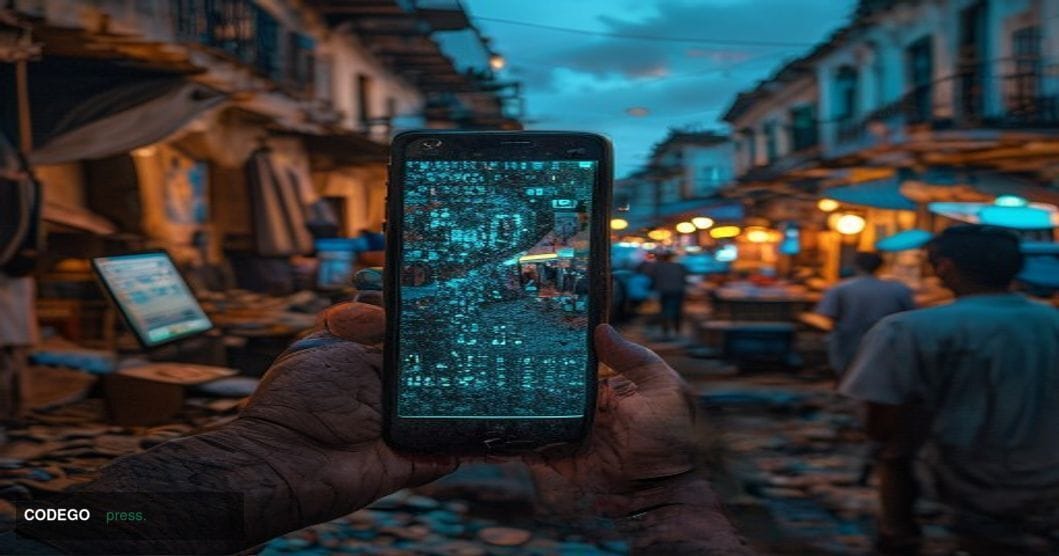
When the United States imposed sweeping sanctions on Venezuela, the architects of that financial pressure campaign almost certainly did not anticipate one consequence: that Venezuela would become the most instructive laboratory in the world for the practical utility of stablecoins. Banned from meaningful access to the conventional dollar system, Venezuela has turned to digital dollars — dollar-pegged stablecoins — with a pragmatic urgency that no amount of venture capital marketing could replicate. The result is something the broader financial world is only beginning to reckon with: a sovereign economy using stablecoins not as a speculative instrument, but as functional monetary infrastructure.
The framing offered by Blockworks is precise and difficult to argue with. Venezuela's experience represents a proof of concept — not in the Silicon Valley sense of a tidy demonstration, but in the harder, messier sense of a population under genuine economic duress finding that stablecoins actually work. When a government is excluded from the Society for Worldwide Interbank Financial Telecommunication network, when its banks cannot correspondent-clear through New York, and when its citizens face hyperinflation in the local currency, the abstraction of "digital dollars on a blockchain" collapses into something entirely concrete: a way to hold value, transact, and survive financially outside the perimeter of traditional gatekeepers.
This is the context that most stablecoin commentary in developed markets lacks. In the United States or Western Europe, the debate around stablecoins tends to orbit regulatory clarity, reserve backing, and whether Circle or Tether will be subject to bank-like oversight. These are not trivial questions — the reserve composition of a major stablecoin issuer carries genuine systemic implications. But they are questions being asked from within a system that works. Venezuela asks different questions from without: Can I receive a payment without my bank being blocked? Can I preserve my family's purchasing power against a currency in freefall? Can I access the dollar economy when the dollar economy has formally expelled me? The answer, increasingly, has been yes — and that answer has been delivered by stablecoins.
The geopolitical irony is layered. US sanctions are instruments of dollar power, designed to leverage the greenback's global dominance as economic coercion. Yet by severing Venezuela from dollar-denominated infrastructure, those same sanctions have driven adoption of dollar-pegged assets that operate entirely outside US-controlled rails. The dollar's value proposition — stability, global acceptance, transactional utility — is preserved in stablecoin form, while the mechanisms the US Treasury relies upon to enforce compliance, namely correspondent banking relationships and payment network access, are bypassed entirely. Venezuela is not abandoning the dollar. It is accessing the dollar through a door that sanctions cannot lock.
This dynamic carries implications well beyond Caracas. Sanctioned economies, of which there are dozens in varying degrees across Iran, Russia, Myanmar, Cuba, and others, are watching. So are the governments of nations that have not been sanctioned but are acutely aware that they could be. The weaponization of dollar infrastructure has been an accelerant for de-dollarization rhetoric in the Global South, but stablecoins suggest a subtler outcome: not de-dollarization, but dollar access decoupled from US institutional control. That is a meaningfully different outcome, and one that challenges the assumption that financial sanctions retain their coercive power in a world where dollar-equivalent value can be transmitted peer-to-peer on a public blockchain.
For the stablecoin industry itself, Venezuela's experience provides something that whitepapers and conference panels cannot manufacture: demonstrated, real-world demand under conditions of maximum pressure. When adoption occurs because there is no alternative — not because an app offers cashback rewards or a neobank has a sleek interface — it signals genuine product-market fit at the infrastructure level. Regulators in Washington and Brussels who are deliberating over stablecoin frameworks in 2026 would do well to absorb this lesson. The technology is not waiting for regulatory permission to become relevant. In Venezuela, it already is.
What This Means for the Industry and Policymakers
The Venezuelan case forces a bifurcation in how stablecoins must be understood going forward. On one track, there is the domesticated version: stablecoins integrated into compliant payment systems, issued by regulated entities, subject to Financial Action Task Force travel rule obligations, and ultimately tethered to the same institutional architecture as traditional finance. On the other track is the version Venezuela is living: permissionless, censorship-resistant, and structurally indifferent to the preferences of the issuing nation's geopolitical adversaries. These two tracks may coexist, but they cannot be collapsed into one another without acknowledging the fundamental tension at their core. Policymakers who treat stablecoins purely as a payments modernization story are missing the more disruptive half of the picture — the half that a country locked out of the global financial system has already proven works.
Written by the editorial team — independent journalism powered by Codego Press.