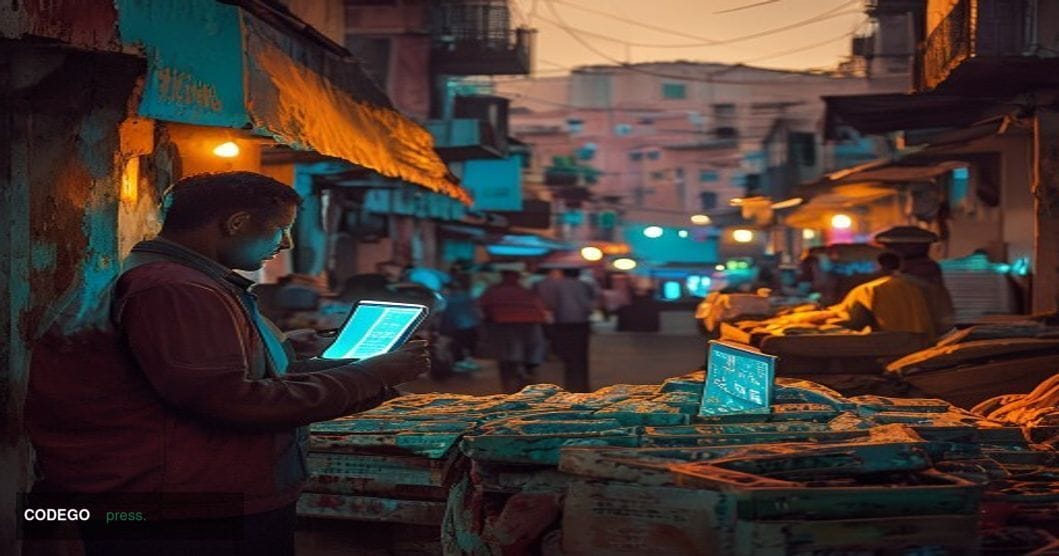
When the United States imposed sweeping financial sanctions on Venezuela, the intended effect was to sever Caracas from the mechanisms of dollar-denominated global commerce. What policymakers may not have fully anticipated was that a parallel dollar system — one running on public blockchains and governed by code rather than correspondent banking relationships — would step into the void. Venezuela's widespread adoption of stablecoins as functional substitutes for physical and bank-held US dollars has emerged as perhaps the most consequential real-world stress test the technology has ever undergone.
The country's experience cuts to the heart of a debate that has consumed regulators, central bankers, and financial technologists for years: are stablecoins a speculative novelty, or are they a genuinely disruptive monetary instrument capable of operating where traditional finance cannot or will not reach? Venezuela, by virtue of being locked out of the conventional dollar system, has provided a brutal and unambiguous answer. Dollar-pegged digital assets are circulating through the Venezuelan economy at meaningful scale, facilitating commerce, protecting savings against hyperinflation, and enabling cross-border transfers that the sanctioned banking sector cannot legally process.
The Architecture of Exclusion
Understanding why stablecoins found such fertile ground in Venezuela requires appreciating the depth of the country's financial isolation. Successive rounds of US Treasury sanctions, targeting both the Nicolás Maduro government and state-owned enterprises including the national oil company, effectively instructed the global banking system to treat Venezuelan counterparties as radioactive. Correspondent banks — the intermediaries that allow local financial institutions to access dollar clearing — withdrew relationships, cutting Venezuelan banks off from the Society for Worldwide Interbank Financial Telecommunication, better known as SWIFT, and from dollar settlement infrastructure more broadly. The result was a population that desperately needed dollars to hedge against bolivar collapse but had diminishing legal pathways to hold or move them through conventional channels.
That combination — intense demand for dollar exposure and the systematic removal of supply channels — is precisely the kind of market failure that permissionless blockchain infrastructure is architecturally suited to circumvent. Stablecoins such as Tether's USDT do not require a Venezuelan bank to maintain a correspondent relationship with a New York clearing institution. They require only an internet connection and a crypto wallet. For millions of Venezuelans, that distinction has been the difference between preserving purchasing power and watching savings evaporate in a currency that has undergone repeated denomination resets.
Proof of Concept in the Harshest Laboratory
The significance of Venezuela's experience extends well beyond the country's borders. Policymakers in Washington, Brussels, and at institutions like the Bank for International Settlements have increasingly acknowledged that the effectiveness of financial sanctions as a foreign policy tool is being eroded by the proliferation of digital asset alternatives. Venezuela is the clearest demonstration of that erosion in action — not as a theoretical future risk but as a documented present reality.
For the stablecoin industry, this presents a double-edged narrative. On one hand, Venezuela validates the technology's core value proposition with a force that no corporate marketing campaign could manufacture. When real people in a real economic crisis choose to denominate their savings and conduct their commerce in digital dollars rather than submit to the deprivations of a broken local currency and an inaccessible banking system, that is organic product-market fit at its most visceral. The use case is not speculative yield farming or collateralized debt positions — it is grocery purchases, rent payments, and remittances from the Venezuelan diaspora back to families who cannot access wire transfers.
On the other hand, the geopolitical dimensions of Venezuela's stablecoin adoption guarantee heightened regulatory scrutiny across jurisdictions. US lawmakers have grown increasingly attentive to the question of whether dollar-pegged digital assets constitute a sanctions evasion vector, even when the underlying dollar reserves are held in US Treasuries and managed by American-adjacent entities. The US Treasury Department and the Office of Foreign Assets Control have expanded guidance on virtual asset service providers' obligations to screen for sanctioned jurisdictions, but enforcement in a decentralized environment remains structurally challenging.
What This Means for the Broader Stablecoin Debate
Venezuela's role as an inadvertent proof of concept for stablecoins arrives at a pivotal moment for the asset class globally. Regulatory frameworks — from the European Union's Markets in Crypto-Assets regulation, known as MiCA, to the stablecoin-specific legislation advancing through the US Congress — are being drafted against a backdrop in which the technology's utility is no longer hypothetical. Legislators cannot credibly argue that stablecoins serve no genuine economic function when the evidence of mass adoption in a sanctioned economy is publicly visible on blockchain ledgers.
That does not mean the path forward is uncomplicated. Questions of consumer protection, reserve transparency, and sanctions compliance remain live and legitimate. But Venezuela's experience has fundamentally shifted the burden of proof in the regulatory conversation. The question is no longer whether stablecoins work as a monetary instrument. The question is what global financial architecture looks like when a significant and growing portion of dollar-denominated economic activity routes around the institutions that have historically administered that architecture. Venezuela, locked out and left to improvise, has already begun writing that answer.
Written by the editorial team — independent journalism powered by Codego Press.