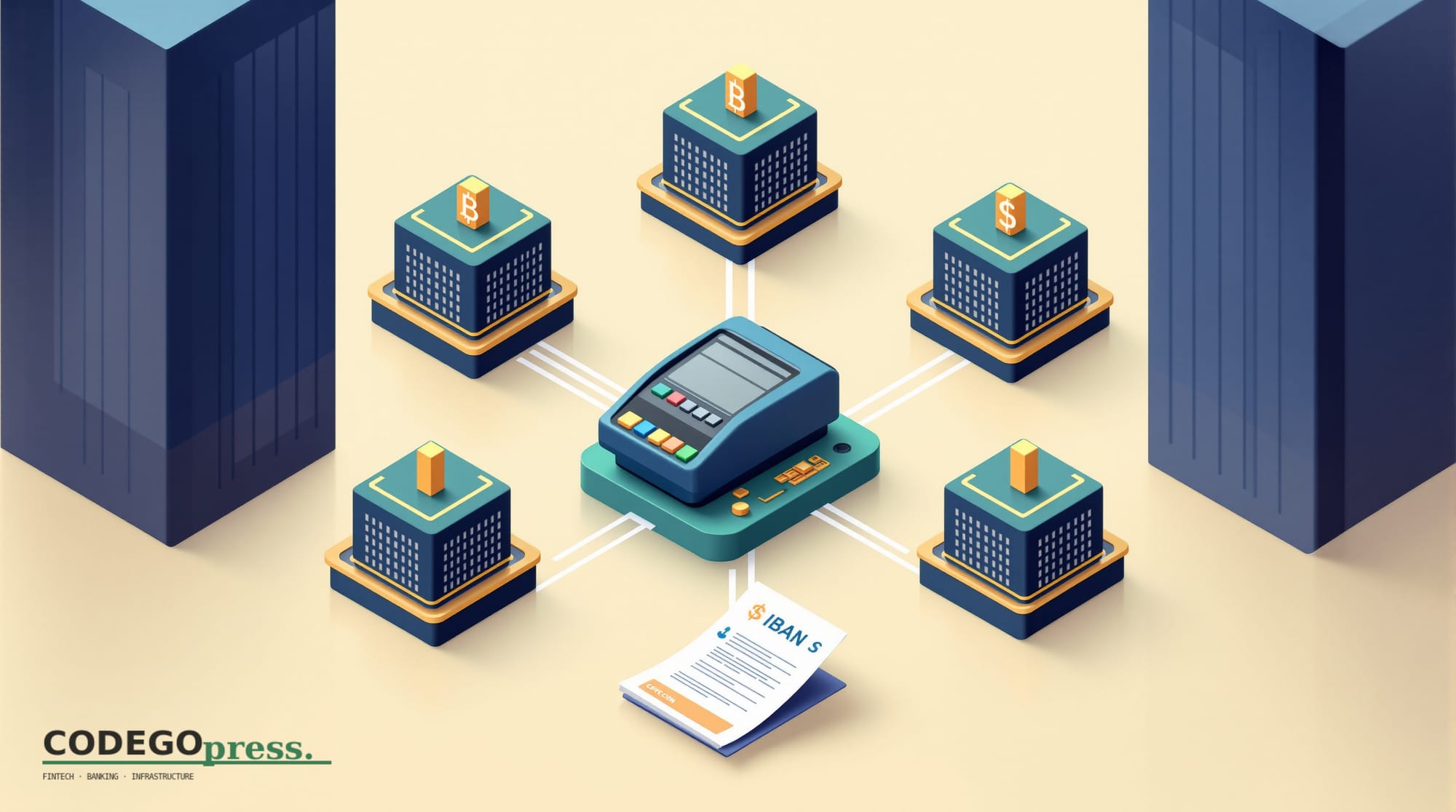
Visa's decision to expand its stablecoin settlement infrastructure across five additional blockchain networks signals something more profound than a routine product upgrade. The world's largest payments processor has effectively acknowledged that the future of settlement—the critical infrastructure layer where money actually changes hands—will not be singular, centralized, or under the exclusive control of traditional financial gatekeepers. This represents a seismic shift in how legacy payments architecture must position itself in an environment where digital assets have moved from speculative fringe to operational necessity.
The numbers alone justify the accelerated pace. Visa's stablecoin settlement pilot has grown at 50 percent quarter over quarter, reaching a $7 billion annualized run rate. That trajectory is not incidental noise in a larger payments ecosystem—it reflects genuine demand from financial institutions seeking faster, cheaper, and more transparent settlement pathways. The decision to add blockchain networks rather than consolidate around a single standard reveals that Visa has recognized a strategic reality: the multi-chain future is not a technical debate to be won through argument, but an operational reality that must be managed.
This expansion exposes a critical vulnerability in how traditional financial infrastructure has been built. For decades, payment networks operated as closed systems—Visa or Mastercard functioned as the rails, and settlement occurred in fiat currency through correspondent banking relationships that moved slowly and opaquely. That architecture worked because there was no viable alternative. Today, Wise, Revolut, and a constellation of crypto-native fintech firms have demonstrated that settlement can happen faster, cheaper, and with complete transparency on distributed ledgers. Visa's multi-chain approach is not an embrace of decentralization as philosophy; it is a defensive economic calculation that accepting multiple standards is preferable to being disintermediated entirely.
The regulatory environment has played a crucial enabling role in this shift. Central banks and financial authorities—particularly in jurisdictions like the EU, where the ECB and national regulators have signaled openness to stablecoin frameworks—have begun establishing guardrails rather than blanket prohibitions. The European Banking Authority's work on stablecoin regulation and the emerging MiCA (Markets in Crypto-Assets Regulation) framework have created legal clarity that enables institutional players like Visa to operate at scale. Without that regulatory scaffolding, the announcement would likely face institutional friction that would slow adoption.
Yet the expansion also illustrates the tension inherent in Visa's position. The company has built its century-long dominance by controlling a single standard—the Visa network itself. Multi-chain settlement inherently distributes control and reduces network effects. By adding five blockchains, Visa is, in effect, admitting that no single standard—including its own—will monopolize settlement infrastructure. That concession is economically rational but strategically uncomfortable for a company whose entire business model rested on such monopoly.
The implications for incumbent financial infrastructure are stark. Banks and payment processors that fail to build genuine multi-rail settlement capabilities will find themselves dependent on intermediaries who have already done so. JPMorgan's JPMCoin and its institutional payments work represent one response; other systemically important financial institutions will need equivalent digital settlement infrastructure or risk obsolescence in corridors where stablecoin settlement becomes standard. The choice is not whether to participate, but how quickly to build native capability rather than bolting on legacy infrastructure as an afterthought.
The $7 billion run rate suggests that stablecoin settlement has moved beyond pilot phase into genuine operational use. When real money—not academic exercises—begins flowing through blockchain networks at that velocity, institutional demand crystallizes. Financial institutions do not migrate critical infrastructure for rhetorical reasons; they migrate when the alternative becomes economically untenable.
Visa's expansion represents the moment when legacy payments infrastructure stops resisting digital asset settlement and begins absorbing it as infrastructure. That is not disruption; it is institutional adaptation. But adaptation implies that the old rules no longer apply—and for an industry built on exclusive network control, that recognition reshapes everything downstream.
Written by the editorial team — independent journalism powered by Codego Press.