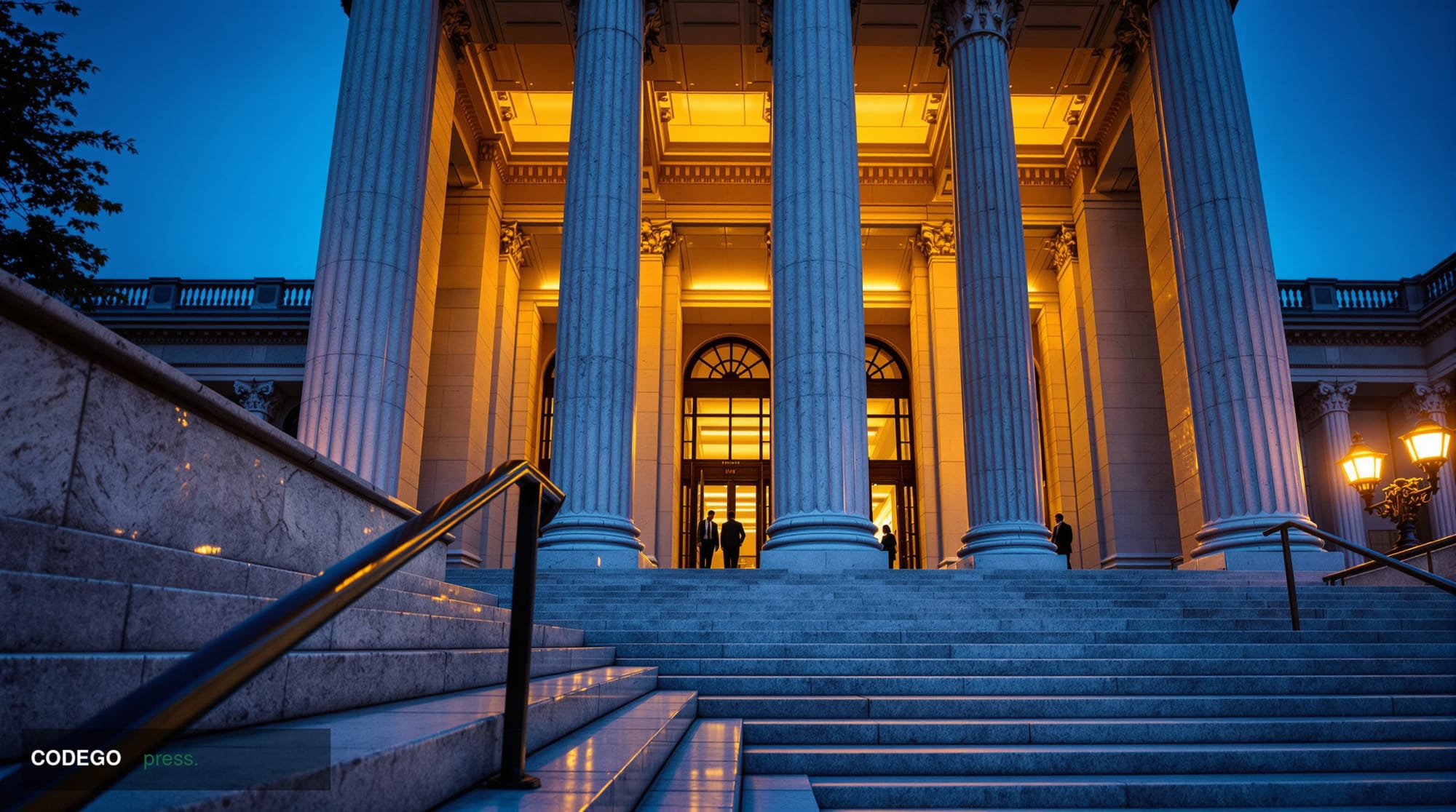
A federal courthouse in Brooklyn became the stage for one of the most consequential unresolved disputes in American payments on Monday, November 16, 2026, as Visa and Mastercard pressed U.S. District Judge Brian Cogan to grant final approval to a long-contested swipe fee settlement — only to leave without a verdict. The judge's silence at the close of the hearing has left the payments industry, the retail sector, and millions of American consumers suspended in a moment of profound regulatory uncertainty.
At the heart of the matter is a proposed settlement governing interchange fees — the transaction charges, commonly called swipe fees, that merchants pay every time a customer uses a credit card at the point of sale. These fees have been a source of festering tension between the card networks and large retailers for well over a decade, generating successive waves of litigation, lobbying, and failed compromise attempts. The current settlement, if Judge Cogan endorses it in its present form, would grant merchants a pilot mechanism to test refusing premium consumer credit cards — a provision that strikes at the core economics of the card industry's most profitable product tier.
The opposition to this settlement is neither small nor politically marginal. Walmart, one of the largest retailers on earth by revenue, has aligned itself with Circle K and the National Retail Federation in arguing against the deal as currently drafted. The involvement of these parties signals that the objections are substantive rather than procedural. Walmart, in particular, commands sufficient commercial and legal resources to escalate any adverse ruling far beyond the Brooklyn courtroom, potentially pushing the dispute toward the appellate level and further delaying resolution for all parties.
The provision enabling retailers to run pilots that refuse premium consumer credit cards is arguably the settlement's most provocative feature. Premium cards — think high-reward travel cards, elite cashback products, and invitation-only charge cards — carry some of the highest interchange rates in the industry, precisely because issuing banks fund their lucrative rewards programs through those fees. Allowing retailers to opt out of accepting such cards, even on an experimental basis, represents a structural challenge to the implicit bargain that has underpinned the card network model for decades: merchants accept all card variants without discrimination in exchange for the trust and ubiquity that the Visa and Mastercard brands provide.
For Visa and Mastercard, securing final approval is not merely a legal formality. The two networks have invested enormous legal capital in reaching this settlement point, and prolonged uncertainty poses operational risks. Banks that issue premium cards under the Visa and Mastercard umbrellas are watching the proceedings with acute anxiety; a ruling that leaves the pilot mechanism intact could trigger a renegotiation of rewards economics across the issuing community. Cardholders who rely on premium products for travel miles, lounge access, and purchase protections may also find themselves caught in the crossfire if merchants begin exercising any newly granted right to decline their cards.
The retail opposition, meanwhile, reflects a broader ideological conviction that the existing swipe fee regime is structurally unfair. The National Retail Federation has consistently argued that interchange rates in the United States are among the highest in the developed world and that the costs are ultimately borne by consumers through higher prices, regardless of whether those consumers use a card at all. Walmart and Circle K, operating at massive transaction volumes, feel the weight of these fees acutely in their margin structures, and their objection to this particular settlement suggests they view it as insufficient — a deal that offers the appearance of reform without delivering meaningful, durable relief.
Judge Cogan's decision to close the hearing without issuing a ruling is consistent with the judicial caution that a case of this complexity demands. The settlement implicates antitrust law, consumer protection principles, and the foundational architecture of retail payments in the United States. A ruling in either direction carries significant downstream consequences: approval would validate a contested compromise and launch premium card pilots into uncharted territory, while rejection would send negotiators back to the table and extend a legal saga that has already consumed years of litigation resources on all sides.
What This Means for the Industry
The Brooklyn hearing may have concluded without resolution, but its implications will reverberate across every stakeholder in the payments ecosystem. Card networks face the prospect of a legally fragmented acceptance environment if premium card pilots proceed. Retailers are testing the outer boundaries of their leverage against entrenched network power. And Judge Cogan sits at the fulcrum of a decision that will shape the economics of everyday commerce in the United States for years to come. Until his ruling arrives, the entire industry remains in a state of carefully watched suspension — an increasingly uncomfortable position for networks, merchants, and issuers alike.
Written by the editorial team — independent journalism powered by Codego Press.