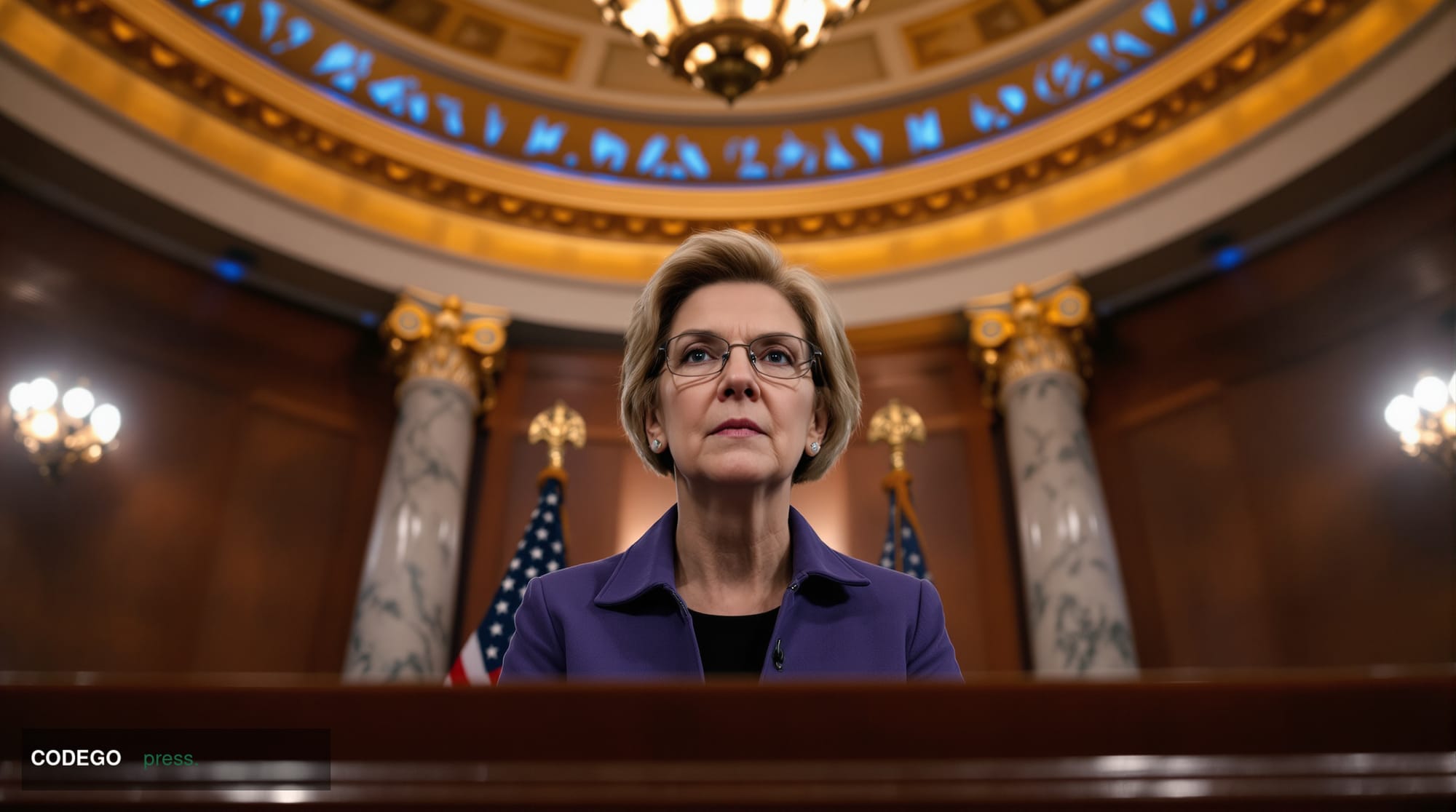
Senator Elizabeth Warren has launched a fresh challenge against the Commodity Futures Trading Commission (CFTC), demanding comprehensive answers about the regulator's approach to cryptocurrency and prediction market oversight in the wake of significant operational changes implemented during the previous administration.
The Massachusetts Democrat's inquiry centers on what she characterizes as concerning workforce reductions and enforcement policy shifts that occurred under the Trump administration, raising questions about the agency's capacity to effectively monitor rapidly evolving digital asset markets. Warren's intervention signals renewed congressional scrutiny of regulatory agencies' preparedness to handle the complex challenges posed by cryptocurrency markets and emerging financial technologies.
The timing of Warren's demands reflects broader concerns about regulatory gaps in cryptocurrency oversight that have persisted across multiple administrations. The CFTC, which shares jurisdiction over digital assets with the Securities and Exchange Commission, has faced mounting pressure to clarify its regulatory framework as cryptocurrency trading volumes and institutional adoption have surged in recent years.
Warren's focus on workforce cuts at the CFTC highlights a critical issue facing financial regulators: the challenge of maintaining adequate staffing levels to oversee increasingly complex markets. The agency's enforcement capabilities have been a particular point of contention, with industry observers questioning whether reduced personnel levels have compromised the regulator's ability to pursue meaningful enforcement actions against bad actors in the cryptocurrency space.
The senator's inquiry into prediction markets oversight adds another dimension to the regulatory debate. These platforms, which allow users to bet on future events including political outcomes and economic indicators, have grown substantially in popularity and sophistication. The CFTC's approach to regulating these markets has significant implications for how similar platforms might operate in the future, particularly as they increasingly incorporate cryptocurrency payments and blockchain technology.
The enforcement changes Warren is highlighting likely relate to shifts in the agency's prosecutorial priorities and settlement practices. Under different administrations, the CFTC has taken varying approaches to cryptocurrency enforcement, ranging from aggressive pursuit of violations to more collaborative engagement with industry participants. These policy oscillations have created uncertainty for market participants and raised questions about regulatory consistency.
Warren's demand for answers comes at a crucial juncture for cryptocurrency regulation. The industry continues to push for clearer regulatory frameworks while regulators struggle to keep pace with technological innovation and market evolution. The senator's intervention may accelerate ongoing congressional efforts to establish more comprehensive digital asset legislation that would provide clearer guidance to both regulators and market participants.
The broader implications of Warren's challenge extend beyond the CFTC to fundamental questions about how financial regulators should adapt to technological disruption. As traditional financial services increasingly converge with digital assets and blockchain technology, regulators face mounting pressure to develop expertise and enforcement capabilities that match the sophistication of the markets they oversee.
Written by the editorial team — independent journalism powered by Codego Press.