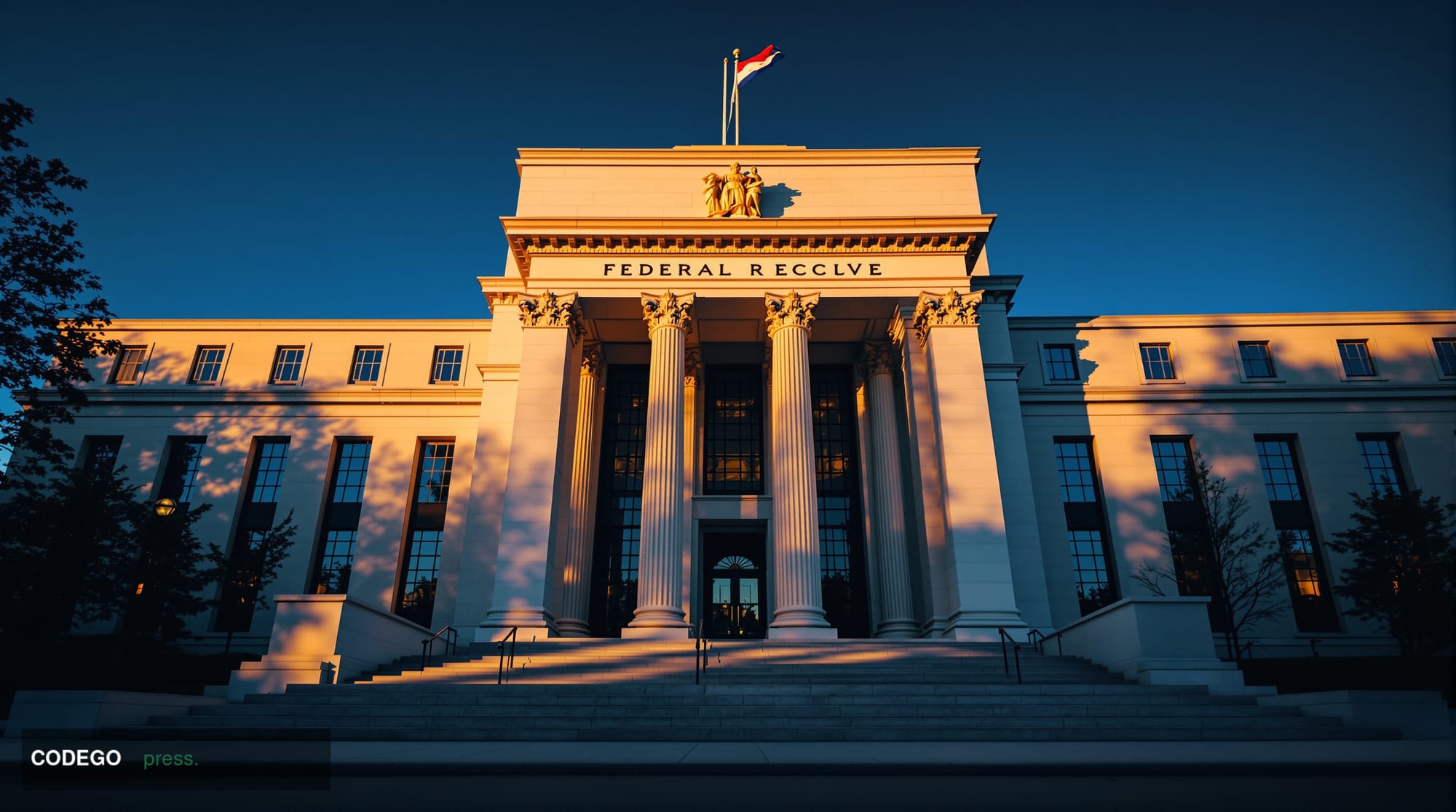
Kevin Warsh has assumed the chairmanship of the Federal Reserve at a pivotal moment for American monetary policy, presiding over his first Federal Open Market Committee meeting as inflation reaches 4 percent. This convergence of new leadership and elevated price pressures marks a critical juncture that could fundamentally reshape the financial landscape for traditional markets and digital assets alike.
The timing of Warsh's ascension to the Fed's top position carries profound implications for monetary policy direction. With inflation running at double the central bank's traditional 2 percent target, the new chairman faces immediate pressure to demonstrate the Fed's commitment to price stability. Warsh's track record as a former Fed governor from 2006 to 2011, during which he witnessed the financial crisis and its aftermath, positions him as a leader familiar with the delicate balance between supporting economic growth and maintaining price stability.
The 4 percent inflation reading represents a significant challenge that will likely influence the Fed's policy trajectory under Warsh's stewardship. This elevated price pressure level typically triggers more aggressive central bank responses, as sustained inflation above target can become entrenched in economic expectations and prove increasingly difficult to contain. The new chairman's approach to addressing this inflationary environment will signal whether the Fed intends to prioritize rapid disinflation or adopt a more gradual approach that considers broader economic stability.
Financial markets are already anticipating the implications of Warsh's leadership amid rising inflation, particularly regarding the potential for tighter monetary policy. Higher interest rates and reduced liquidity typically emerge as the primary tools for combating inflation, but these measures carry significant consequences for asset valuations across the financial spectrum. The prospect of tighter policy under Warsh's tenure suggests a shift toward a more restrictive monetary stance that could fundamentally alter investment dynamics.
The impact on speculative investments and risk assets appears particularly pronounced under this new monetary regime. Digital assets, growth stocks, and other risk-sensitive investments that thrived in the low-rate environment of recent years face headwinds when central bank policy tightens. Reduced liquidity in financial markets typically leads investors to reassess their appetite for volatile assets, potentially triggering revaluations across cryptocurrency markets, technology stocks, and other speculative investments.
Warsh's previous tenure at the Fed provides insight into his likely approach to monetary policy during periods of economic stress. His experience navigating the 2008 financial crisis and subsequent recovery offers valuable perspective on managing monetary policy during turbulent periods. However, the current inflationary environment presents different challenges than the deflationary pressures that characterized much of his previous Fed service, requiring adapted strategies for a fundamentally different economic landscape.
The cryptocurrency sector faces particular uncertainty under a potentially more hawkish Fed leadership. Digital assets have historically demonstrated sensitivity to changes in monetary policy, with tighter conditions typically reducing investor appetite for volatile, speculative investments. Warsh's stance on digital assets and their role in the financial system remains to be fully articulated, but traditional central bank priorities of financial stability and monetary control suggest a cautious approach toward cryptocurrency markets.
What This Means
Warsh's inaugural Fed meeting amid 4 percent inflation establishes a defining moment for American monetary policy that extends far beyond traditional banking circles. The convergence of new leadership and elevated price pressures creates conditions for significant policy shifts that will reverberate through financial markets, affecting everything from mortgage rates to cryptocurrency valuations. Investors across asset classes must prepare for a potentially more restrictive monetary environment that prioritizes inflation control over asset price support, marking a fundamental shift from the accommodative policies that characterized recent years. The success of Warsh's tenure will ultimately depend on his ability to navigate the complex balance between controlling inflation and maintaining financial stability, a challenge that will shape economic conditions for years to come.
Written by the editorial team — independent journalism powered by Codego Press.