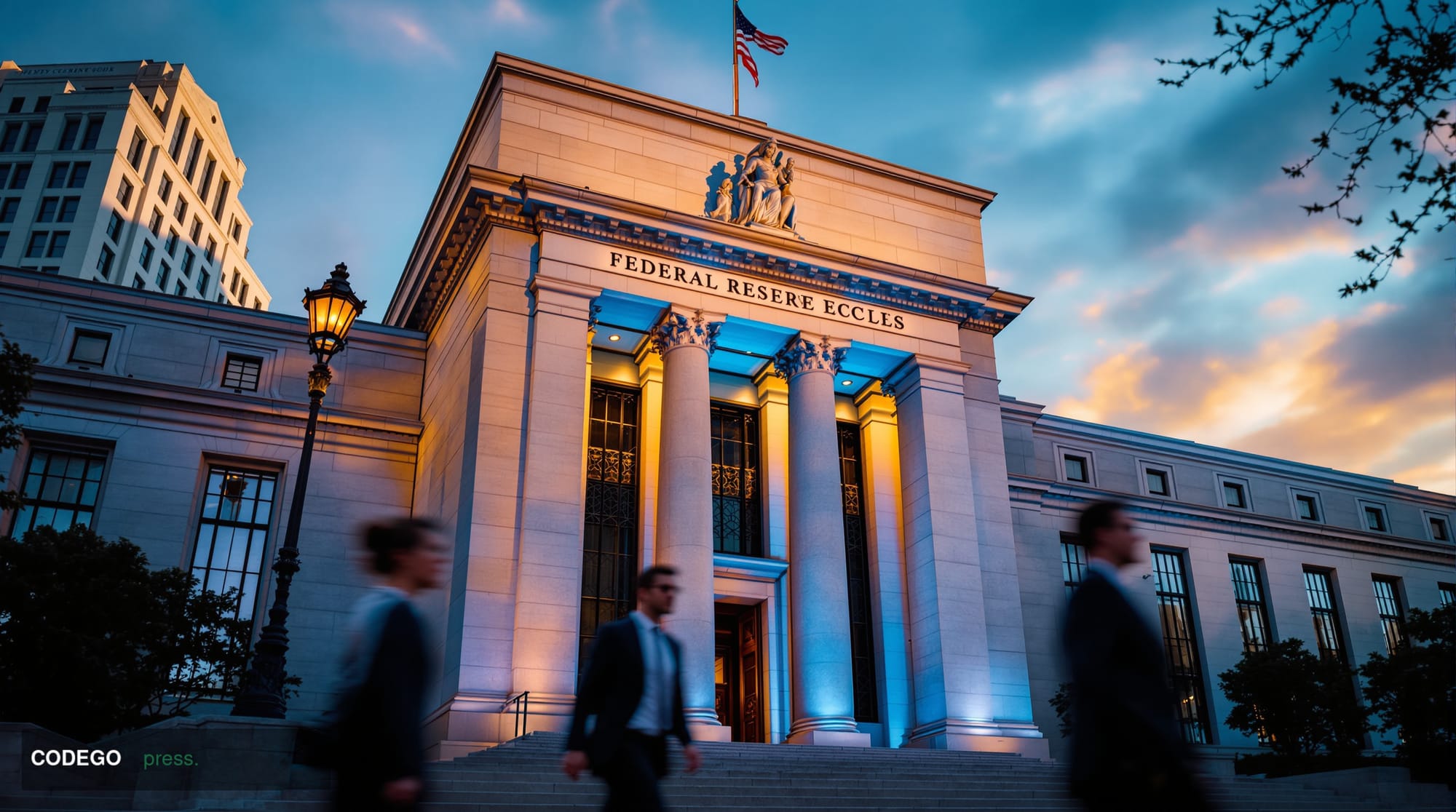
Kevin Warsh has officially assumed the chairmanship of the Federal Reserve, taking the helm of America's central bank at a moment when market expectations stand in stark contradiction to the Trump administration's monetary policy preferences. The swearing-in ceremony marks a pivotal transition in monetary leadership, occurring against a backdrop of divergent views on the appropriate trajectory for interest rates.
The new Fed chair inherits a complex economic landscape where political pressure and market realities appear fundamentally misaligned. President Trump has repeatedly articulated his desire for the Federal Reserve to pursue aggressive rate cuts, viewing lower borrowing costs as essential for sustained economic expansion. This public stance represents a continuation of Trump's historically vocal approach to monetary policy, where presidential preferences regarding Fed decisions have been expressed with unprecedented directness.
However, financial markets paint a decidedly different picture of monetary policy expectations. Trading activity and derivatives pricing indicate that investors assign zero probability to rate cuts materializing in 2026. More significantly, market participants are actively positioning for rate increases during the same period, suggesting professional traders and institutional investors see inflationary pressures or economic overheating as more pressing concerns than the need for monetary accommodation.
This disconnect between political desires and market expectations creates an immediate challenge for Warsh's tenure. The Federal Reserve's dual mandate requires balancing employment objectives with price stability, often necessitating policy decisions that may conflict with short-term political preferences. Warsh's academic background and previous experience within financial markets positions him uniquely to navigate these competing pressures, though his actual policy inclinations remain to be fully revealed through upcoming Federal Open Market Committee deliberations.
The market's expectation of rate hikes in 2026 reflects broader concerns about economic momentum and inflationary dynamics that may be developing beneath surface-level indicators. Professional traders typically incorporate extensive economic modeling and forward-looking analysis into their positioning, suggesting their rate hike expectations stem from fundamental economic projections rather than mere speculation. This professional consensus implies that economic conditions may warrant tighter monetary policy despite political preferences for accommodation.
Warsh's appointment arrives at a critical juncture for American monetary policy, where the traditional independence of the Federal Reserve faces renewed testing. The explicit nature of Trump's rate cut advocacy creates an environment where Fed decisions will likely receive heightened political scrutiny. Historical precedent suggests that Federal Reserve chairs who maintain policy independence often face significant political pressure, yet this independence has traditionally been viewed as essential for credible monetary policy implementation.
The implications extend beyond domestic considerations, as Federal Reserve policy decisions reverberate through global financial markets and international monetary systems. Foreign central banks and international investors closely monitor Fed policy signals, making Warsh's early decisions particularly consequential for global capital flows and currency valuations. The expectation of rate increases could strengthen dollar positioning while potentially creating challenges for emerging market economies with dollar-denominated debt obligations.
What this development ultimately signals is a fundamental tension between political economy and financial market dynamics that will define Warsh's early tenure. The Federal Reserve chair must balance constitutional independence with political accountability, while simultaneously addressing market expectations that appear increasingly divorced from administrative preferences. Success will likely require clear communication strategies that manage both political relationships and market expectations while maintaining focus on the Fed's statutory objectives. The resolution of this tension between Trump's rate cut desires and market expectations of increases will serve as an early test of both Warsh's leadership approach and the institution's continued independence in an era of heightened political engagement with monetary policy.
Written by the editorial team — independent journalism powered by Codego Press.